Designed & Built in Nottingham, UK — Since 1986 +44 (0)115 939 1888 sales@www.cnc-cutmachine.com
0%

Thick Plate Metal Cutting is not a one-machine decision. Plate thickness, alloy, edge quality, production volume, and operating cost all shape the right choice. A process that cuts mild steel quickly may struggle with stainless steel or intricate profiles. Small details matter.

The scale of steel use gives this equipment real industrial importance. World Steel Association’s World Steel in Figures 2024 reports global crude steel production of 1,892.6 million tonnes in 2023. That figure does not measure cutting-machine sales, but it shows the vast material base served by fabrication shops, shipyards, construction suppliers, and heavy-equipment makers. Their needs differ. A shipyard may value long, reliable cuts, while a job shop may need fast changeovers and flexible programming.

This guide compares leading machine types and manufacturers through practical criteria: cutting capacity, accuracy, speed, automation, service support, and total cost of ownership. Plasma systems often balance speed and cost; oxy-fuel remains useful for very thick carbon steel. Fiber laser and waterjet systems can suit different material and finish requirements, but neither is automatically the best fit. Vendor specifications need context. A stated maximum thickness may not reflect everyday production quality. Buyers should ask for sample cuts using their own plate grade and thickness, then inspect the edge and measure cycle time. That test can expose gaps a brochure misses. The comparison is useful, but not a substitute for a shop-floor trial.
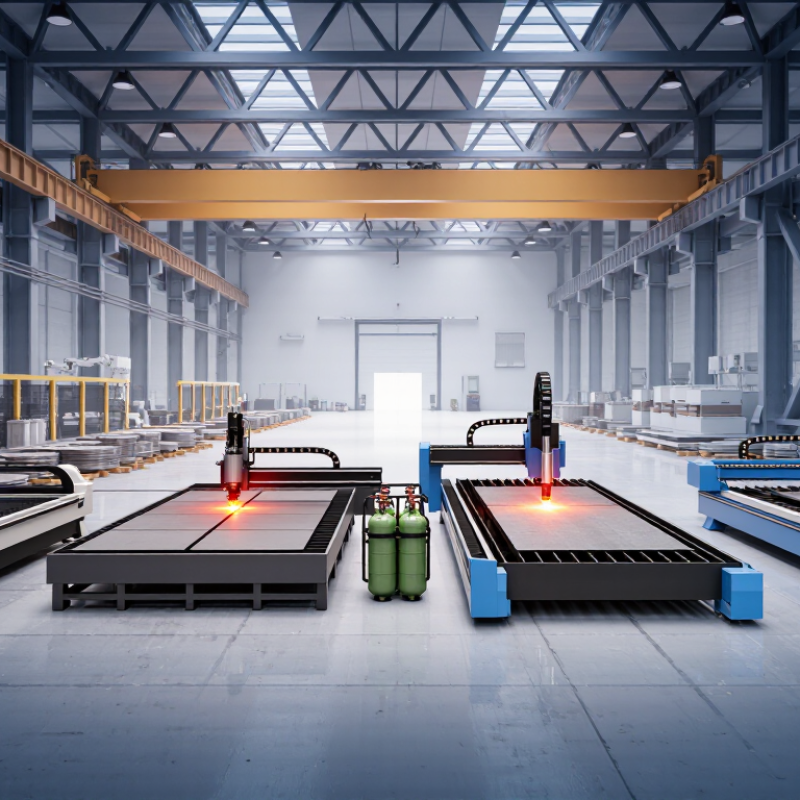
What Are China's Top Thick Plate Metal Cutting Machines?

What Thick Plate Metal Cutting Machines Do

What Thick Plate Metal Cutting Machines Do

Thick plate metal cutting machines separate heavy steel and other metals into parts with specified shapes and dimensions. They guide a cutting tool along a programmed path, while operators secure the plate and set the process parameters. The result may be a straight edge, a circular opening, or a complex component profile. Sparks, heat, and metal scale are common sights.

Different cutting methods suit different jobs. Oxy-fuel systems use a flame and oxygen jet, often for thick carbon steel. Plasma systems use an electrically charged gas to cut conductive metals at higher speeds. Waterjet machines use an abrasive stream and avoid heat-related changes near the cut. Each method has limits. Material type, plate thickness, edge quality, and production speed all matter.

Good preparation affects the result as much as the machine. Operators check plate flatness, confirm material details, and choose a cutting speed that matches the job. A cut made too quickly can leave a rough, angled edge; too slowly, and heat may distort the part. Small test cuts help. They are not wasted time. Still, settings from one plate may not transfer perfectly to another, so careful adjustment remains part of the work.

How Thick Plate Cutting Systems Work

What Are China's Top Thick Plate Metal Cutting Machines?

How Thick Plate Cutting Systems Work

A thick-plate cutting system turns a digital drawing into a controlled cut. A CNC controller follows programmed toolpaths, while a height sensor keeps the torch at a steady distance from the plate. The torch pierces the steel, then travels along the contour. Support slats hold the sheet; extraction systems collect smoke and fine particles. Small details matter. A poor pierce can leave a crater that distorts the next cut.

Oxy-fuel systems preheat carbon steel, then use an oxygen jet to oxidize and remove metal. TWI’s published thermal-cutting guidance gives oxy-fuel a typical steel thickness range of about 3–300 mm. Plasma systems use an electric arc and compressed gas to melt and eject material, often cutting faster on thinner sections. Waterjet systems use abrasive-laden water and avoid a heat-affected edge, though cutting time can rise on very thick plate. ISO 9013 provides quality classes for thermal cuts, including tolerances for perpendicularity and surface profile. In real shops, plate scale, warping, and torch wear can still spoil an otherwise precise path. The software is not magic. A test cut and a measured edge remain useful.

The Main Cutting Technologies Used in China

China’s thick-plate shops commonly rely on plasma, oxy-fuel, laser, and waterjet cutting. Each process suits a different mix of material, thickness, tolerance, and production volume. The right choice depends on the job, not just the machine’s advertised capacity.

Plasma cutting uses an electric arc and compressed gas to cut conductive metals. It can handle substantial plate thickness at useful speeds, though the cut edge may need grinding before welding. Watch the kerf and bevel on a test piece. Small setup changes matter.

Oxy-fuel cutting remains practical for thick carbon steel, especially for large parts with less demanding tolerances. It uses a flame to oxidize the steel, so it is not suitable for every metal. Preheating also affects the result.

High-power laser systems can produce narrow cuts and detailed contours, but operating cost and edge quality vary with plate thickness and material.

Waterjet cutting avoids a heat-affected zone, which helps when heat distortion is a concern, but cutting can be slower and abrasive use adds expense.

In real production, a clean sample cut tells more than a specification sheet. It is easy to overvalue speed; honestly, I would also check consumable costs, plate flatness, fume control, and operator skill before choosing a process.

Leading Types of Chinese Thick Plate Cutting Machines

China’s thick-plate cutting floors commonly use oxy-fuel, plasma, laser, and waterjet systems. The right choice depends on plate thickness, steel grade, edge tolerance, and production volume. The World Steel Association’s World Steel in Figures 2024 reports that China produced 1,019.1 million tonnes of crude steel in 2023. That figure describes steel output, not cutting-machine sales, but it shows the scale of the country’s steel-processing sector.

Oxy-fuel machines suit very thick carbon-steel plates and can cut large structural parts. They are comparatively slow, and heat can distort edges.

CNC plasma systems cut faster and work across conductive metals, though thick cuts may need dross removal. Not every edge is clean.

High-power laser machines can deliver narrow kerfs and precise profiles, but performance depends on material and thickness; operating costs also matter.

Waterjet cutting avoids a heat-affected edge, yet it can be slower on heavy plate.

In practice, gantry-style CNC machines are common for large sheets, with torch height and cutting speed adjusted to the job. Buyers should compare tested cut samples, consumable life, and thickness-specific accuracy—not just advertised maximum capacity. A maximum rating may not reflect everyday production. I would also check how easily operators can tune the process; even a capable machine can disappoint when setup is rushed.

How to Select a Machine for Industrial Needs

Choosing a thick-plate cutting machine starts with the plate, not the brochure. Record the steel grades, maximum thickness, usual thickness, and sheet dimensions handled each week. A machine rated for occasional heavy cuts may struggle during repeated production. Be specific. Compare its stated capacity with your real workload, including edge quality and tolerance needs. Maximum capacity alone can mislead.

Match the cutting method to your materials and production pace. Plasma and oxy-fuel systems suit many heavy-plate jobs, while suitable laser systems may offer different precision and operating costs. The right choice depends on thickness, alloy, cut quality, and throughput. Ask suppliers for test cuts using your own material. Inspect bevel, dross, and the heat-affected edge. A clean sample matters. Also check torch-height control, table support, fume extraction, guarding, and sheet-loading arrangements.

Consider the full working environment, not just the machine’s footprint. Confirm floor space, power and gas requirements, software compatibility, and access for maintenance. Ask how quickly routine parts and technical support are available. A specification sheet cannot show every production problem; even a small mismatch between the table and your loading equipment can cause delays. It is worth reviewing your actual job mix with operators before choosing a configuration.

What Are China's Top Thick Plate Metal Cutting Machines? — How to Select a Machine for Industrial Needs

The machine categories below are widely used in China’s industrial fabrication sector. “Top” refers to common process options, not a brand ranking.

Machine Type Typical Material and Thickness Range Key Strengths Considerations Best-Fit Industrial Applications
CNC Oxy-Fuel (Flame) Cutting Machine Primarily carbon and low-alloy steel; commonly used from about 6 mm to 300 mm or more, depending on the torch, gas system, and setup. Suitable for very thick carbon-steel plate; relatively low equipment and consumable costs; practical for large-format plate processing. Slower than plasma or laser on many jobs; produces a heat-affected zone and may require edge cleanup; generally unsuitable for stainless steel and aluminum. Shipbuilding, heavy structural steel, mining equipment, bridge components, and large carbon-steel parts.
CNC Plasma Cutting Machine Conductive metals, including carbon steel, stainless steel, and aluminum; common production ranges are approximately 1–50 mm, with system-dependent capability beyond this range. Fast cutting on medium and thick plate; handles a range of conductive metals; typically offers a useful balance of speed and operating cost. Cut quality and squareness vary with material thickness and process settings; edge bevel and dross may require secondary work on demanding parts. General metal fabrication, machinery parts, construction equipment, and plate profiling.
High-Power Fiber Laser Cutting Machine Carbon steel, stainless steel, and other suitable metals; capacity varies substantially by laser power, material, and process, with thick-plate systems commonly specified for ranges extending to several tens of millimeters. High precision and fast processing on suitable thicknesses; narrow kerf; easy integration with CNC nesting and automated material handling. Purchase and operating requirements can be higher; maximum thickness and production speed are highly configuration-dependent; thick-plate edge quality should be confirmed with sample cuts. Precision fabrication, electrical enclosures, machinery, and mixed-thickness production where accuracy and throughput matter.
CNC Abrasive Waterjet Cutting Machine Can cut many metals and non-metal materials; thick-section capacity is machine- and material-dependent and can reach well beyond 100 mm in suitable applications. No thermal heat-affected zone; suitable for heat-sensitive materials and complex profiles; can process diverse material types. Usually slower than thermal methods on thick steel; abrasive and water-treatment costs must be considered; kerf taper may need process compensation. Aerospace and precision components, specialty alloys, heat-sensitive parts, and jobs requiring cold cutting.
CNC Oxy-Fuel/Plasma Combination Cutting Machine Typically configured for carbon-steel plate across both medium and very thick sections; actual range depends on the installed plasma source and oxy-fuel torches. One machine can use plasma for faster cutting on thinner sections and oxy-fuel for thicker carbon steel; supports varied job requirements. Requires space, maintenance, and operator knowledge for two processes; process changes and consumable management add complexity. Steel service centers, heavy fabrication shops, and production lines handling a broad range of carbon-steel plate thicknesses.
CNC Bevel Cutting System Available with plasma or oxy-fuel cutting heads; thickness capability follows the selected cutting process and bevel-head configuration. Produces angled edges for weld preparation and can reduce separate beveling operations when properly programmed. Bevel capability, angle range, and accuracy depend on head design, plate thickness, and cutting conditions; sample validation is recommended. Pressure vessels, ship sections, heavy structures, and components requiring weld-preparation edges.

Selection note: Thickness figures are indicative industry ranges, not guaranteed machine ratings. Confirm the exact material grade, maximum plate thickness, required edge quality, cutting speed, bevel needs, table size, duty cycle, extraction or water-treatment requirements, and local service support with the machine supplier before purchasing.

FAQS

How does a thick-plate cutting system work?

A CNC controller follows a digital toolpath while a height sensor keeps the torch above the plate. A test cut still matters.

Which cutting method suits very thick carbon-steel plate?

Oxy-fuel cutting is commonly used for very thick carbon steel, roughly 3–300 mm. It is slower and can distort edges.

When is plasma cutting a practical choice?

Plasma can cut conductive metals quickly, especially at moderate thicknesses. Thick cuts may leave dross that needs removal.

What are the advantages of laser cutting?

High-power lasers can make narrow kerfs and precise profiles. Results and running costs depend on the material and thickness.

When should a shop consider waterjet cutting?

Waterjet avoids a heat-affected edge, which can matter for sensitive parts. Cutting heavy plate may take longer.

What does a gantry-style machine offer?

Its wide frame can support cutting large sheets, with speed and torch height adjusted to the job. Setup still takes care.

What should buyers check beyond maximum thickness?

Compare cut samples, thickness-specific accuracy, and consumable life. A maximum rating may not describe everyday results.

What can make an accurate cutting path produce a poor edge?

Warping, torch wear, and a poor pierce can affect the cut. Software cannot fix every problem.

How can operators judge cut quality?

Measure the finished edge and inspect its profile and perpendicularity. One sample may not tell the whole story.

Conclusion

Thick Plate Metal Cutting machines are designed to process heavy steel and other substantial metal sections into components for construction, shipbuilding, energy, and general manufacturing. A typical system combines a cutting power source, a CNC control unit, a worktable, and motion components that guide the cutting head along a programmed path. Depending on the material and required thickness, Chinese systems may use oxy-fuel, plasma, laser, or waterjet cutting. Each technology offers different advantages in cutting speed, edge quality, heat impact, and capacity.

Common machine types include CNC gantry cutters, plasma cutting systems, oxy-fuel machines, and combined multi-process platforms. Choosing the right equipment involves assessing the usual material and thickness range, required accuracy, production volume, available floor space, and maintenance needs. Buyers should also consider automation, software compatibility, energy use, consumables, and operator training. Matching these factors to real production requirements helps ensure reliable performance and a practical balance between productivity, cut quality, and long-term operating costs.


Amelia

Amelia

Amelia is a highly experienced marketing professional dedicated to helping customers better understand our company, products, and solutions. With a strong background in market research, content strategy, customer communication, and product education, she brings clarity and practical insight to......