Engineering Knowledge Base
Frequently Asked Questions: Sheet Metal Plasma Cutter Procurement
Detailed answers to technical, financial, and operational questions commonly raised by global procurement teams and factory managers.
What thickness range is ideal for an industrial sheet metal plasma cutter?
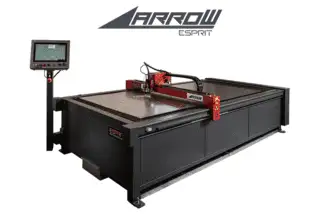
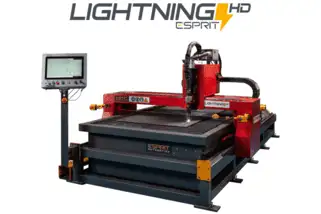
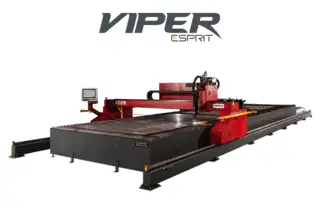
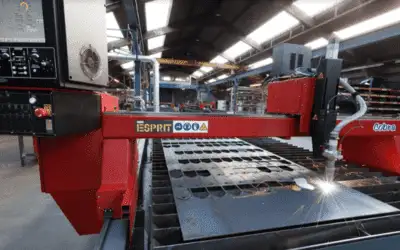
Industrial sheet metal plasma cutters excel across a wide range, from 0.8 mm light sheet up to heavy plate exceeding 80 mm. For ultra-thin sheet (0.5 mm to 3 mm), specialized lightweight HVAC plasma systems like the Esprit Arrow offer maximum velocity and rapid cornering acceleration. For medium to heavy plate (3 mm to 50+ mm), High-Definition plasma systems like the Lightning HD and Viper paired with Hypertherm XPR power sources deliver laser-like bevel control, superior perpendicularity, and minimal dross.
How does a High-Definition sheet metal plasma cutter compare to a fiber laser cutter?
While fiber laser cutters deliver higher cutting speeds on thin sheet metal below 6 mm, High-Definition plasma cutters offer a substantially lower Total Cost of Ownership (TCO) and Capital Expenditure (CapEx) when processing materials between 6 mm and 50 mm. Plasma cutting is far less sensitive to surface rust, mill scale, or oil coatings, requires significantly lower gas volume costs, and offers faster investment payback periods for structural steel fabricators, heavy equipment builders, and metal service centres.
What is the expected consumable life and operating cost of a modern Hypertherm torch system?
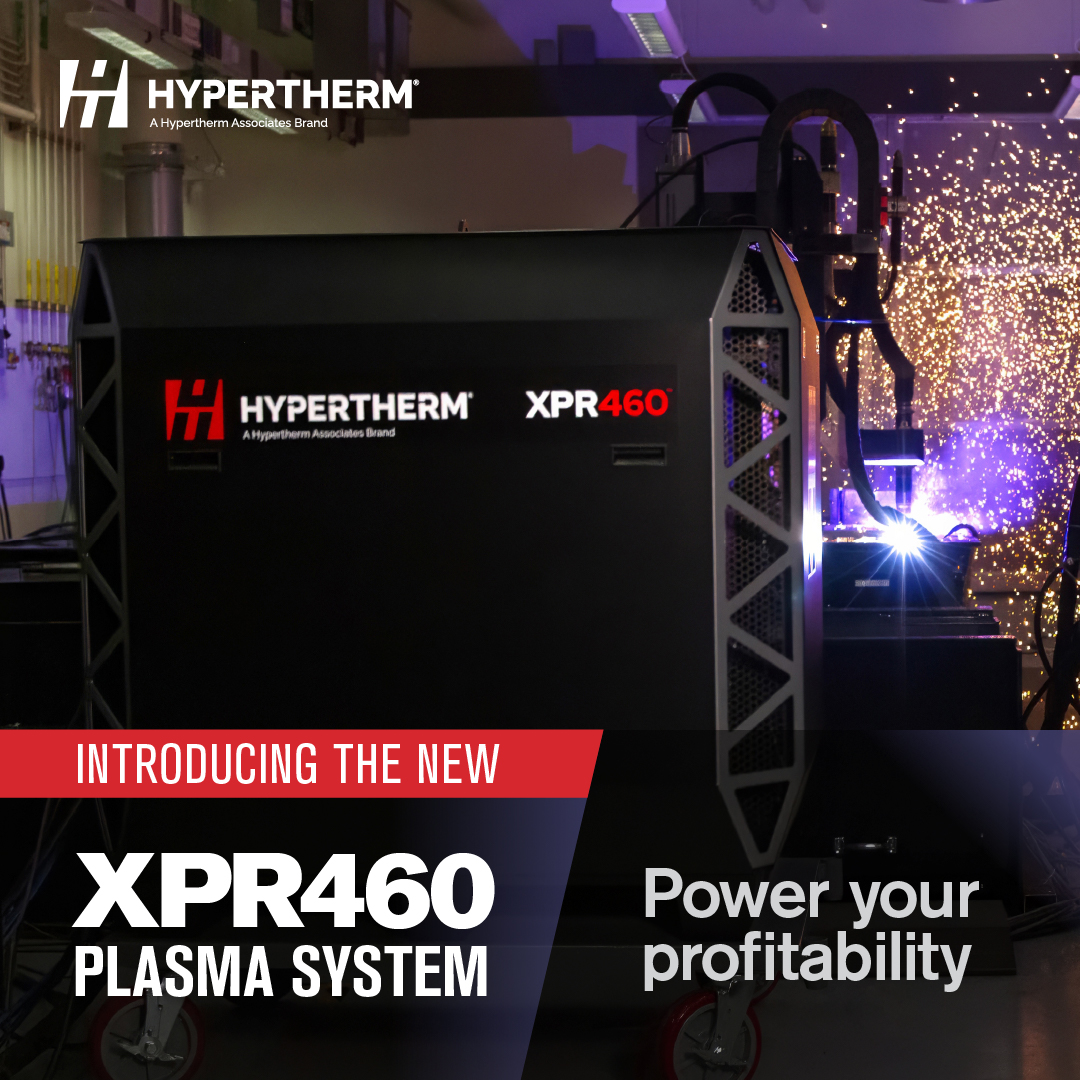
Modern Hypertherm XPR plasma power units integrated into Esprit machines incorporate Arc Response Technology™ and automatic gas metering. These advancements protect consumables during piercing and torch ramp-down, extending nozzle and electrode life up to 3 times longer than conventional plasma cutters. Depending on gas selection (Oxygen, Nitrogen, Compressed Air, or H35) and operating amperage, average direct consumable running costs typically range between £1.50 and £4.50 per arc-on hour.
Why is zoned downdraft extraction critical for a sheet metal plasma table?
Plasma cutting generates fine metallic fumes, oxides, and respirable particulate dust. Esprit’s pneumatically controlled zoned downdraft extraction system opens suction dampers exclusively beneath the specific section of the bed where the torch is actively cutting. This localized high-velocity air capture maximizes extraction efficiency, minimizes total CFM requirements, reduces electric motor power consumption on the filtration unit, and keeps workshop air compliant with UK HSE and international workplace safety standards.
How does dynamic Torch Height Control (THC) impact cut quality on thin sheet metal?
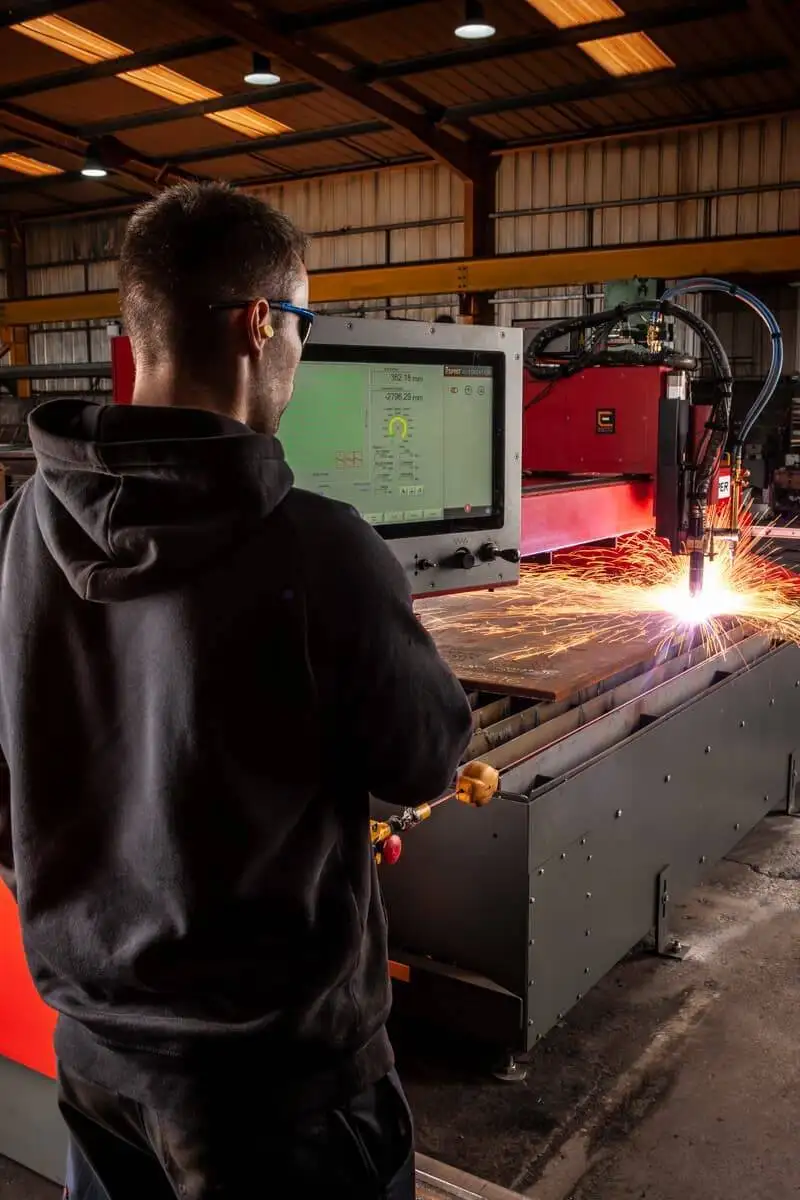
Thin sheet metal naturally warps and expands when exposed to intense plasma heat. Dynamic arc-voltage THC continuously monitors arc voltage thousands of times per second and adjusts the z-axis torch height instantly to maintain a constant standoff distance (typically 1.5 mm). This fast response prevents torch collisions, eliminates top dross, maintains precise kerf width, and guarantees uniform edge bevel angles across uneven or warped sheets.
Can an Esprit sheet metal plasma cutter handle automated bevel cutting and hole profiling?
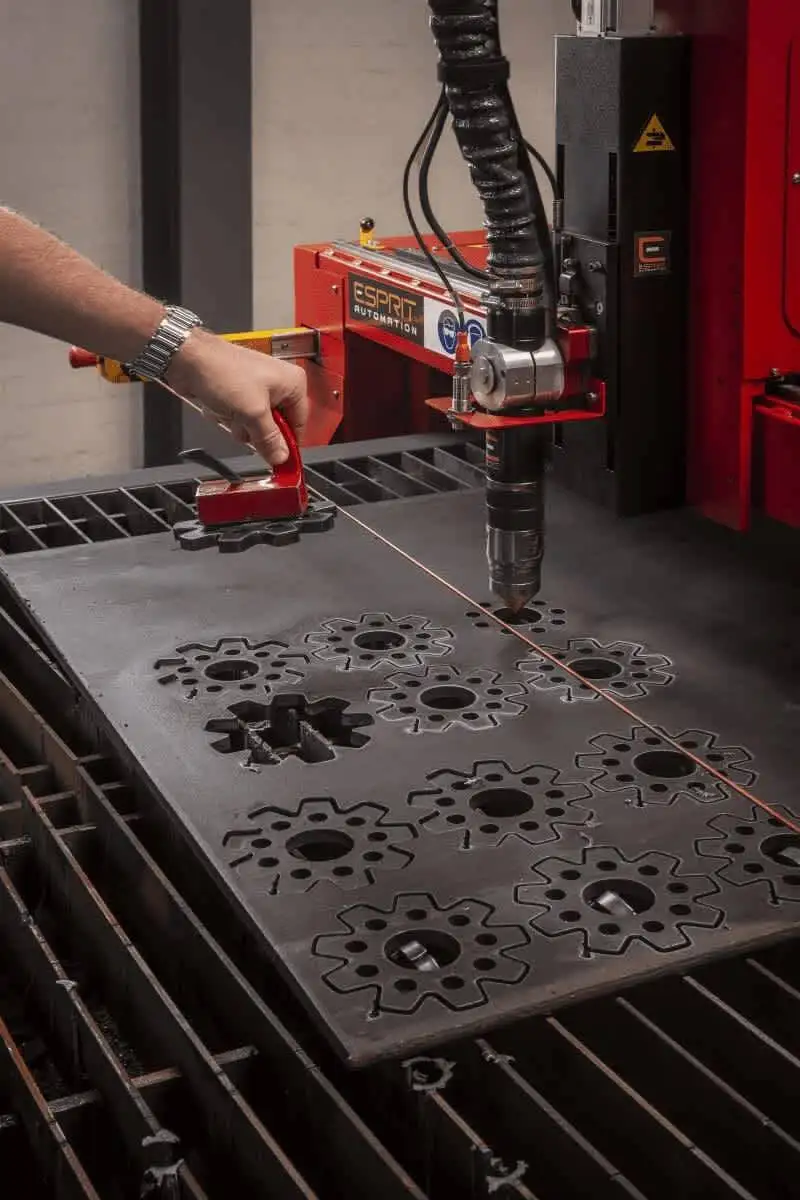
Yes. Equipped with optional 5-axis motorized bevel heads and fully integrated Hypertherm True Hole® technology, Esprit plasma cutters automatically adjust lead-in angles, shield gas pressures, and arc timing. This produces bolt-ready cylindrical holes with a 1:1 diameter-to-thickness ratio and automated V, Y, X, and K bevel angles up to ±45° for direct weld preparation without secondary grinding.
How does Esprit Automation support international machinery exports outside the UK?
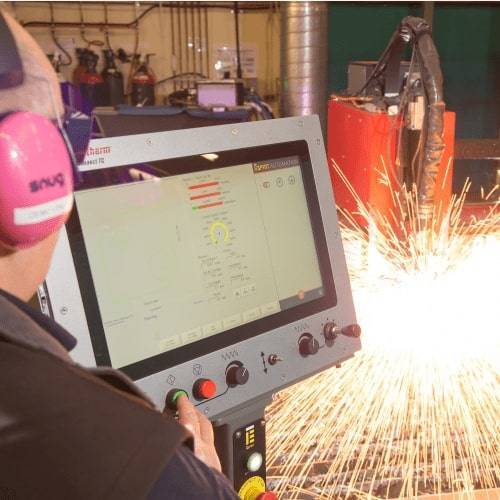
Esprit supports installed CNC plasma machines across more than 30 countries worldwide. All machines are equipped with secure ethernet remote CNC diagnostics, allowing our UK factory engineers to analyze telemetry, adjust parameters, update software, and troubleshoot issues live. Genuine Hypertherm consumables and spare parts are dispatched internationally from our Nottingham facility within 24 hours, supported by comprehensive video tutorials and documentation.
What CAD/CAM and nesting software ecosystems are compatible with Esprit plasma tables?
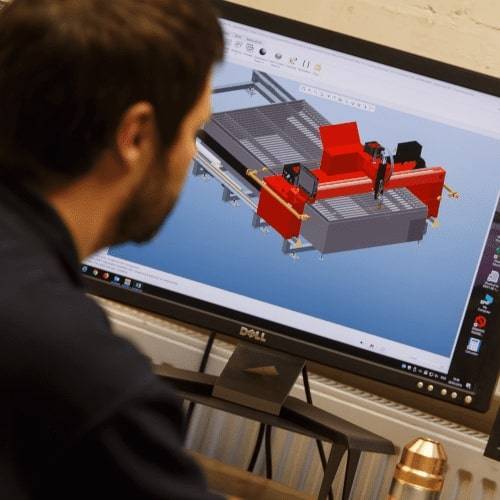
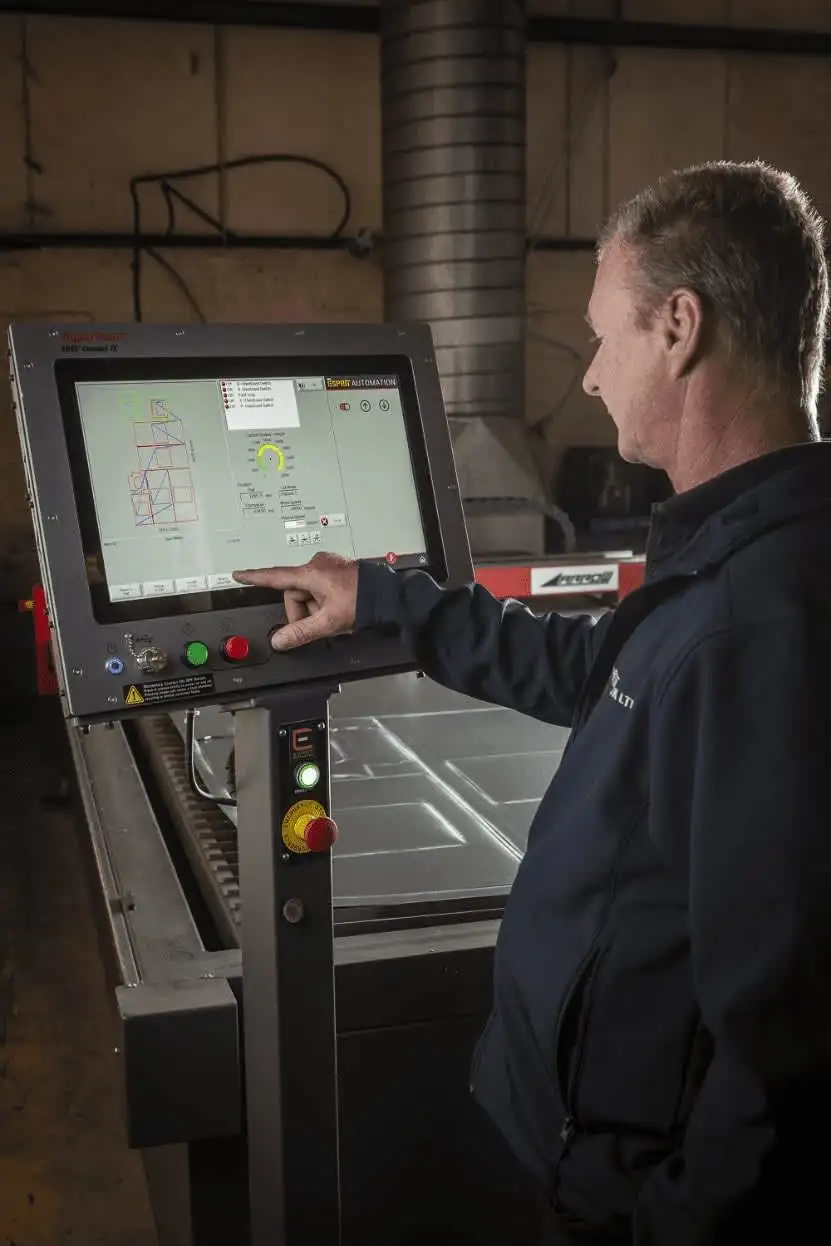
Esprit machines seamlessly interface with industry-standard CAD/CAM and nesting software, including Hypertherm ProNest®, Lantek, and Esprit’s proprietary CNC controller interface. The post-processor automatically applies cut charts, torch height offsets, kerf compensation, lead-in speed ramps, and common-line nesting paths to minimize operator setup time and eliminate sheet material scrap.