Sales & Applications: +44 (0)115 939 1888 Designed & built in Nottingham, England
British Engineering Excellence Since 1986

Industrial Multi-Head Oxyfuel Cutting Machine GuideHeavy Plate Efficiency & Future Automation Trends

Discover how multi-torch CNC flame cutting gantries engineered in Nottingham deliver unmatched throughput, zero-taper thick plate cuts up to 300 mm, and long-term cost efficiency for global steel fabricators.

300 mmMax Flame Cut Thickness
Up to 12Synchronous Torches
35+ YrsNottingham Engineering
30+Export Countries

Consult with an Esprit Application Engineer for Custom Multi-Torch Configurations

+44 (0)115 939 1888

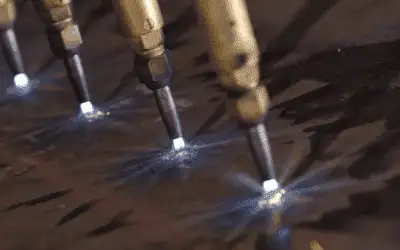
Multi-head oxyfuel flame cutting machine operating multiple torches on heavy steel plate at Esprit Automation UK factory
100%British Machine Tool Build & Testing
Heavy Plate Machinery

Mastering Heavy Metal Profiling with Multi-Head Oxyfuel Precision

In high-tonnage structural metal fabrication, shipyards, heavy machinery manufacturing, and steel service centers, the Multi-Head Oxyfuel Cutting Machine remains the gold standard for processing carbon steel plates from 25 mm to over 300 mm thickness.

While modern fiber lasers dominate thin-gauge sheet processing, physics dictates that thermal oxygen-fuel gas reactions provide the most economical, energy-efficient, and perpendicular cut profile across thick steel plates. By deploying multiple heavy-duty gas torches synchronized across a high-rigidity CNC gantry, manufacturers multiply daily tonnage output linearly without incurring exponential capital or energy costs.

At Esprit Automation, every multi-head flame cutting gantry is designed, machined, welded, assembled, and cut-tested in Nottingham, UK. Built upon 35+ years of British machine-tool precision, our systems combine robust mechanical rails with computerized gas management to eliminate operator error, cut thermal distortion, and lower the total cost per cut meter.

Contact Us
Engineering Benchmarks

Multi-Torch Oxyfuel vs. Plasma vs. Fiber Laser: Process Physics & Economics

Selecting the optimum thermal cutting technology requires evaluating material thickness, edge squareness, heat input, consumable wear rates, and total electrical demand. The table below presents real-world production benchmarks across mild steel grades.

Data based on typical production runs processing S275/S355 structural carbon steel. Realized results depend on gas purity, tip geometry, plate surface cleanliness, and machine rigidity.
Evaluation Criteria Multi-Head Oxyfuel Machine High-Definition CNC Plasma High-Power Fiber Laser (12kW+)
Primary Economic Thickness Range 25 mm to 300 mm (Severance up to 400 mm) 3 mm to 50 mm (Piercing up to 50 mm) 0.8 mm to 25 mm (Thick plate cutting incurs high gas cost)
Multi-Torch Batch Scalability High (Up to 12 torches running simultaneously) Moderate (Typically 1 or 2 plasma heads per gantry) Low (Single cutting head per machine architecture)
Edge Perpendicularity / Bevel Angle Excellent (< 1° bevel) on plates > 50 mm Good (1° to 3° bevel depending on thickness) Slight edge taper on plates > 20 mm
Capital Expenditure (CapEx) per Cutting Head Very Low (Scalable carriage additions) High (Requires heavy-duty plasma power sources) Very High (Resonators, chilling units, enclosure safety)
Electricity & Operating Power Consumption Minimal (Gantry servo drives only, ~3-5 kW) High (50 kW - 120 kW per arc system) Very High (Chillers, optics, high-voltage supply)
Fuel / Gas Media Requirements Oxygen + Fuel Gas (Propane, Natural Gas, Acetylene) Oxygen, Nitrogen, Compressed Air, H35 mix High-pressure Nitrogen or Oxygen assist gas
Pre-heating & Pierce Dynamics Requires thermal pre-heat cycle (Automated by CNC) Instantaneous arc transfer piercing Instantaneous laser beam piercing
Customizable Machine Configurations

Recommended Multi-Head Oxyfuel Cutting Solutions

Esprit Automation builds tailorable flame cutting platforms engineered around your production throughput requirements, floor-space layout, and material thickness spectrum.

Heavy duty multi-head oxyfuel flame cutting machine gantry with 4 torches
  • Standard Multi-Torch
  • 50–300 mm Steel

Dedicated Rail-Based Multi-Head Flame Cutter

Engineered for high-volume steel service centers and structural plate profiling. Features floor-mounted heavy-duty crane rails, expandable bed lengths, dynamic rack-and-pinion drives, and up to 12 independent auto-ignition oxy-fuel carriages.

View Flame Machinery
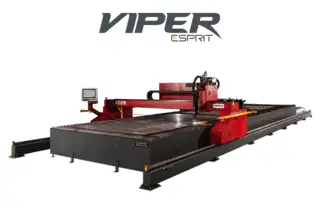
Combination plasma and oxyfuel cutting machine gantry - Esprit Viper model
  • Hybrid Plasma + Oxyfuel
  • Complete Versatility

Hybrid Oxy-Plasma Combination Systems

Why choose between speed and thickness? Our combination gantries mount a High-Definition Hypertherm XPR plasma system alongside multiple oxyfuel torches on a single heavy beam—allowing rapid internal hole piercing with plasma and heavy outer profiling with flame.

Explore Hybrid Systems
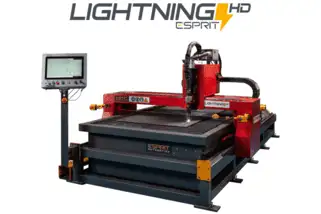
High precision gantry structure for multi-head industrial plate cutting
  • Bevel & Prep
  • V, Y, K Weld Joints

Multi-Head Bevel & Tri-Flame Systems

Minimize post-cut grinding by equipping your oxy-fuel gantry with manual or CNC multi-torch triple-bevel heads. Cut top bevel, root face, and bottom bevel in a single linear pass to prepare heavy plates directly for welding.

Request Custom Specs
Industry Foresight

As global procurement managers evaluate machinery investments through 2030, four major technological shifts are transforming how multi-torch flame cutting systems are designed, operated, and integrated.

1. Automated Proportional Gas Consoles

Manual needle valve adjustment is obsolete. Modern procurement demands CNC-driven electronic proportional gas controls that automatically set preheat oxygen, cutting oxygen, and fuel gas pressures based on exact plate thickness and alloy grade.

2. Smart Thermal Distort Control

Advanced nesting algorithms now communicate directly with multi-head carriage positioning motors, dynamically adjusting torch spacing and sequencing cut paths to balance heat distribution and prevent plate bowing during long cutting schedules.

3. Alternative Fuel Gas Efficiency

With rising energy costs and environmental audits, fabricators are shifting from acetylene to optimized propane, natural gas, or synthesized gas mixtures combined with high-velocity injector nozzles to lower cost-per-cut-meter by up to 35%.

4. IoT Remote Diagnostics & OEE

Global supply chains require full transparency. Modern CNC oxy-fuel gantries transmit operational metrics, pierces completed, gas consumption rates, and maintenance alerts directly to ERP systems for proactive fleet maintenance.

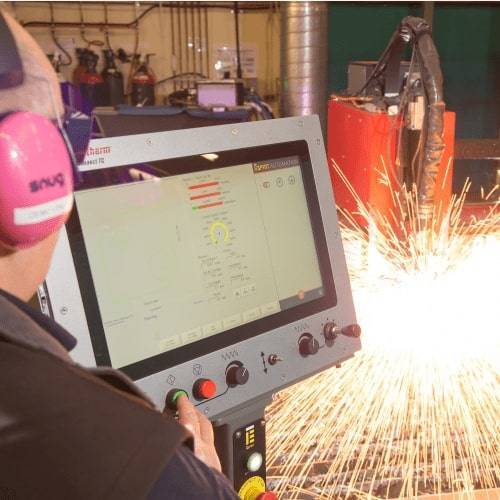
Multi-head CNC cutting table during high temperature steel plate processing
Procurement Checklist

Key Technical Factors When Evaluating a Multi-Head Oxyfuel Machine

Purchasing a heavy-duty CNC flame cutting machine is a multi-decade capital investment. Global buyers should audit suppliers against these critical mechanical and electrical criteria:

  • Gantry Beam Rigidity: Flame cutting heavy plate requires high-torque servo drives moving large thermal masses. Look for stress-relieved, fully machined gantry structures that prevent flex and vibration.
  • Precision Rail Foundation: Floor-mounted machined crane rails (e.g., 43 kg/m or 50 kg/m rail profiles) independent of the cutting table bed protect the motion system from plate loading impacts.
  • Automatic Torch Height Control (IHC): Capacitive or inductive height sensing ensures constant nozzle-to-plate distance across warped or scale-heavy plates, preventing tip collisions.
  • Integrated Flashback Safety: Microprocessor-controlled automatic gas shutoff valves, certified flashback arrestors, and explosive gas detection ensure maximum operator safety.
  • Proportional Valve Control: Avoid manual gas consoles. Ensure gas flow is dictated by post-processor cut charts built into the CNC software.
Contact Us for a Engineering Audit
Global Buyer Insights

Frequently Asked Questions: Multi-Head Oxyfuel Cutting

Real answers to critical technical questions raised by global procurement officers, plant managers, and structural fabrication directors.

Why should high-volume heavy plate fabricators invest in a Multi-Head Oxyfuel Cutting Machine over high-power Fiber Laser?

While high-power fiber lasers excel on thin-to-medium sheet metals (up to 20-25 mm), a Multi-Head Oxyfuel Cutting Machine offers unmatched capital cost efficiency, linear throughput, and process stability on thick carbon steel plates from 50 mm up to 300 mm.

Running 4, 6, 8, or 12 oxyfuel torches simultaneously allows a fabricator to cut identical profiles across massive plate formats in a single cycle. To match that linear throughput with laser technology would require purchasing multiple multi-kilowatt laser machines at ten times the capital investment, accompanied by enormous electricity consumption and specialized cleanroom optic maintenance costs. Oxy-fuel cutting remains chemically superior for thick steel oxidation cutting with vertical cut edges and zero structural taper.

How does automated gas management in modern multi-torch oxyfuel gantries improve bevel accuracy and consumable life?

Traditional manual flame cutting tables relied on manual valve tweaking by operators, leading to unequal flame chemistry across torches, improper preheating times, variable kerf widths, and heavy dross adhesion. Modern Esprit multi-head gantries feature CNC-controlled proportional valve gas consoles.

The CNC controller dictates preheat oxygen, fuel gas, and high-pressure cutting oxygen levels according to verified material charts. The system automates low-preheat, high-preheat, internal piercing pressure ramps, and cutting flow rates dynamically. This guarantees identical flame characteristics across all active torch heads, extends cutting nozzle life by up to 400%, prevents melt-down of top edges, and ensures consistent perpendicular cut edges across the entire plate.

What is the economic thickness crossover point between High-Definition Plasma and Multi-Head Oxyfuel flame cutting?

The economic crossover point typically sits between 32 mm and 50 mm for carbon steel:

  • Under 32 mm: High-Definition Plasma (such as Hypertherm XPR systems) provides faster cutting speeds and lower cost-per-meter with minimal pre-heat delays.
  • 32 mm to 50 mm: Process selection depends on part geometry and total volume. High-amp plasma offers speed, but oxyfuel offers lower consumable cost and superior edge squareness on thick profiles.
  • Above 50 mm to 300 mm+: Oxyfuel flame cutting is overwhelmingly the most economical solution. Piercing thick plate with plasma places severe thermal shock on consumables, whereas oxyfuel pierces and cuts thick carbon steel smoothly at minimal operating cost.
How do Esprit Automation multi-torch gantries prevent thermal deformation during long production runs on thick steel plates?

Thermal deformation is controlled through four synchronized engineering features:
1. Balanced Symmetrical Nesting: Esprit’s CNC software assigns cutting sequences that balance heat input across the left and right sides of the steel plate simultaneously.
2. Synchronized Multi-Torch Spacing: Motorized or manual carriage clamping ensures torches are positioned to distribute flame heat evenly.
3. Automated Water-Bed or Downdraft Integration: Efficient extraction or water-level management absorbs radiant heat.
4. Auto Torch Height Sensing (IHC): Torch stations dynamically adjust vertical positioning in real time to adapt to localized plate expansion without crashing.

Can an Esprit Multi-Head Oxyfuel Machine be upgraded with Plasma or Bevel heads in the future?

Yes. Every Esprit heavy-duty gantry machine is engineered on modular machine-tool frames. Many of our international clients purchase a rail-based gantry pre-configured with multiple oxyfuel torches and later retrofit a Hypertherm High-Definition plasma station, an ink/plasma marking system, or a triple-torch oxy-fuel beveling head as their product mix evolves.

How does Esprit Automation support international customers with installation, training, and spare parts supply?

Esprit machines operate in over thirty countries worldwide. Overseas clients receive complete turnkey support, including factory-tested machine delivery, on-site commissioning by our direct UK-employed service engineers, comprehensive operator and programming training, and lifetime CNC remote diagnostics via secure internet connections. Spare parts and genuine consumables are stocked at our Nottingham headquarters for rapid international dispatch.

Why Choose Esprit Automation

British Engineering Integrity & In-House Manufacturing Control

Founded in 1986 by engineering graduates of the University of Nottingham, Esprit Automation maintains absolute control over every stage of machine tool production.

In-House Manufacturing

We machine our own gantries, weld our own steel chassis, wire our own electrical cabinets, and write our own CNC post-processors at Plackett Mill in Nottingham, UK.

Hypertherm OEM Partner

As a premier European OEM partner for Hypertherm, our integration of CNC electronics, arc voltage height controls, and gas systems meets the absolute highest international standards.

Employed Engineers

We never subcontract technical service. Your installation, training, and maintenance are handled by Esprit’s own factory-trained engineers who build these machines daily.

35+ Years Proven Reliability

Over three decades of active machine installations in demanding heavy industrial environments provide proven durability and documented long-term performance.

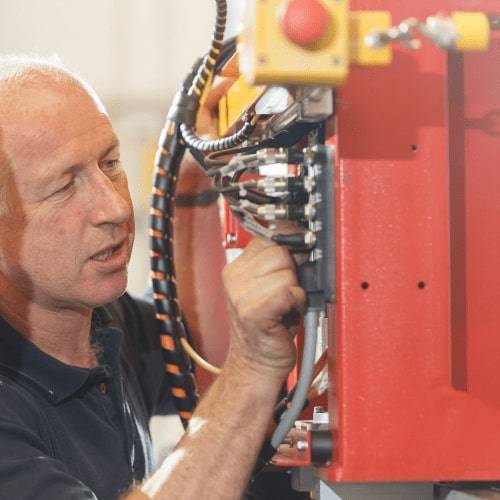
Precision machining of machine gantry structure at Nottingham facility
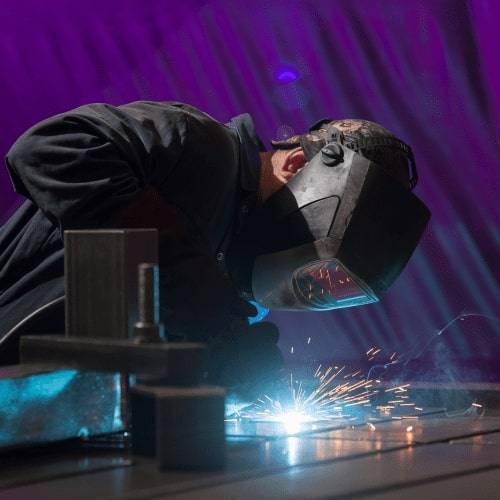
In-house welding of heavy plate CNC machine frames
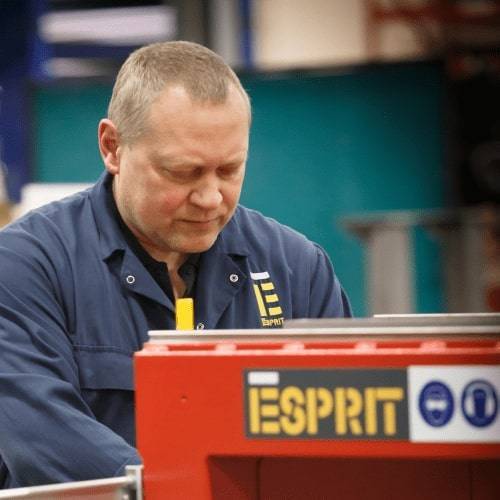
Final assembly and testing of multi-torch CNC cutting gantry
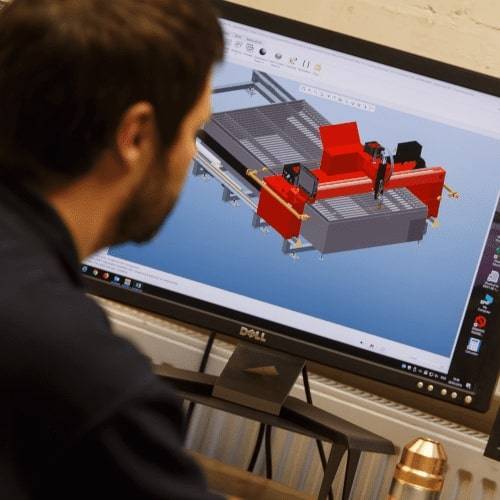
Software development and post-processor tuning at Esprit Automation
Factory Audit

Inside Our Nottingham Manufacturing Plant

When you invest in an Esprit Multi-Head Oxyfuel Cutting Machine, you are buying direct from the manufacturer. Our facility at Plackett Mill in Sandiacre combines modern CAD/CAM software development with heavy structural steel fabrication under one roof.

Every machine beam is stress-relieved, precision machined along its entire length, and aligned with laser instruments to ensure true linear travel across long bed lengths. Prior to international despatch, your machine undergoes rigorous cut testing on actual production plate to verify edge angularity, pierces, and CNC motion sync.

  • Full material and electrical component traceability
  • Custom rail lengths and cutting width options (up to 6m+ span)
  • Direct factory support and fast-response global spare parts routing
Contact Us
Verified User Experience

Trusted by Leading Steel Fabricators & Service Centers

“Having dealt with Esprit for 8 years now we have purchased 2 CNC cutting machines from them and found them to be extremely well built. The cut quality is excellent from the thinnest to the thickest plates. From sales and management to technical and service all of their team are knowledgeable, helpful and dependable.”
John Ready, Operations Manager at Eggleston Steel Ltd John ReadyOperations Manager, Eggleston Steel Ltd
“Thanks to our four Esprit machines the quality and quantity of structural metal parts being produced have increased exponentially. The machine reliability in multi-shift operations is exceptional.”
Toby Massey, Managing Director of BM Catalysts Ltd Toby MasseyManaging Director, BM Catalysts Ltd
“Your machine has revolutionised our business. It's just coming up to the 2 year anniversary of the installation and already the machine has paid for itself. I cannot fault Esprit in the slightest for the after-sales service.”
Barry Caulkett, Director of BA Caulkett Ltd Barry CaulkettDirector, BA Caulkett Ltd
Global Consultation & Quoting

Optimize Your Heavy Plate Cutting Efficiency Today

Whether you require a dedicated 8-torch multi-head oxyfuel flame cutter or a hybrid plasma-flame gantry, our engineering team is ready to analyze your technical drawings, calculate consumable operating costs, and deliver a detailed commercial proposal.

Direct Sales Line: +44 (0)115 939 1888 · Esprit Automation Ltd, Nottingham, NG10 5EE, United Kingdom