Engineering Insights Frequently Asked Questions: Industrial Fume Filtration Systems
Answers to key questions asked by global procurement professionals, factory safety auditors, and thermal cutting operators.
Why is a dedicated Industrial Fume Filtration System necessary for thermal metal cutting?
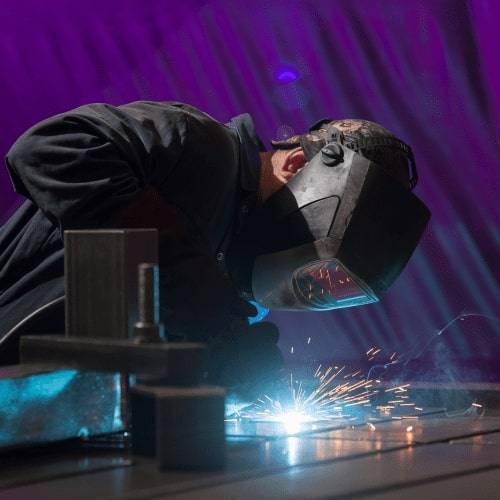
Thermal metal cutting (plasma, laser, oxy-fuel) vaporizes metal alloys, generating ultra-fine particulate matter (PM0.1 to PM2.5) along with hazardous gases such as ozone, nitrogen oxides, and hexavalent chromium when processing stainless steel. A purpose-built industrial fume filtration system captures these airborne toxins at the point of origin, ensuring health compliance (OSHA, HSE COSHH LEV, ISO 21904), preserving worker lung health, and preventing conductive metal dust from settling on expensive CNC electronics.
How does a zoned downdraft extraction table optimize fume filtration efficiency?
Zoned downdraft tables divide the cutting area into isolated mechanical channels under the cutting bed. Pneumatic dampers open only in the specific zone where the CNC cutting torch is actively piercing or cutting metal. By focusing total suction airflow (CFM or m³/h) solely on the cutting zone rather than the entire bed, the required extraction fan size and electrical power consumption are reduced by up to 60% while maintaining maximum capture velocity.
What filter media type is required for high-definition plasma cutting of stainless steel and aluminium?
For high-definition plasma cutting of stainless steel, aluminium, and galvanized sheet, we specify surface-loading ePTFE (expanded polytetrafluoroethylene) membrane nanofiber cartridge filters. These media prevent sub-micron particulates from embedding into the filter substrate (deep-bed loading). Instead, dust remains on the outer surface where automated reverse pulse-jet compressed air blasts clean the filter cartridges efficiently, extending filter life to several thousand operational hours.
How do Esprit filtration systems prevent spark ignition and filter fires?
Safety is paramount in thermal cutting extraction. Every Esprit industrial fume filtration system features multi-stage inline spark arrestors. Heavy molten spatter and glowing embers pass through mechanical baffle plates, centrifugal spark traps, or spark-arresting mesh filters before reaching the main filter chamber. This drops hot sparks into a sealed slag tray well away from combustible cartridge media.
Can filtered air be recirculated back into the factory building to save heating costs?
Yes, provided local regulatory standards (such as European W3 or UK HSE rules) are satisfied and the filter unit is certified for recirculating clean air. Systems equipped with high-efficiency PTFE cartridge filters and secondary absolute HEPA safety filters yield particulate separation efficiencies greater than 99.997%, allowing clean, warm air to return to the plant, drastically reducing workshop winter heating costs.
How does Esprit Automation support international customers with filtration system installation?
Esprit ships turnkey CNC cutting and filtration systems to more than 30 countries worldwide. We configure electric motors for local global voltages and frequencies (e.g., 400V/50Hz, 480V/60Hz, 220V 3-Phase). Support is managed by our factory-trained engineers via remote CNC diagnostic telemetry, detailed ductwork installation schematics, video technical support, and global air-freight dispatch of replacement cartridges and spare parts from our Nottingham headquarters.
How frequently do filter cartridges in an industrial fume filtration system require replacement?
Filter cartridge lifespan depends on daily duty cycle, metal thickness, material type (mild steel vs stainless steel), and cutting process. Thanks to automatic differential pressure pulse-jet cleaning and surface-loading nanofiber media, typical cartridge lifespans range from 2,000 to 4,000 cutting hours under standard single or double-shift operating conditions. Differential pressure gauges on the control panel notify operators when cartridge replacement is due.