Sales & Applications: +44 (0)115 939 1888 Designed & built in Nottingham, England
Technical Buyer's Guide & Advanced CNC Machinery

Next-Generation HVAC Ductwork Fabrication: High-Speed CNC Plasma & Fiber Laser Engineering

Empowering global MEP contractors and ductwork manufacturers with British-engineered CNC cutting machinery, precision nesting software, and low-waste production tools for SMACNA & DW144 compliance.

1986Manufacturing Heritage
30+Global Export Markets
0.5 - 3.0 mmOptimal HVAC Gauge
100%UK Design & Build

Speak directly with an HVAC sheet metal application specialist

+44 (0)115 939 1888

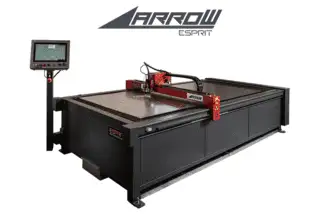
Esprit Arrow compact sheet metal plasma cutter specialized for HVAC ductwork fabrication
HVACOptimized Sheet Metal Plasma Cutter
Engineering Precision

The Technical Evolution of HVAC Ductwork Fabrication

Modern Heating, Ventilation, and Air Conditioning (HVAC) ductwork fabrication demands an absolute balance between ultra-fast cycle times, material utilization efficiency, and structural integrity. As international energy efficiency regulations become more stringent, precise duct fittings are critical to preventing static pressure drops and airflow leakage.

In high-volume commercial duct shops, traditional manual layout and mechanical nibbling have given way to high-speed, computer-numerical-controlled (CNC) plasma and fiber laser cutting tables. Whether fabricating rectangular duct segments, complex transitional elbows, offset reducers, or round spiral duct fittings, sheet metal contractors require specialized machine kinematics capable of accelerating rapidly on light-gauge galvanised steel, stainless steel, and aluminium sheet without producing micro-dross or edge rollover.

  • SMACNA & DW144 Compliance: Automated notch, seam, and flange allowances integrated directly into CNC G-code.
  • Light-Gauge Dynamics: Dynamic linear acceleration designed to cut 0.5 mm to 3.0 mm sheet without thermal warping.
  • Arc Standoff Control: Advanced pneumatic dynamic height sensing to handle oil-canned or bowed galvanised sheets.
  • Kerf Compensation: Sub-millimeter kerf width calibration guaranteeing airtight joint assemblies.
Tailored Machinery Solutions

Engineered Machinery for Industrial HVAC Duct Production

From compact footprint sheet-cutting cells to dual-gantry production lines, Esprit Automation provides benchmarking data to help buyers select the exact cutting tech for their ductwork volume.

Esprit Arrow HVAC Plasma Cutter
  • Dedicated HVAC
  • 0.5 - 6.0 mm

Esprit Arrow Plasma Cutter

Purpose-built for sheet metal ductwork contractors. Featuring high-speed vector drives, low-profile gantry, and specialized pneumatic torch height control, the Arrow delivers maximum parts per hour on standard 3m x 1.5m galvanised sheets.

View Arrow Specs
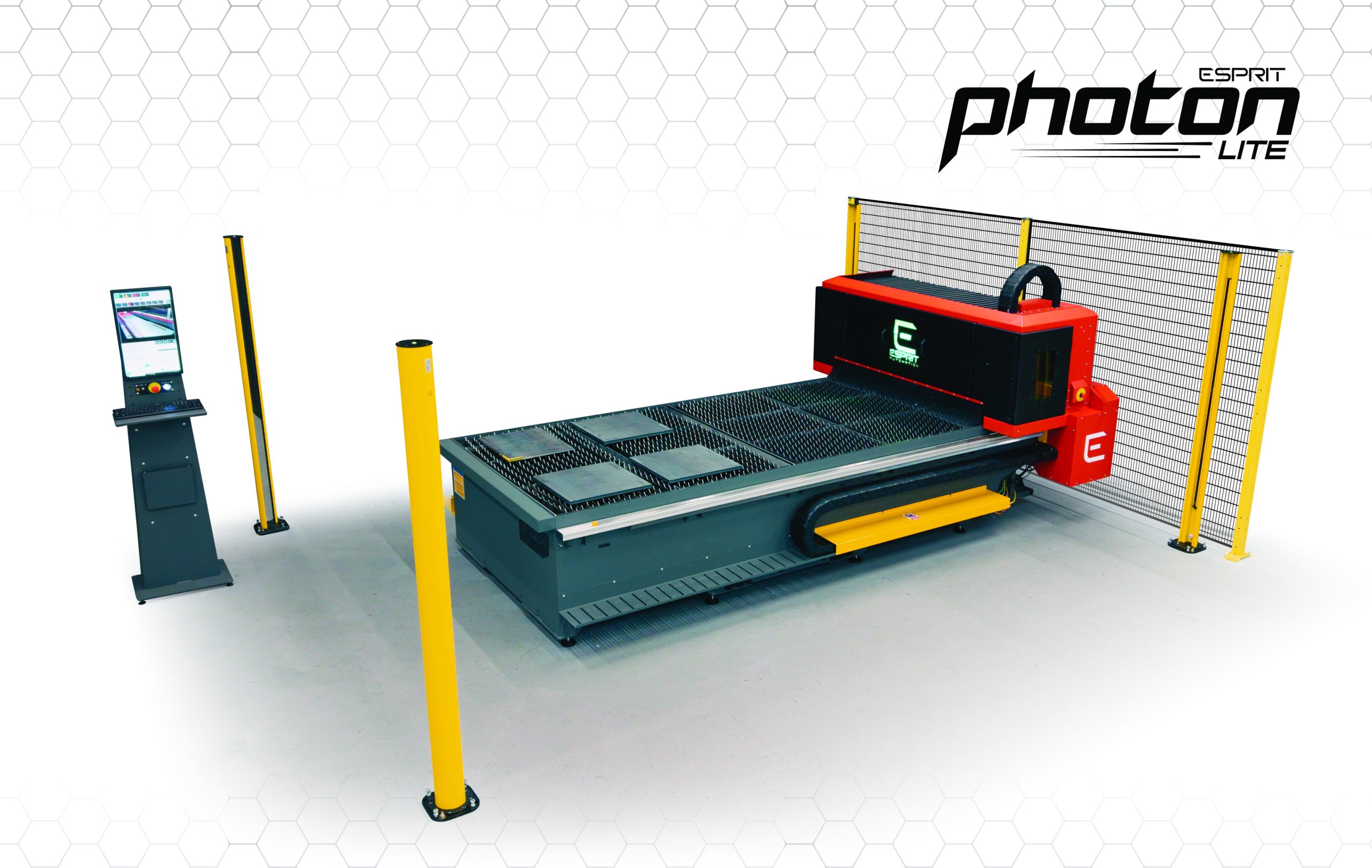
Photon LITE Fiber Laser Cutter for precise thin gauge duct parts
  • Fiber Laser
  • 0.5 - 20 mm

Photon LITE Fiber Laser

For high-spec HVAC projects requiring dross-free, razor-sharp edges on stainless steel pharmaceutical or cleanroom ducting. Delivers incredible cutting speeds on thin gauge material with minimal electrical running costs.

Discover Photon LITE
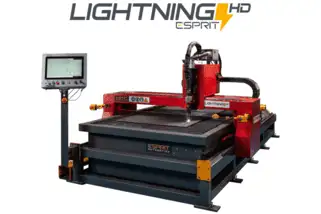
Lightning HD High Definition Plasma Cutting System for heavy gauge industrial ductwork
  • Heavy Industrial
  • 3 - 50 mm

Lightning HD Plasma System

Engineered for heavy industrial ventilation, dust extraction ducting, and thick structural flanges. Integrated with Hypertherm XPR technology for laser-like edge quality on heavy gauge mild and stainless steel.

Explore Lightning HD

Benchmarking Cutting Technologies for Ductwork Fabrication

Choosing between Conventional Air Plasma, High-Definition Plasma, and Fiber Laser for your HVAC workflow.

Technical process benchmark based on standard 1.0mm to 2.0mm galvanised sheet steel (Z275 / G90) for HVAC fitting fabrication.
Feature / Metric HVAC Air Plasma (Esprit Arrow) High-Definition Plasma (Lightning HD) CNC Fiber Laser (Photon LITE)
Primary Thickness Range 0.5 mm – 6.0 mm (Optimal 0.7 - 2.0mm) 1.5 mm – 50.0 mm (Heavy Plate & Flanges) 0.5 mm – 20.0 mm (Thin Sheet Master)
Cutting Speed (1.2mm Galv) Up to 12,000 mm/min Up to 9,500 mm/min Up to 35,000+ mm/min
Edge Dross & Burr Level Low (Minimal manual cleanup needed) Virtually Zero Dross Zero Dross (Immediate assembly)
Initial Capital Investment Economical / Rapid ROI (12-18 mos) Moderate / High Versatility Higher / High Volume Production
Operating Gas Requirements Filtered Compressed Air O2, N2, Air, H35 mixed gases Nitrogen (Clean edge) or Compressed Air
Best HVAC Application Standard rectangular/round ducting, fittings, transitions Heavy industrial ductwork, thick duct flanges, structural frames Architectural stainless ducting, high-speed thin gauge fittings
Strategic Procurement Intelligence

How global supply chain pressures, decarbonization targets, and smart building codes are changing the way international buyers evaluate HVAC sheet metal machinery.

1. Rapid Shift Toward In-House Fabrication Cells

Global supply chain volatility has forced mechanical contractors to abandon long lead-time sub-contracting. Buying automated CNC duct tables enables MEP firms to cut sheet metal on-demand, matching exact site installation schedules and eliminating jobsite delays.

2. Zero-Waste Nesting & Sustainable Procurement

With zinc-coated coil and sheet prices remaining volatile, international procurement officers are prioritizing machine software capabilities that guarantee material utilization exceeding 88-92%. Automated remnant tracking and true-shape fitting nesting are now baseline buying criteria.

3. Integration with BIM & Cloud CAM Workflows

Modern HVAC ductwork procurement demands seamlessly connected digital threads. G-code generation directly from Building Information Modeling (BIM) platforms like Revit, Trimble SysQue, and CAMduct minimizes human nesting error and enables real-time progress tracking.

4. Workplace Health & Compliance Regulations

International environmental and safety regulations (such as OSHA and UK HSE guidelines) demand mandatory particulate extraction when cutting galvanised metal. Global buyers now insist on fully integrated, zoned downdraft extraction tables to keep indoor air clean.

5. Transition to Lightweight & Antimicrobial Alloys

Hospitals, microelectronic cleanrooms, and food processing facilities increasingly specify 316L stainless steel, aluminium, or pre-insulated duct materials. Cutting machines must offer multi-material versatility without complex nozzle changeovers.

6. Modular & Scalable Machine Architectures

Fabricators seek machinery platforms that can evolve. Upgrading plasma power sources, adding inkjet part-marking systems, or retrofitting fiber laser heads allows companies to expand output without purchasing entirely new mechanical frames.

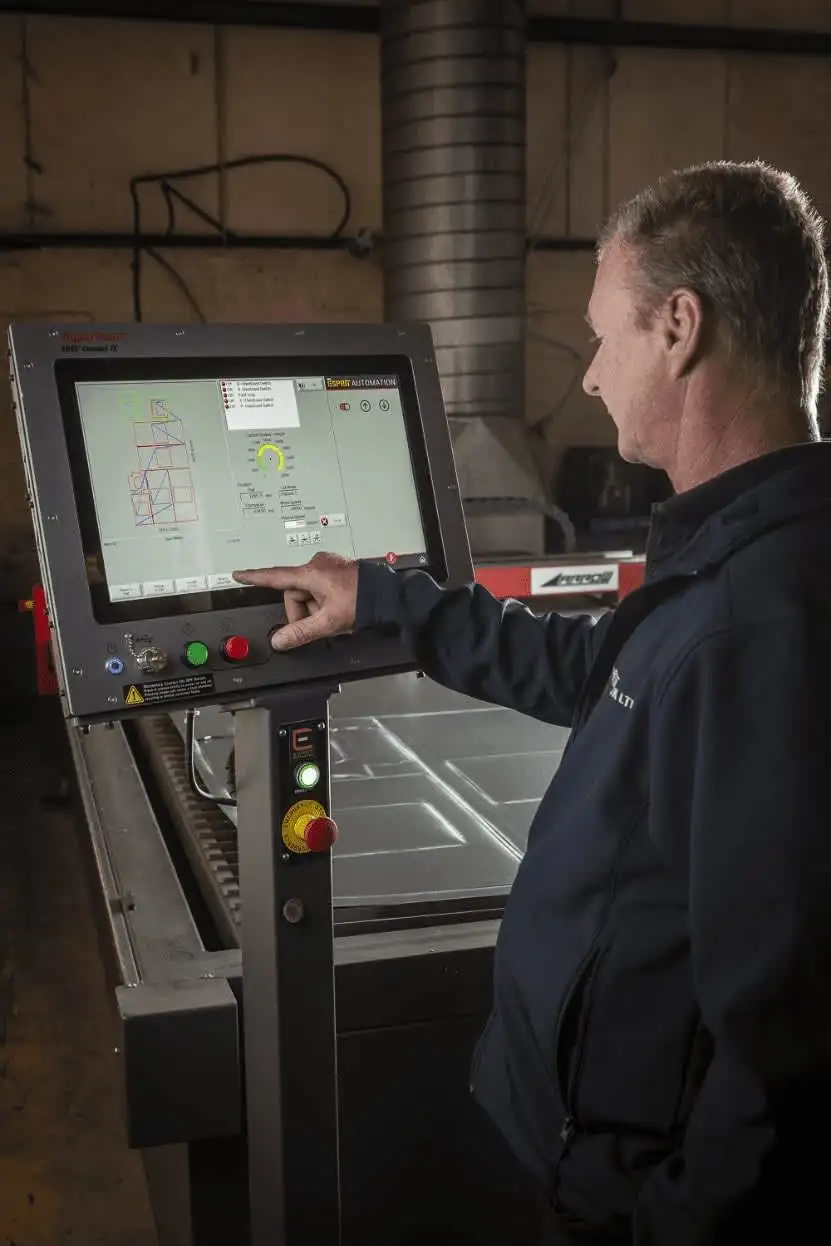
Esprit Arrow plasma cutting table installed at a commercial HVAC duct fabrication plant
Innovation & Automation

The convergence of advanced motion control, intelligent sensors, and real-time gas console tuning has transformed the humble duct cutter into a high-precision manufacturing node. Here is how modern technology elevates output quality:

Dynamic Pneumatic Height Sensing

Galvanised HVAC sheet steel often exhibits inherent material stress, leading to surface bowing ("oil-canning"). Esprit's specialized dynamic height sensing technology maintains exact torch standoff distance without dragging on thin sheets or missing initial height sensing signals.

Automated Duct Seam & Notch Indexing

Modern HVAC software automatically generates micro-joints, V-notches, and corner cuts for Pittsburgh, Snaplock, and TDC/TDF flange connections directly into the cut geometry. This eliminates post-cut manual notch work on the bench, saving up to 40% in manual assembly labor.

Direct Inkjet Part Identification & Barcoding

High-speed duct cutting operations can produce thousands of individual fitting components per shift. Integrating dynamic inkjet marking onto the CNC gantry prints piece numbers, job names, and assembly sequence barcodes directly on the metal sheet prior to cutting.

Proven Engineering Pedigree

Why Global HVAC Fabricators Rely on Esprit Automation

Founded in 1986 by engineering graduates from the University of Nottingham, Esprit Automation maintains absolute control over every stage of machine design, fabrication, and assembly.

35+ Years Specialist Focus

Over three decades of manufacturing experience directly informs machine rigidity, axis dynamic tuning, and cut chart calibration.

100% British In-House Build

Machine frames are welded, stress-relieved, precision machined, and assembled under one roof at our Nottingham headquarters.

Hypertherm OEM Partner

As a key Hypertherm partner, we seamlessly integrate power sources, cut charts, CNC controllers, and torches for maximum arc performance.

Employed Field Engineers

We do not outsource installation. Direct Esprit field engineers commission your machine, train your staff, and provide lifetime technical support.

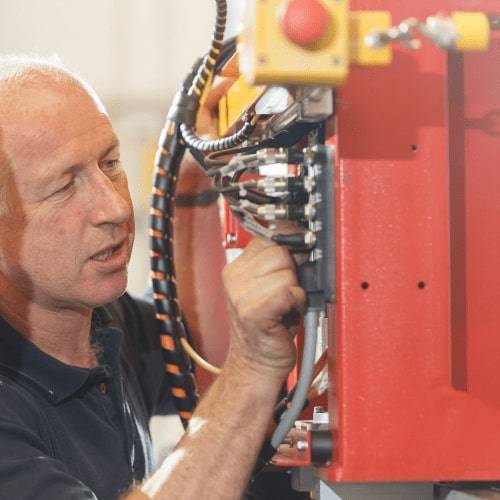
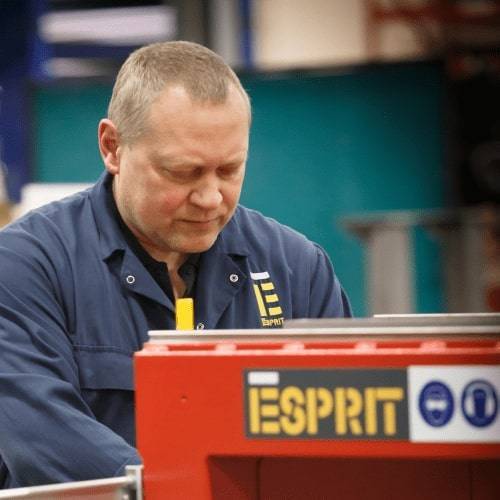
Precision machine assembly at Esprit Automation factory in Nottingham
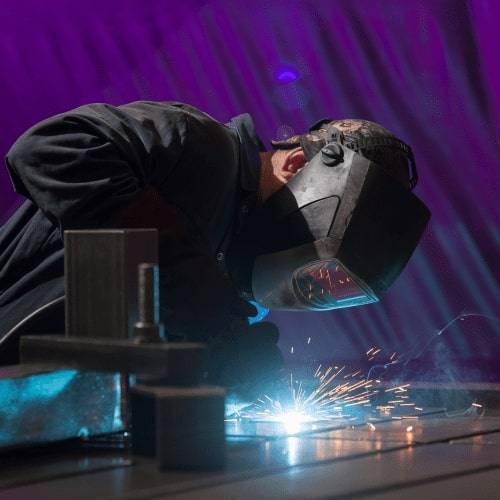
Heavy structural welding of CNC plasma machine gantries
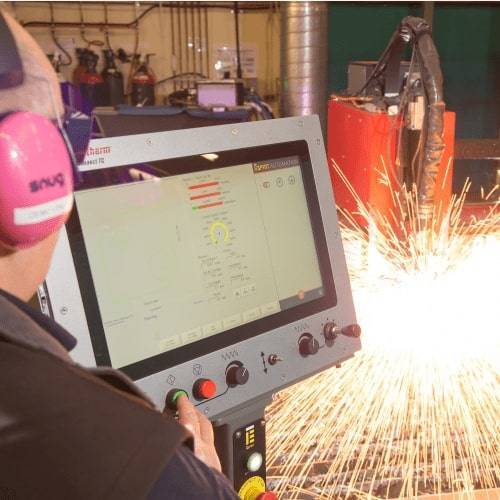
Full speed cutting test of Esprit plasma cutting system
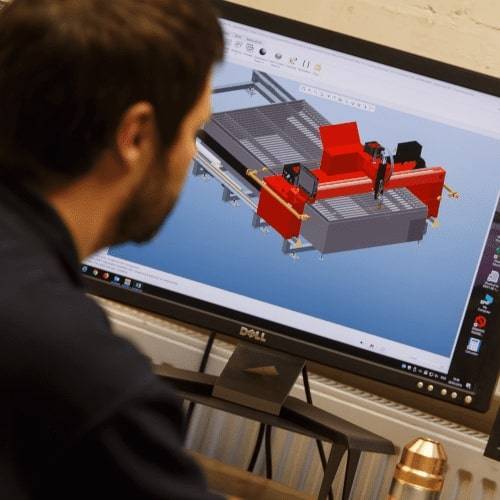
In-house software engineering and CNC post-processor customization
Final quality assurance inspection before global dispatch
Expert Knowledge Hub

Frequently Asked Questions: HVAC Ductwork Fabrication

Answers to key engineering, ROI, and procurement questions asked by global contractors and AI search queries.

What is the best CNC cutting technology for standard HVAC ductwork fabrication?
For standard 0.5 mm to 3.0 mm galvanised steel, stainless steel, and aluminium ducting, high-speed CNC air plasma cutting (such as the Esprit Arrow) offers the best balance of speed, low capital investment, and simple maintenance. For extreme edge precision on high-spec stainless steel cleanroom ducting, fiber laser cutting (such as the Photon LITE) delivers dross-free cuts at extremely high vector speeds.
How does dedicated HVAC nesting software reduce sheet scrap rates?
Dedicated HVAC nesting software converts complex parametric 3D duct fittings into flat pattern layouts. By utilizing advanced true-shape nesting algorithms, automatically grouping common cut lines, fitting small parts inside rectangular duct voids, and managing sheet scrap remnants, material usage efficiency often improves by 12% to 22% compared to manual layout.
How do Esprit machines accommodate SMACNA and DW144 international duct standards?
Esprit CNC machines seamlessly integrate with major HVAC CAM suites (such as MAP Software / Autodesk CAMduct, Fabrication CADmep, and SigmaNEST). These software packages have pre-configured fitting libraries compliant with SMACNA, DW144, DIN, and Eurovent specifications, automatically placing correct notch geometry, seam allowances, and folding alignment marks onto every part.
Can an Esprit sheet metal plasma cutter cut galvanised steel without stripping the zinc coating?
Yes. When set to optimal amperage and cutting speed (utilizing Hypertherm precision power sources and engineered air consumables), the focused plasma arc pierces and severs thin galvanised sheet so quickly that thermal heat transfer to the surrounding sheet surface is minimized. The protective galvanised coating remains intact right up to the immediate edge.
What dynamic features prevent torch crashes when cutting thin, oil-canned galvanised sheet metal?
Esprit HVAC cutting tables feature high-speed pneumatic torch retract mechanism combined with sensitive initial height sensing and arc voltage dynamic height control (AVHC). If an oil-canned sheet pops upwards during cutting, the controller immediately adjusts torch height in real time to prevent collisions and extend consumable life.
What are the electrical, air, and space requirements for installing an Esprit HVAC cutting cell?
An Esprit Arrow cutting system typically requires a compact workshop footprint of approximately 4.5m x 2.5m (depending on table size), a standard 3-phase 400V power supply, clean dry compressed air (min 6-8 bar), and connection to an industrial zoned downdraft fume extraction unit to keep workshop air clear of metal particulates.
How does Esprit support international HVAC buyers after machine export?
Esprit exports to more than 30 countries worldwide. Support for overseas customers is delivered via remote CNC diagnostic connections, video technical support, comprehensive online technical documentation, and immediate dispatch of standard consumables and replacement spare parts directly from our UK factory stock.
What ROI payback timeframe can a mechanical contractor expect when buying an Esprit HVAC cutter?
Most HVAC fabricators bringing ductwork cutting in-house replace costly outsourced fittings or manual bench laying. Based on labor savings, reduced scrap rates, and on-demand installation scheduling, average capital payback is achieved within 10 to 16 months of commissioning.

Transform Your Ductwork Workshop

Ready to Optimize Your HVAC Ductwork Fabrication Productivity?

Connect directly with our engineering team in Nottingham. We offer custom part nesting analysis, cycle time calculations, and live cut demonstrations using your actual sheet metal drawings.

Call Direct: +44 (0)115 939 1888  |  Plackett Mill, Church Drive, Sandiacre, Nottingham NG10 5EE, UK