Choosing a Multi-Head Oxyfuel Cutting Machine requires more than comparing prices or counting torch heads. The decision affects cutting speed, plate utilization, gas consumption, operator safety, and production consistency. According to the World Steel Association’s World Steel in Figures 2024, global crude steel production reached approximately 1.89 billion tonnes in 2023. That scale reflects a demanding fabrication environment, where even small cutting delays can create costly bottlenecks.
A suitable machine should match your daily plate thickness, material grade, table dimensions, and required cutting capacity. Check whether the system supports independent torch adjustment, reliable flame control, automatic height sensing, and compatible CNC software. ISO 9013 provides recognized quality classifications for thermally cut surfaces, so buyers should request documented test results rather than trusting general claims. The IEA’s Iron and Steel Technology Roadmap also highlights the sector’s pressure to improve energy efficiency and reduce emissions. Gas efficiency matters.
Details become visible on the shop floor. Watch the torch pierce a 30-millimeter steel plate. Observe slag buildup, edge squareness, flame stability, and how quickly an operator can replace a nozzle. A machine that looks powerful in a brochure may perform poorly with uneven plates or frequent job changes. There is no perfect configuration. Your first specification may still be wrong. Review actual production records, ask for a live cutting demonstration, and verify service response times before purchasing. This practical evidence supports a more reliable choice of Multi-Head Oxyfuel Cutting Machine.
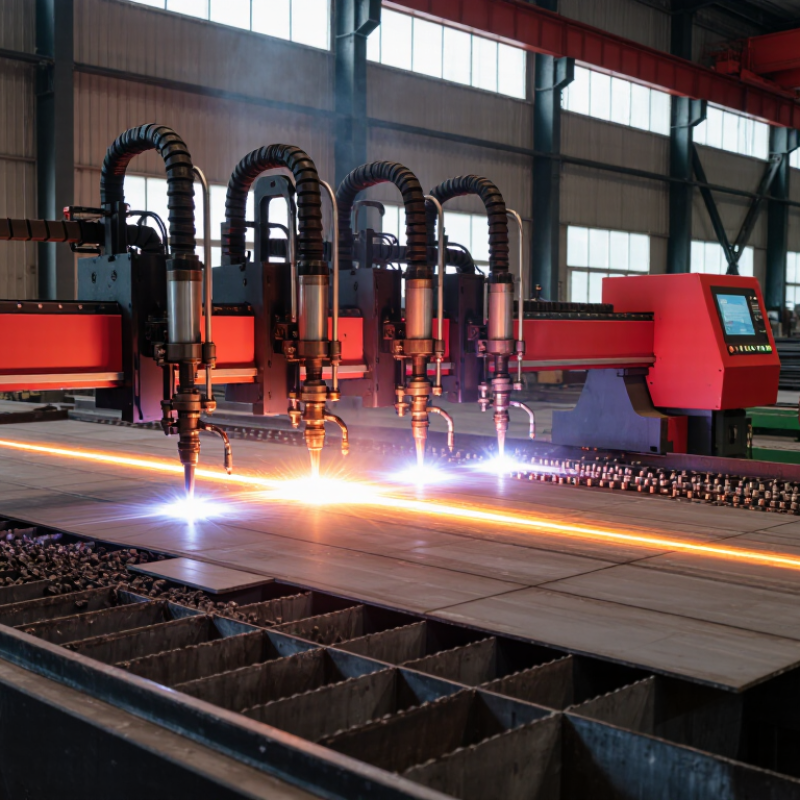
Oxyfuel cutting is a practical choice for carbon steel above 6 mm. The process uses heat and oxygen to remove steel efficiently. It is less suitable for stainless steel or aluminum because their oxides resist clean separation. The six-millimetre line is useful, but not sacred. Plate chemistry, surface scale, and cut quality can change the result. According to the World Steel Association’s World Steel in Figures 2024, global crude steel production reached 1,892.1 million tonnes in 2023. That scale confirms carbon steel remains a major fabrication material. It also explains why stable, high-output cutting equipment still matters.
For a multi-head machine, match the torch count to daily plate volume. More heads can reduce cycle time, but spacing must suit your common plate widths. Check oxygen pressure stability, kerf control, ignition reliability, and automatic height sensing. ISO 9013:2017 evaluates thermal-cut quality through criteria such as perpendicularity, surface roughness, and dimensional tolerance. A machine should support your required quality class, not only advertise fast cutting. In real workshops, poor nozzle alignment can waste more time than a slower cutting speed. I would not assume maximum speed always means better productivity.
Tips: Test samples using your actual steel thicknesses. Record piercing time, oxygen use, slag adhesion, and edge squareness. Leave room for operator judgment. Reports provide useful benchmarks, but site conditions remain imperfect.
Choosing a multi-head oxyfuel cutting machine starts with plate thickness, not head count. In field trials, operators often compare regulator readings before checking pressure at the torch. That can mislead. Oxygen pressure must remain stable while several heads cut simultaneously. A machine rated for 0.3–0.8 MPa may still struggle if its pipeline, valves, or oxygen supply cannot sustain flow.
Match the working pressure to the thickness table supplied for each nozzle. Around 0.3 MPa may suit thinner carbon steel with the correct nozzle and moderate cutting speed. Thicker plate usually needs higher pressure, sometimes approaching 0.8 MPa. Do not treat this range as universal. Plate chemistry, nozzle design, preheat flame, and cutting speed affect the result. Watch the underside. Heavy dross, a rounded kerf, or delayed piercing may signal poor oxygen delivery or incorrect adjustment.
Test the thickest routine plate with every planned torch operating. Measure pressure during cutting, not only before ignition. Check samples for straight kerfs and clean separation. Keep capacity margin. Running near the upper limit can reduce stability. Closely spaced heads may also heat neighboring areas and affect cut quality. I once selected a machine from nominal pressure alone. The result was workable, but slower than expected. Record thickness, nozzle size, pressure, speed, and gas consumption before purchase.
When choosing a multi head oxyfuel cutting machine, fuel gas selection directly affects heat concentration, speed, and edge quality. Oxyacetylene flames can reach about 3,480°C, while oxypropane flames reach approximately 2,820°C. These figures are engineering reference values, not guaranteed cutting temperatures. NIST thermochemical data shows that flame temperature changes with oxygen ratio, pressure, nozzle design, and atmospheric heat loss.
The hotter oxyacetylene flame concentrates heat rapidly on thin and medium steel plates. It can support quick piercing and narrow heat-affected zones. Oxypropane produces a broader, softer flame. It often suits heavier plates and continuous multi-head operation, where fuel cost and cylinder logistics matter. The U.S. Department of Energy’s industrial efficiency guidance identifies combustion control and gas delivery as major performance factors. More heads also increase oxygen demand. That detail is easy to underestimate.
Tips: Match each torch to the plate range, not only the flame temperature. Check oxygen pressure at the farthest head during simultaneous cutting. A practical test should record piercing time, kerf width, dross, and gas consumption. OSHA’s Technical Manual also stresses ventilation, leak checks, flashback protection, and trained operation. My field experience suggests oxyacetylene feels faster at first, but propane can become more economical during long production runs. Still, results vary. The “best” gas may change after one nozzle change.
How to Choose a Multi Head Oxyfuel Cutting Machine?
Size Multi-Head Layout: Balance Head Count, Kerf Spacing, and Table Width
Choosing a multi-head oxyfuel cutting machine starts with the table, not the torch count. More heads are not always better. Each torch needs enough room for its flame, hoses, adjustment hardware, and operator access. Measure the usable table width, then subtract safe edge margins before planning the layout. A crowded arrangement may look efficient, but it can restrict maintenance and increase collision risks.
Kerf spacing must match the parts you cut most often. Narrow spacing supports smaller components, while wider spacing suits large plates and reduces heat concentration between cuts. Remember that the cutting kerf removes material, and the flame heats nearby steel. On thick plate, insufficient spacing may create excessive distortion or uneven cut edges. A practical layout should also allow torch height adjustment without disturbing neighboring heads.
In real workshops, head count is often chosen too early. I have seen machines with unused torches because the table could not support their effective working width. That is an expensive lesson. Review typical plate sizes, cutting patterns, and daily production targets. Leave room. Test the proposed spacing with actual nesting samples and a trial plate. Small changes in head position can improve material yield, access, and cutting stability. The best layout is not the densest one; it is the one operators can control consistently.
This planning example uses a 3,000 mm table, 100 mm edge clearance on both sides, a 150 mm torch-envelope allowance, and 250 mm center-to-center spacing between adjacent heads. Increasing the head count raises throughput potential, but it also consumes more usable table width and leaves less room for part nesting. Final spacing should be checked against plate thickness, torch body dimensions, kerf width, heat input, and the required cut profile.
How to Choose a Multi Head Oxyfuel Cutting Machine?
Quality starts with the cut edge, not the number of torches. ISO 9013:2017 defines five thermal-cutting quality ranges, covering tolerances, perpendicularity, and surface roughness. Ask the supplier for sample reports showing the requested ISO range on your actual steel thickness. A clean edge should show limited drag lines, stable kerf width, and minimal dross. Measure the edge.
Oxygen purity deserves equal attention. Industrial cutting commonly specifies at least 99.5% oxygen , because contamination can reduce flame temperature and increase consumption. The Compressed Gas Association’s CGA G-4.3 guidance emphasizes oxygen quality, compatible equipment, and contamination control. Check purity at the machine inlet, not only from the cylinder certificate. Small leaks matter. Use oxygen-rated regulators, hoses, flashback arrestors, and documented leak checks. OSHA 1910.253 also highlights safe fuel-gas handling, ventilation, and flashback protection.
Multi-head systems can improve output, but poor synchronization may create uneven kerfs across identical plates. The World Steel Association reported approximately 1.89 billion tonnes of crude steel production in 2023 , showing why repeatable cutting remains important. Still, production volume should not replace inspection. One weakness in my own checklist is relying too heavily on supplier demonstrations. Real workshop dust, plate scale, and operator changes can alter results. Request a witnessed trial, record oxygen pressure and purity, then compare several cut edges against ISO 9013 requirements. Do not guess.
Oxyfuel cutting usually suits carbon steel thicker than 6 mm. The six-millimetre limit is not absolute. Plate chemistry, scale, and required edge quality can change results. Stainless steel and aluminum are usually less suitable.
Match the head count to daily plate volume. More heads can shorten cycle time. However, too many heads may crowd the table. Review common plate widths, cutting patterns, and production targets.
Measure the usable table width first. Subtract safe edge margins. Allow space for hoses, adjustments, maintenance, and operator access. A crowded table can cause collisions. Leave room.
Match spacing to your most common parts. Narrow spacing suits smaller components. Wider spacing suits large plates and reduces nearby heat concentration. Test the layout with real nesting samples.
Oxyacetylene flames can reach about 3,480°C. Oxypropane flames reach approximately 2,820°C. Oxyacetylene may pierce thin or medium steel quickly. Oxypropane often suits heavier plates and longer production runs.
No. Flame temperature is only one factor. Oxygen pressure, nozzle design, plate thickness, and heat loss also matter. A hotter flame may feel faster initially. That assumption can fail.
Test actual steel thicknesses before purchase. Record piercing time, kerf width, oxygen use, slag adhesion, and edge squareness. Check the farthest head during simultaneous cutting. Results may differ from brochures.
Check ventilation, gas leaks, flashback protection, and reliable ignition. Confirm stable oxygen delivery to every head. Operators need practical training. Small setup mistakes can create serious problems. Review them.
Choosing the right Multi-Head Oxyfuel Cutting Machine starts with defining the material and production requirements. Oxyfuel cutting is generally most suitable for carbon steel thicker than 6 mm, so material type and thickness should be confirmed first. Compare the machine’s oxygen pressure range, typically around 0.3–0.8 MPa, with the required cutting capacity and expected plate thickness. Fuel gas selection also matters: oxyacetylene produces a flame of approximately 3,480°C, while oxypropane reaches about 2,820°C, offering different performance and operating-cost considerations.
The multi-head layout should balance the number of cutting heads, kerf spacing, and table width to improve productivity without limiting plate positioning or creating interference between heads. Finally, verify cutting quality and operational safety by checking ISO 9013 tolerance requirements, maintaining oxygen purity of at least 99.5%, and ensuring that pressure control, ventilation, flame protection, and emergency shutoff systems are properly configured. A well-matched machine should deliver consistent cuts, efficient material usage, and safe long-term operation.