Choosing a Sheet Metal Plasma Cutter is not simply a matter of selecting the highest amperage. The right machine must match your metal thickness, cutting frequency, workshop space, power supply, and accuracy expectations. A compact cutter may handle thin steel beautifully, yet struggle with thick stainless plate. A powerful model may perform well, but waste energy during small repair jobs.
Plasma-cutting educator Jim Colt has said, “Plasma cutting is a system, not just a torch.” That point deserves attention. Clean cuts depend on more than the cutter itself. Air pressure, moisture control, consumable condition, travel speed, and grounding all affect the result. A rusty workpiece, a wet compressor line, or a worn electrode can leave rough edges and visible dross. Small details matter.
This guide will examine the practical decisions behind buying a Sheet Metal Plasma Cutter. It will compare amperage ratings, duty cycles, pilot-arc functions, cut capacity, CNC compatibility, and compressed-air requirements. It will also consider operator experience. Beginners often trust advertised maximum thickness, although recommended cut capacity is usually more useful. I have seen capable machines produce disappointing edges because their settings were poorly matched. That is an important limitation to remember.
There is no perfect cutter for every workshop. The best choice balances performance, maintenance, portability, operating cost, and realistic production needs. By focusing on these factors, buyers can avoid paying for unused power and choose equipment that delivers stable, repeatable cuts.
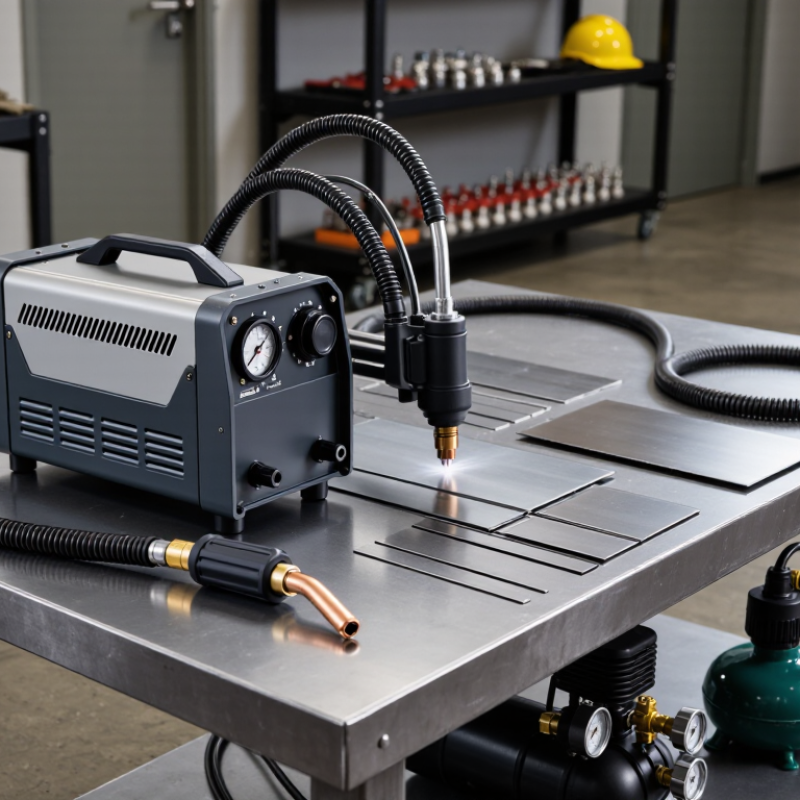
How to Choose a Sheet Metal Plasma Cutter?
Define Your Sheet Metal Cutting Requirements
Defining your cutting requirements prevents expensive mistakes and improves daily production reliability. Start with the material you cut most often. Mild steel, stainless steel, and aluminum require different settings and cutting speeds. Record the actual thickness range, not just the maximum thickness listed in a catalog. A specification sheet can look impressive. Measure twice. My first estimate was wrong because painted panels were thicker than expected. A slower cut also produced cleaner edges than the recommended speed.
Decide how precise your parts must be. Decorative panels may tolerate light dross, while machine brackets often need cleaner edges. Note the smallest holes, sharpest corners, and longest continuous cuts. Heat can warp thin sheet metal, especially during repeated cuts. Ask whether you need manual control or automated table compatibility. Compressed air quality matters too. Moisture and oil can damage consumables and weaken the arc. A basic filter may not be enough in a humid workshop.
Match the cutter to your real workload. A machine rated for occasional cutting may struggle during long production runs. Check duty cycle, available power, torch reach, and replacement consumable costs. Your workspace matters. Measure the table, ventilation path, and storage area before purchasing. Keep safety requirements practical, including eye protection, gloves, hearing protection, and fire control. Test cuts on your actual material remain essential. Record amperage, speed, and air pressure, then adjust one setting at a time. Even experienced operators sometimes chase perfect edges and overlook production time.
| Requirement | What to Define Before Purchase | Typical Target for Light-Duty Work | Typical Target for General Fabrication | Typical Target for Heavy-Duty Production | Why It Matters |
|---|---|---|---|---|---|
| Material Type | Identify the metals you will cut most often. | Mild steel, stainless steel, and aluminum. | Mild steel, stainless steel, aluminum, galvanized steel, and painted sheet. | Frequent cutting of carbon steel, stainless steel, aluminum, and other electrically conductive metals. | Plasma cutting requires electrically conductive material. Material type affects cutting speed, amperage, gas selection, and edge appearance. |
| Common Material Thickness | Measure the thickness used in at least 80% of your jobs. | 0.8–6 mm. | 1–16 mm. | 3–32 mm or more. | A machine should operate comfortably at your normal thickness, not only reach its maximum rating occasionally. |
| Maximum Cutting Thickness | Separate the maximum production thickness from the occasional severance thickness. | Recommended production range: up to 6 mm; occasional severance: approximately 10–12 mm. | Recommended production range: up to 16 mm; occasional severance: approximately 20–25 mm. | Recommended production range: 25–32 mm; occasional severance may exceed 40 mm, depending on the power source and material. | Rated maximum thickness is often a severance rating. For cleaner edges and reliable starts, choose additional capacity above your normal job thickness. |
| Required Cutting Speed | Define the minimum acceptable speed for your most frequent thickness. | Approximately 1,000–3,000 mm/min for thin sheet. | Approximately 500–2,500 mm/min across common fabrication thicknesses. | Approximately 300–2,000 mm/min, with stable output during long production cuts. | Higher speed can improve productivity, but excessive speed may cause incomplete cuts, dross, or a poor edge. |
| Cutting Current | Choose amperage based on thickness, material, duty cycle, and desired speed. | 30–45 A. | 45–80 A. | 80–125 A or higher. | Higher amperage generally supports thicker material, but consumable choice, travel speed, air quality, and torch height also affect results. |
| Pilot Arc Requirement | Decide whether you will cut painted, rusty, expanded, or perforated metal. | Contact start may be sufficient for clean sheet. | Non-contact pilot arc is preferred for painted, rusty, or coated surfaces. | Non-contact pilot arc with reliable arc transfer for repetitive and perforated cutting. | A pilot arc helps start the cut without dragging the torch across the workpiece and can reduce interruptions on imperfect surfaces. |
| Duty Cycle | Estimate the percentage of each 10-minute period during which the cutter will operate at its rated output. | Approximately 35–40% at rated current. | Approximately 50–60% at rated current. | Approximately 60% or higher at rated current. | A higher duty cycle is important for long cuts and repeated production work. Duty-cycle ratings are normally specified at a stated ambient temperature and output current. |
| Input Power | Confirm the available electrical supply at the installation site. | Single-phase 120 V or 230 V, depending on output. | Single-phase 230 V or three-phase supply, depending on the machine design. | Three-phase 230 V, 400 V, or another site-approved industrial supply. | Insufficient voltage, undersized circuits, or long extension cords can cause nuisance tripping, reduced output, and overheating. |
| Compressed Air Supply | Check required pressure, flow rate, filtration, and compressor capacity. | Approximately 4.5–5.5 bar and 100–150 L/min. | Approximately 5–6 bar and 150–250 L/min. | Approximately 5–6.5 bar and 250–400 L/min or more. | Clean, dry air is essential. Moisture, oil, and insufficient flow can shorten consumable life and produce unstable arcs or excessive dross. |
| Air Quality | Determine whether the shop has a dryer, separator, and suitable filtration. | Basic water separator and particulate filtration. | Water separator, particulate filter, and refrigerated or equivalent dryer where humidity is high. | Reliable multi-stage filtration and drying system sized for continuous operation. | Air purity directly affects electrode and nozzle wear, cut consistency, and torch reliability. |
| Consumable Cost | Estimate electrode and nozzle consumption based on operating hours and material thickness. | Low initial cost with occasional consumable replacement. | Balance consumable life, availability, and cost per cutting hour. | Prioritize long consumable life, stable performance, and predictable replacement intervals. | Consumables are operating expenses. Incorrect standoff, poor air quality, and piercing too close to the plate can increase wear. |
| Piercing Capability | Define the thickest material that must be pierced directly rather than started from an edge. | Approximately 3–6 mm piercing capability. | Approximately 10–16 mm piercing capability. | Approximately 20–32 mm piercing capability, depending on the torch and process settings. | Piercing is more demanding than edge starting. Excessive pierce thickness can damage the torch and reduce cut quality. |
| Cut Accuracy | Set a realistic dimensional tolerance for the finished parts. | Approximately ±0.5–1.0 mm for manual or basic guided cutting. | Approximately ±0.3–0.8 mm with a stable guide, correct settings, and suitable material. | Approximately ±0.2–0.5 mm with CNC motion, height control, and a well-maintained process. | Accuracy depends on machine motion, torch alignment, kerf compensation, material flatness, heat distortion, and operator settings. |
| Kerf Width | Determine whether parts require narrow kerfs or close nesting. | Approximately 1.5–3.0 mm. | Approximately 1.5–3.5 mm. | Approximately 2.0–4.5 mm, depending on current, thickness, and torch technology. | Kerf width affects hole size, part dimensions, corner quality, and material utilization. CNC software should compensate for the kerf. |
| Manual or CNC Operation | Decide whether you need hand-held work, guided cutting, or automated nesting. | Hand-held torch for repair, maintenance, and occasional fabrication. | Hand-held torch with guide accessories or a small cutting table. | CNC cutting table with motion control, torch-height control, and nesting software. | CNC control improves repeatability and material utilization, while a hand torch provides greater flexibility for large or irregular workpieces. |
| Workpiece Size | Identify the largest sheet or plate that must be cut without repositioning. | Small sections or sheets up to approximately 1,220 × 2,440 mm. | Sheets around 1,500 × 3,000 mm. | Large-format tables of approximately 1,500 × 3,000 mm or larger. | Table size, gantry clearance, and support spacing must match the actual sheet dimensions and loading method. |
| Portability | Decide whether the cutter will move between work areas or remain installed. | Compact unit, approximately 8–15 kg, with a short torch lead. | Portable unit, approximately 15–30 kg, with a longer torch lead and durable case. | Stationary power source and cutting table, often above 30 kg. | Portability improves field flexibility, while stationary systems generally provide greater output, automation, and production capacity. |
| Ventilation and Fume Control | Assess the amount of smoke, dust, and coating fumes generated in the workspace. | Local ventilation and suitable respiratory protection for occasional cutting. | Downdraft, water-table, or effective local exhaust for regular indoor work. | Engineered fume extraction with filtration or a properly designed downdraft or water-table system. | Plasma cutting can generate fine particulate and fumes, especially when cutting coated, painted, or galvanized materials. |
| Safety Features | Review protection against over-temperature, over-current, low air pressure, and torch faults. | Thermal overload protection, safe torch trigger, and basic fault indicators. | Over-temperature and over-current protection, air-pressure monitoring, and clear fault codes. | Comprehensive monitoring, emergency stop integration, torch collision protection, and table interlocks. | Safety functions reduce the risk of equipment damage, unintended arc starts, and operator injury. |
| Best-Fit Selection Rule | Compare the machine specification with your normal job, not only the advertised maximum. | Select a cutter whose recommended production thickness is at least 25% above your common thickness. | Select a cutter whose recommended production thickness is at least 25–50% above your common thickness. | Select a system based on continuous production load, duty cycle, automation, air capacity, and total operating cost. | A capacity margin helps maintain cut quality, extend consumable life, and avoid operating the machine continuously at its limit. |
Note: Performance ranges are typical planning values. Actual results vary with material grade, plate condition, torch design, consumable condition, air quality, cutting height, travel speed, and manufacturer-approved process settings.
Identify your common materials, thickness range, smallest holes, sharpest corners, and longest cuts. Measure actual sheets twice. Painted panels may exceed expected thickness.
Common choices include mild steel, stainless steel, and aluminum. Each material needs different amperage, speed, and air settings. Test the real material.
Compare rated capacity with your usual thickness, then leave a practical margin. A cutter at its maximum may struggle during repeated production cuts.
A hand torch suits repairs, benches, and irregular shapes. A machine torch provides steadier movement on cutting tables. Check duty cycle before buying.
Use clean, dry air with stable pressure and enough flow. Moisture and oil can weaken the arc. Drain the compressor tank regularly.
Inspect the electrode, nozzle, shield, and swirl ring before serious work. Replace them when the hole becomes oval or the arc starts wandering.
Hold the torch squarely and maintain the recommended standoff. Adjust one setting at a time. Record amperage, speed, and air pressure.
Measure the table, ventilation route, cable reach, and storage space. Wear eye protection, gloves, hearing protection, and flame-resistant clothing. Keep flammable materials away.
Portability helps between benches, trailers, and repair sites. However, a compact cutter may have a short duty cycle. That trade-off is easy to underestimate.
Yes. Cut samples from your actual sheet and inspect dross, kerf width, warping, and edge smoothness. My first estimate was wrong once. Test first.
Choosing the right Sheet Metal Plasma Cutter begins with clearly defining your cutting requirements, including the metal types, thicknesses, dimensions, production volume, and desired finish. Compare each machine’s power, maximum cutting capacity, duty cycle, and cutting speed to ensure it can handle both regular tasks and occasional heavier work. The cutter should also include a suitable torch, reliable air supply, and easily available consumables that support stable performance and efficient operation.
Accuracy, portability, safety, and ease of use are equally important. Look for precise controls, comfortable handling, effective ventilation, and built-in safeguards that help reduce operational risks. Useful features such as digital displays, adjustable output, and organized cable storage can improve productivity. Finally, consider maintenance requirements, replacement-part availability, warranty coverage, energy consumption, and the total cost of ownership. A well-balanced choice will provide dependable results, convenient operation, and long-term value for your sheet metal projects.