Sales & Applications: +44 (0)115 939 1888 Designed & built in Nottingham, England
0%

Choosing the best CNC Fiber Laser Cutter manufacturer in China requires more than comparing prices and website claims. It requires evidence from factory capability, cutting performance, component quality, and after-sales support. A serious evaluation should examine sample cuts on mild steel, stainless steel, and aluminum. Watch the machine operate. Listen for unusual vibration. Inspect edge roughness under consistent settings.

Industry demand supports this careful approach. Grand View Research reports that the global fiber laser market is expanding steadily, driven by automotive, electronics, aerospace, and metal fabrication applications. Fortune Business Insights also forecasts strong market growth through 2032, reflecting wider adoption of high-efficiency laser processing. These reports indicate opportunity, but they do not prove that every Chinese supplier delivers equal reliability.

The strongest manufacturers usually provide ISO 9001 systems, traceable core components, documented machine testing, and practical operator training. Buyers should verify laser-source performance, cutting-head support, software compatibility, bed accuracy, and spare-parts availability. IEC 60825-1 safety principles and applicable local machinery requirements also deserve attention. CE marking alone should not replace technical verification.

China has many capable manufacturers. However, “best” depends on material thickness, production volume, factory space, budget, and service expectations. A 6-kilowatt machine may be excessive for a small workshop. A lower-power model may struggle with continuous heavy production. No shortlist is perfect. Even experienced buyers can overlook service response time or installation quality. Reports from Grand View Research and Fortune Business Insights provide market context, while hands-on testing provides stronger purchasing evidence. This guide examines China’s leading CNC Fiber Laser Cutter manufacturers through both perspectives.
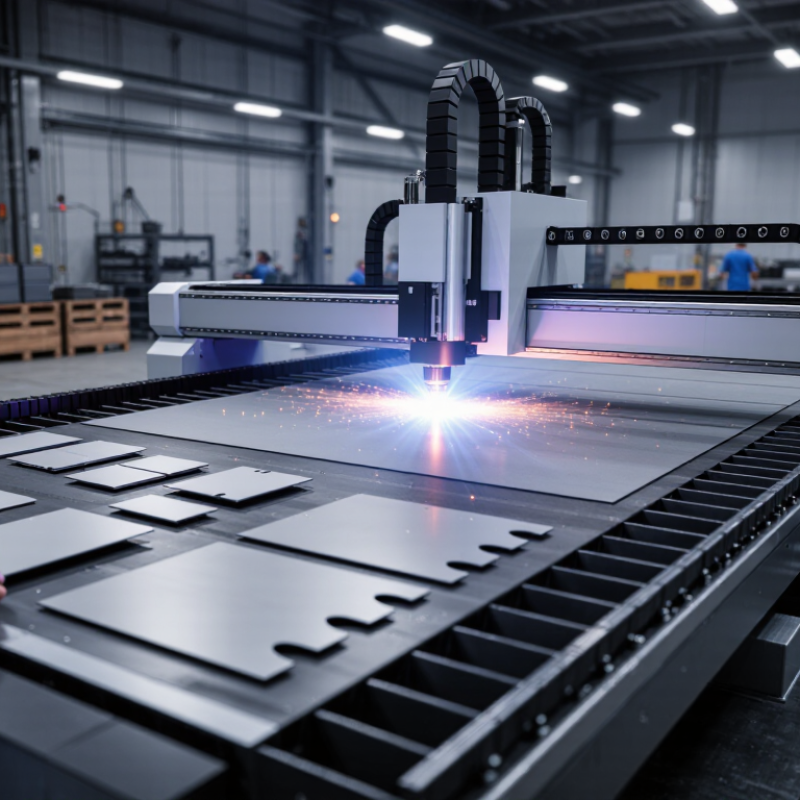
China Best CNC Fiber Laser Cutter Manufacturers?

What Defines a Leading CNC Fiber Laser Cutter Manufacturer in China

China Best CNC Fiber Laser Cutter Manufacturers?

A leading CNC fiber laser cutter manufacturer is defined by engineering discipline, not attractive brochures. The factory should explain its laser source, cutting head, motion system, and control software clearly. It should also provide traceable test results, not vague promises. During a practical evaluation, inspect the gantry, cable routing, cooling system, and enclosure quality. Small details often reveal production standards. The cutting table should remain stable during long jobs. Calibration records matter too.

Reliable manufacturers use documented quality checks before shipment. Ask for sample cuts using your actual materials and thicknesses. Examine edge smoothness, corner accuracy, piercing time, and dross. A professional technical team will explain limitations honestly. That matters more than claiming perfect performance. After-sales support is equally important. Response time, spare-parts availability, installation guidance, and operator training can affect production for years. Certifications should be verifiable and suitable for the target market.

Tips: Request a live cutting test, maintenance schedule, electrical diagram, and written warranty terms. Check whether the supplier records machine serial numbers and inspection results. Speak with several existing users, if possible. No factory is perfect. I would also ask how failures are handled, because this uncomfortable question often exposes real reliability. A lower purchase price may become expensive when alignment tools, lenses, or technical visits are excluded.

Key Technologies Used in Chinese CNC Fiber Laser Cutting Machines

Chinese CNC fiber laser cutting machines increasingly depend on integrated control, not only higher laser power. A CNC controller coordinates motion, piercing, focusing, and gas pressure in milliseconds. Modern fiber sources commonly reach electrical efficiencies above 30%, according to the U.S. Department of Energy’s laser technology reviews. That efficiency can reduce heat and operating costs.

Beam delivery is equally important. A stable fiber path preserves spot quality across long production shifts. Automatic focusing adjusts the focal position for changing sheet thickness. Capacitive height sensors help maintain a small gap above uneven metal. These details matter on a workshop floor. A tiny height error can leave rough edges or incomplete piercing.

Software now carries much of the machine’s intelligence. Nesting algorithms reduce scrap, while closed-loop monitoring can detect power loss or nozzle contamination. The 2024 World Robotics report recorded over 4.2 million industrial robots operating worldwide, showing how strongly manufacturing is moving toward connected automation. Yet, not every factory needs maximum automation. MarketsandMarkets’ 2024 laser-processing analysis also identifies system integration as a major growth factor, but installation quality remains inconsistent. A fast cutter still underperforms when the assist-gas line, grounding, or calibration is neglected. That is the uncomfortable part. Technology cannot repair poor maintenance.

China Best CNC Fiber Laser Cutter Manufacturers? - Key Technologies Used in Chinese CNC Fiber Laser Cutting Machines
Technology or Data Dimension Typical Technical Configuration Common Industry Range Primary Function Key Advantages
Laser Source Continuous-wave ytterbium fiber laser 1–30 kW Generates the high-intensity laser beam used for metal cutting. High electro-optical efficiency, compact construction, low routine maintenance, and stable beam delivery.
Laser Wavelength Near-infrared fiber-laser wavelength Approximately 1.06–1.08 μm Provides efficient absorption in commonly processed metals. Suitable for carbon steel, stainless steel, aluminum, copper, brass, and selected alloys.
CNC Motion System Numerically controlled X, Y, and Z axes with linear guides and servo drives 2D or 3D axis configurations Controls the position and movement of the cutting head. High positioning repeatability, programmable motion, and compatibility with complex profiles.
Drive and Transmission Rack-and-pinion transmission for long travel axes; ball screw or linear drive for selected axes Configuration depends on machine size Transfers motor torque to the moving gantry and cutting head. Supports high-speed travel while maintaining cutting accuracy when properly aligned.
Machine Bed Heavy welded steel bed with stress-relief treatment and replaceable support slats Common working widths: 1,500–2,500 mm Supports the workpiece and absorbs mechanical and thermal loads. Improves structural rigidity, vibration resistance, and long-term dimensional stability.
Working Area Flat-sheet cutting table Approximately 1,500 × 3,000 mm to 2,500 × 8,000 mm Accommodates standard and oversized metal sheets. Offers flexible production capacity for fabrication, machinery, construction, and general metalworking.
Cutting Head Autofocus cutting head with protective window and capacitive height sensing Automatic focal adjustment Maintains the correct focal position and stand-off distance above the material. Reduces setup time, improves cut consistency, and helps protect optical components.
Height Control Capacitive sensing with closed-loop torch-height control Real-time height correction Detects changes in sheet position and adjusts the cutting head accordingly. Helps prevent nozzle collisions and maintains stable kerf quality on uneven sheets.
Assist Gas System Programmable oxygen, nitrogen, or compressed-air delivery Gas selection depends on material and thickness Removes molten metal from the kerf and influences edge chemistry. Oxygen supports carbon-steel cutting; nitrogen helps produce oxidation-reduced edges on stainless steel and aluminum.
Piercing Technology Multi-stage piercing with adjustable power, frequency, focus, and gas pressure Parameters adapted to material thickness Creates the initial hole before contour cutting begins. Reduces spatter, protects the nozzle, and improves piercing reliability in thicker materials.
Cutting Parameters Recipe-based control of laser power, cutting speed, focal position, nozzle diameter, and gas pressure Material-specific parameter libraries Coordinates the main variables that determine cut quality. Speeds production setup and supports repeatable results across similar jobs.
Materials Processed Ferrous and non-ferrous metal sheets and plates Carbon steel, stainless steel, aluminum, copper, and brass Processes conductive metals without mechanical contact. Supports a broad range of fabrication applications and part geometries.
Material Thickness Thickness capability determined by laser power, material type, gas, nozzle, and process settings Thin sheet to heavy plate; practical limits vary by configuration Defines the usable production envelope of the machine. Higher laser power generally expands thickness capability, while thin-sheet productivity depends strongly on speed and control.
Cutting Speed Material- and thickness-dependent programmed feed rate Highest on thin sheet; lower on thick plate Determines how quickly the cutting head follows the tool path. Fiber lasers can provide high productivity on thin and medium-gauge sheet metal.
Nesting Software Automatic part nesting with common-line and remnant-sheet functions 2D CAD/CAM integration Arranges parts on a sheet before cutting. Improves material utilization, reduces scrap, and simplifies job preparation.
CNC Controller Dedicated laser CNC control with graphical interface and network or USB data transfer Programmable multi-axis control Manages motion, laser output, gas switching, piercing, and fault monitoring. Enables repeatable production, parameter management, and operator access to diagnostic information.
Cooling System Industrial closed-loop water chiller Capacity matched to laser power and ambient conditions Controls the temperature of the laser source and cutting head components. Supports stable optical performance and helps prevent thermal damage.
Fume and Slag Management Segmented extraction ducts with filtered or externally exhausted airflow Zoned extraction beneath the cutting table Removes smoke, dust, and hot particles generated during cutting. Improves workplace air quality and helps protect machine components from contamination.
Safety Protection Protective enclosure, interlocked access doors, emergency stops, and laser-radiation shielding Safety design depends on machine architecture Restricts access to hazardous laser radiation and moving equipment. Reduces operator exposure risk when correctly installed, operated, and maintained.
Automation Options Automatic loading, unloading, shuttle tables, pallet changers, and sheet-storage integration Optional or integrated configurations Moves raw sheets and finished parts with reduced manual handling. Improves machine utilization and supports higher-throughput production lines.
Quality Control Indicators Kerf width, edge roughness, dross level, squareness, dimensional accuracy, and heat-affected zone Results depend on process setup and material condition Provides measurable criteria for evaluating finished cuts. Helps operators optimize parameters and maintain consistent part quality.
Maintenance Requirements Routine cleaning of the protective window and nozzle, inspection of optics, guides, gas lines, chiller, and extraction system Daily, weekly, and periodic checks Maintains cutting performance and reduces unplanned downtime. Fiber-laser systems generally require less routine maintenance than many older laser architectures.
Technical ranges are representative industry values for CNC fiber laser cutting systems. Actual performance depends on laser power, material grade, thickness, sheet flatness, assist gas, nozzle selection, machine configuration, and operating conditions.

How to Compare China’s Top CNC Fiber Laser Cutter Manufacturers

China Best CNC Fiber Laser Cutter Manufacturers?

Comparing China’s top CNC fiber laser cutter manufacturers requires more than checking prices. Start with cutting performance. Request a sample test using your actual metal thickness, such as 6 mm carbon steel or 3 mm stainless steel. Review edge smoothness, piercing time, kerf width, and repeatability. Ask for dated videos and measurable test results, not only polished showroom footage.

Inspect the factory’s engineering process and quality controls. Check whether critical parts have traceable sources and documented inspection records. Confirm the laser power, cutting head, drive system, software compatibility, and working-table accuracy. A reliable manufacturer should explain maintenance intervals clearly. Warranty terms, spare-part availability, remote support, installation, and operator training also deserve careful comparison. The cheapest quotation may hide weak service coverage or costly downtime. That still needs questioning.

Tips: Build a comparison sheet with identical specifications. Ask each supplier for a complete landed-cost estimate. Contact recent customers with similar materials and production volumes. Verify certifications through official documents. If possible, visit the facility and watch a machine operate under normal conditions. Trust evidence over confident claims. I would also leave room for doubt; even a strong test can miss long-term wear, software issues, or delayed support.

How to Compare China's Top CNC Fiber Laser Cutter Manufacturers

Use a consistent procurement scorecard instead of comparing manufacturers by price alone. The suggested weighting emphasizes measurable cutting results, machine accuracy, automation, safety, after-sales support, and total cost of ownership.

Evaluate every supplier with the same material, laser power, thickness, cutting speed, edge-quality standard, positioning-accuracy requirement, warranty terms, spare-parts policy, and service response time. The percentages show recommended evaluation weights, not rankings for any specific company or brand.

Quality, Certifications, Customization, and After-Sales Support

China Best CNC Fiber Laser Cutter Manufacturers?

Quality begins with evidence, not polished factory photos. Grand View Research valued the global fiber laser market at about USD 5.05 billion in 2023. It also forecasts an 11.1% CAGR from 2024 to 2030. This growth increases supplier choices, but not every machine delivers stable cuts. Ask for cutting samples using your steel grade, thickness, and assist gas. Check edge roughness, piercing time, dimensional accuracy, and performance after continuous operation. I would request inspection records and a final acceptance test. One attractive sample proves little.

Certifications support reliability when properly verified. ISO 9001 indicates a quality management system, while CE documentation may support sales in applicable European markets. Electrical safety should also reflect standards such as IEC 60204-1. Certificates alone are not enough. Verify certificate numbers, issuing bodies, machine models, and validity dates. The International Organization for Standardization reports that ISO 9001 remains one of the world’s most widely adopted management standards. Still, paperwork cannot replace operator training or maintenance discipline.

Customization should match production, not sales language. Consider bed size, laser power, cutting head, rotary options, nesting software, and fume extraction. A supplier should explain trade-offs clearly. After-sales support matters more when a cutting head stops during a night shift. Request remote diagnostics, local training, spare-parts availability, and written response times. Fortune Business Insights identifies automation and productivity as major drivers in the laser cutting equipment market. Yet service promises can remain vague. Ask who answers, where parts are stored, and whether engineers understand your material before signing.

How to Select the Right Chinese Manufacturer for Your Application

China Best CNC Fiber Laser Cutter Manufacturers?

How to Select the Right Chinese Manufacturer for Your Application

Choosing a Chinese CNC fiber laser cutter requires more than comparing power ratings. Match the machine to your material, thickness, sheet size, and production volume. A 3 kW system may suit thin stainless steel, while thicker carbon steel may need higher power and slower cutting. Ask the manufacturer to perform test cuts using your actual material. Request photographs, cutting times, edge samples, and measured tolerances.

Visit the factory online or in person. Check assembly areas, machine calibration records, electrical testing, and quality-control procedures. Confirm the laser source, cutting head, control system, and motion components through written specifications. Do not accept vague claims. Verify safety certifications, export documents, installation procedures, and operator training. Reliable manufacturers explain limitations instead of promising perfect results.

Support matters after delivery. Ask about spare-part availability, remote diagnostics, response times, and technician travel arrangements. Clarify warranty exclusions and software updates before signing. A practical mistake is judging only by the lowest quotation. I once underestimated installation costs, especially gas lines, ventilation, and operator training. That error changed the real budget. No evaluation is perfectly clean. Leave room for test results, maintenance experience, and feedback from users with similar applications. A detailed acceptance checklist can expose small problems before shipment.

FAQS

What defines a leading CNC fiber laser cutter manufacturer?

Strong engineering matters more than attractive brochures. The supplier should explain the laser source, cutting head, motion system, and software clearly. Ask for traceable test results. Inspect the gantry, cable routing, cooling system, and enclosure. Small details reveal factory discipline.

How should cutting performance be tested?

Request sample cuts using your actual materials and thicknesses. Try 6 mm carbon steel or 3 mm stainless steel. Check edge smoothness, corner accuracy, piercing time, kerf width, and dross. Use dated videos and measurable results. Showroom footage can hide weaknesses.

Which machine technologies deserve close attention?

Examine the CNC controller, automatic focusing, height sensing, and beam delivery. These systems coordinate motion, piercing, focus, and gas pressure quickly. A tiny height error may cause rough edges. Stable fiber delivery helps maintain cutting quality during long shifts.

Does higher laser power always mean better performance?

Not necessarily. A powerful machine may still perform poorly with weak calibration or poor gas delivery. Installation quality matters. Maintenance matters more than expected. The fastest cutter can disappoint on a badly prepared workshop floor.

What quality records should a buyer request?

Ask for calibration records, inspection results, machine serial numbers, and pre-shipment checklists. Confirm critical component sources when possible. Certifications should be verifiable for the target market. Documents are useful, but real machine testing remains essential.

How can manufacturers be compared fairly?

Create one comparison sheet with identical specifications. Compare cutting results, warranty terms, spare parts, training, installation, and remote support. Request a complete landed-cost estimate. A low quotation may exclude alignment tools, lenses, or technical visits.

Why is after-sales support important?

Response time can affect production for years. Confirm spare-part availability, maintenance intervals, operator training, and installation guidance. Ask how failures are handled. It is uncomfortable, but revealing. Support promises should appear in writing.

Should a buyer visit the factory?

If possible, yes. Watch a machine operate under normal conditions. Inspect the cutting table, cooling system, electrical layout, and cable routing. Speak with users handling similar materials and volumes. No factory is perfect, including a strong one. Long-term wear may still surprise you.

Conclusion

Choosing the best CNC Fiber Laser Cutter manufacturer in China requires more than comparing prices. A leading manufacturer should demonstrate strong engineering capabilities, stable production quality, advanced laser sources, precise motion-control systems, reliable automation, and effective cutting software. Buyers should also evaluate machine performance, cutting accuracy, energy efficiency, material compatibility, and the manufacturer’s ability to provide customized configurations for different production needs.

A careful comparison should include product specifications, quality-control procedures, international certifications, delivery reliability, installation services, operator training, warranty terms, spare-parts availability, and long-term technical support. The right Chinese manufacturer should offer transparent communication, practical solutions, and proven experience with applications similar to yours. By clearly defining material types, thickness ranges, production volume, workspace requirements, and budget, buyers can select a CNC Fiber Laser Cutter that delivers consistent results, supports future expansion, and provides dependable value throughout its service life.


Elara

Elara

Elara is a seasoned marketing professional dedicated to helping businesses discover practical, reliable, and innovative solutions through clear communication and informed insights. With a deep understanding of the company’s products, services, and customer needs, Elara creates and regularly updates......