Sales & Applications: +44 (0)115 939 1888 Designed & built in Nottingham, England
0%

Global steel fabrication is entering 2026 with stronger pressure for speed, accuracy, and lower operating waste. The World Steel Association reported approximately 1.89 billion tonnes of crude steel production in 2023. This volume supports continued demand for reliable thermal cutting equipment. However, steel output alone does not guarantee growth for every machine supplier.

This guide examines the 2026 Top CNC Flame Cutting Machine Types for Global Buyers. It compares gantry, portable, table-type, multi-torch, and bevel-cutting configurations. Each design suits different plate thicknesses, workshop sizes, and production targets. A small fabrication shop may value a compact table and simple controls. A shipyard may need a wide gantry, multiple torches, and stable oxygen-fuel management.

The International Energy Agency and major manufacturing outlook reports continue to highlight energy efficiency, automation, and digital monitoring as important industrial priorities. These trends affect flame-cutting decisions. Buyers should inspect fuel consumption, cutting tolerance, torch height control, nesting software, and after-sales support. A bright kerf is useful. It is not enough.

Manufacturing quality expert W. Edwards Deming said, “In God we trust; all others must bring data.” His warning remains relevant here. Supplier claims should be tested against cutting samples, maintenance records, and measurable cycle times.

The conclusion is not always comfortable. The cheapest CNC Flame Cutting Machine can become expensive through downtime, warped plates, or weak technical support. This overview offers practical comparisons, but local gas prices, operator skill, and material grades can change the final answer. Expect variation. Verify before buying.
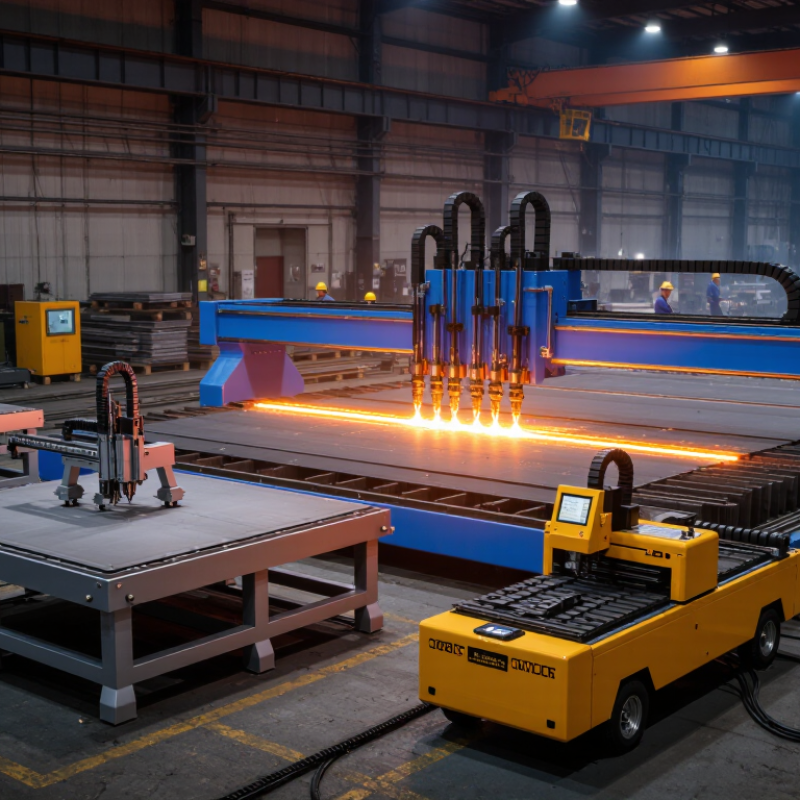
2026 Top CNC Flame Cutting Machine Types for Global Buyers

CNC Flame Cutting Types by Process: Oxy-Fuel, Plasma, and Laser

Choosing a CNC flame cutting machine in 2026 starts with the cutting process, not the machine frame. Oxy-fuel uses a preheating flame and oxygen jet to cut carbon steel. It handles thick plates well and offers relatively low operating costs. However, heat-affected zones can be wider, and edge cleanup may take longer. It is practical for structural steel, ship components, and heavy fabrication.

Plasma cutting uses an electric arc and compressed gas. It cuts faster than oxy-fuel on medium steel and supports stainless steel and aluminum. Modern CNC plasma systems can produce clean profiles, although consumable wear affects accuracy and cost. Laser cutting delivers narrow kerfs, fine details, and smooth edges. It suits thin and medium sheets, but reflective metals, power demands, and higher maintenance deserve careful evaluation.

Tips: Match the process to your usual thickness range. Measure pierce time, edge quality, and daily material volume before buying. Ask for sample cuts using your own steel grade. A machine can look impressive during a short demonstration. Real production may expose vibration, smoke control, or software issues. I have seen buyers focus on maximum thickness and overlook minimum practical thickness. That choice can reduce flexibility. Keep spare consumables available, especially for plasma systems. Test operator training needs too. Simple controls matter.

2026 Top CNC Flame Cutting Machine Types for Global Buyers

CNC Flame Cutting Types by Process: Oxy-Fuel, Plasma, and Laser

Oxy-fuel cutting is suitable for very thick carbon steel and offers the greatest practical thickness range. Plasma cutting provides higher productivity on electrically conductive metals, while laser cutting delivers the narrowest kerf and high precision on thin-to-medium materials. The values shown are representative engineering benchmarks for mild steel; actual performance depends on material grade, machine power, consumables, gas settings, and cut quality requirements.

Oxy-Fuel Systems for 6–300 mm Carbon Steel Plate Applications

2026 Top CNC Flame Cutting Machine Types for Global Buyers

Oxy-Fuel Systems for 6–300 mm Carbon Steel Plate Applications

Oxy-fuel CNC cutting remains practical for carbon steel plates from 6 to 300 mm. It uses a fuel gas flame and a high-purity oxygen jet. The flame heats the steel, while oxygen completes the cutting reaction.

For 6–40 mm plates, a compact oxy-fuel torch can deliver clean starts and efficient travel speeds. Medium plates, around 40–100 mm, need stronger preheating control and stable gas pressure. Very thick plates require precise torch height, wider kerf planning, and carefully selected cutting nozzles.

The machine frame should resist vibration during long cutting cycles. A rigid gantry helps maintain torch alignment across large sheets. Automatic height sensing can reduce collisions, especially when plates contain scale or slight warping. Still, it is not perfect. Operators must inspect the first cut and adjust oxygen pressure, preheat time, and travel speed.

A practical workshop check includes measuring top and bottom kerf width. The difference can reveal incorrect torch angle or oxygen flow. Slag on the lower edge often indicates excessive speed, weak preheating, or contaminated plate surfaces. Experienced operators also keep nozzle tips clean and verify gas hoses before production.

For global buyers, confirm local fuel-gas availability, electrical requirements, operator training, and applicable safety standards. Cutting 300 mm steel is demanding. Patience matters. A reliable setup combines CNC control, tested consumables, disciplined maintenance, and realistic production targets.

CNC Gantry Designs, Cutting Axes, and Positioning Accuracy Standards

For global buyers, CNC flame cutting machines should be compared by gantry structure, axis control, and verified accuracy.
A rigid double-drive gantry reduces yaw when cutting wide steel plates. Single-drive frames can work, but rail alignment and crossbeam stiffness become more critical. Look for synchronized motors, protected linear guides, and accessible calibration points. These details matter more than a large advertised cutting width. Small details matter.

Most machines use X and Y motion for plate travel, while Z controls torch height.
An automatic height controller helps maintain the flame-to-steel distance as plate surfaces vary. Optional bevel axes can prepare edges for welding, but they add setup and calibration demands. Ask whether the controller records backlash, homing repeatability, and torch collision events. Those records support more reliable production decisions. Positioning accuracy should be stated with a test method, not one attractive number.

ISO 230-2 provides a recognized method for evaluating positioning accuracy and repeatability on machine tools.
For cut quality, ISO 9013 helps classify thermal-cut edges and tolerances. Actual results still depend on material thickness, gas pressure, nozzle condition, and operator settings. Test cuts are essential. Buyers should request measured reports at the intended working length and speed. Check diagonal accuracy across the table, not only movement along one axis. In practice, heat, dust, and imperfect leveling can shift results after installation. I would not treat brochure accuracy as production accuracy.

Cut Quality Metrics: ISO 9013 Classes, Kerf Width, and Cutting Tolerances

2026 Top CNC Flame Cutting Machine Types for Global Buyers

For global buyers, cut quality matters more than machine size alone. ISO 9013 classifies thermal-cut edges from Class 1, the highest quality level, to Class 5. The assessment considers edge angularity, surface roughness, and dimensional deviation. A lower class may still suit structural plates, while precision assemblies usually require tighter control. Always confirm the required class on the drawing.

Kerf width is the material removed by the flame. It changes with plate thickness, oxygen pressure, cutting speed, nozzle condition, and flame adjustment. On a thick mild-steel plate, a wider kerf can create noticeable slot expansion and affect hole accuracy. Operators should measure the actual kerf rather than rely on catalog figures. A small test grid often reveals more than a specification sheet.

Cutting tolerance describes the difference between programmed and finished dimensions. It is not identical to kerf width. Machine rigidity, thermal distortion, plate flatness, and calibration all influence the result. In practice, even a well-adjusted CNC table may produce uneven edges across a large plate. That limitation deserves attention. Buyers should request sample cuts, inspection records, and the applicable tolerance standard before purchase. Check several features, not just one straight edge. A circular opening can expose errors that a simple ruler misses.

2026 Top CNC Flame Cutting Machine Types for Global Buyers — Cut Quality Metrics: ISO 9013 Classes, Kerf Width, and Cutting Tolerances
Machine / Cutting Type Typical Material Range Typical Thickness Range Typical Kerf Width Typical Dimensional Tolerance Typical ISO 9013 Quality Class Cut-Edge Characteristics Best-Fit Applications
CNC Oxy-Fuel Flame Cutting Carbon steel and low-alloy steel 6–300 mm; specialized systems can process thicker plate 2.0–4.5 mm ±0.8–2.0 mm ISO 9013 Class 2–4 Wide heat-affected zone; moderate striation; possible top-edge rounding and slag at the lower edge if parameters are not optimized Heavy structural plate, bridges, shipbuilding, steel frames, and large industrial parts
CNC High-Definition Plasma Cutting Carbon steel, stainless steel, and aluminum 0.8–50 mm, depending on power and material 1.5–3.5 mm ±0.3–1.0 mm ISO 9013 Class 2–3 Good productivity and edge quality; small bevel angle; heat input is higher than laser cutting General fabrication, machinery parts, HVAC components, and medium-thickness plate
CNC Fiber Laser Cutting Carbon steel, stainless steel, aluminum, brass, and copper with suitable equipment 0.5–30 mm for common industrial production; capacity varies by laser power 0.1–0.5 mm ±0.05–0.20 mm ISO 9013 Class 1–2 Narrow kerf, low heat input, smooth edge, and limited post-processing on thin and medium sheet Precision sheet metal, electrical enclosures, automotive components, and high-volume production
CNC CO2 Laser Cutting Carbon steel, stainless steel, aluminum, acrylic, wood, and selected non-metals 0.5–25 mm for many metal applications 0.15–0.60 mm ±0.08–0.25 mm ISO 9013 Class 1–2 Fine, narrow cut with good contour accuracy; generally higher operating and maintenance requirements than fiber laser systems Precision profiling, signage, sheet-metal work, and mixed-material fabrication
CNC Abrasive Waterjet Cutting Steel, stainless steel, aluminum, titanium, stone, glass, composites, and heat-sensitive materials 1–200 mm or more, depending on pump, nozzle, and material 0.8–1.5 mm ±0.10–0.30 mm Not normally classified under ISO 9013 Cold cutting process with negligible heat-affected zone; taper may occur and is reduced by tilting or dynamic cutting heads Heat-sensitive alloys, composites, thick plate, stone, glass, and difficult-to-machine materials
CNC Oxy-Fuel Pipe and Profile Cutter Carbon-steel pipe, tube, angle, channel, and structural profiles 6–150 mm wall or section thickness, depending on torch configuration 2.0–4.0 mm ±1.0–2.5 mm ISO 9013 Class 3–4 Suitable for bevels and large profiles; heat distortion and slag control are important for thin-wall sections Pipe fabrication, structural steel, pressure-vessel components, and construction equipment
CNC Flame-and-Plasma Combination Table Primarily carbon steel, with plasma capability for stainless steel and aluminum Flame: 6–200 mm; plasma: approximately 1–40 mm 1.5–4.5 mm ±0.4–1.5 mm ISO 9013 Class 2–4 Flexible production platform; plasma handles thinner work while oxy-fuel handles thick carbon-steel plate Job shops, steel service centers, custom fabrication, and mixed-thickness production

Data basis: Values are representative engineering ranges for properly maintained CNC equipment under stable production conditions. Actual results depend on material grade, plate thickness, gas or power settings, nozzle condition, machine rigidity, thermal distortion, programming, and operator setup. ISO 9013 quality classes are indicative for thermal cutting and should be confirmed through the applicable material, process, and customer acceptance requirements. Dimensional tolerance is not the same as kerf width.

Global Buyer Selection: Gas Use, Productivity, Safety, and Compliance Data

2026 Top CNC Flame Cutting Machine Types for Global Buyers

Global Buyer Selection: Gas Use, Productivity, Safety, and Compliance Data

CNC oxy-fuel machines suit thick carbon steel, while plasma systems handle faster cutting on thinner sheets. Gas consumption depends on plate thickness, nozzle size, cutting speed, and torch condition. A 20 mm steel plate may require different settings from a 100 mm plate. Buyers should request measured oxygen and fuel-gas use per cutting hour. Catalog estimates can be useful, but they are not production evidence. A timed trial cut is better.

Productivity involves more than cutting speed. Check pierce time, acceleration, torch-change time, nesting efficiency, and downtime between jobs. A machine with high speed may still lose output through unstable ignition or frequent nozzle replacement. Safety data should cover flashback protection, gas pressure control, hose routing, emergency stops, and operator training. Compliance documents must match the destination market, electrical system, and workplace requirements. Requirements differ by country. That part is easy to overlook.

Tips: Ask for sample cutting records, not only brochures. Compare gas use per finished meter, not per hour alone. Inspect cut edges under real shop lighting. Request manuals in your operators’ working language. Keep a written risk assessment before installation. Some assumptions will be wrong; update them after two weeks of production data.

FAQS

Which CNC cutting process suits thick carbon steel plates?

Oxy-fuel cutting suits carbon steel from about 6 to 300 millimeters. It uses a preheating flame and oxygen jet. Thick plate cutting needs patience. It works well for structural steel and heavy fabrication. However, heat-affected zones may be wide. Edge cleanup can also take longer.

When is plasma cutting a practical choice?

Plasma cuts medium steel faster than oxy-fuel. It also handles stainless steel and aluminum. An electric arc and compressed gas create the cut. Consumable wear can reduce accuracy and increase operating costs. Keep spare consumables nearby. That small detail is easy to overlook.

When does laser cutting make more sense?

Laser cutting suits thin and medium sheets. It creates narrow kerfs, fine details, and smooth edges. Reflective metals may require careful evaluation. Power demand and maintenance costs can be higher. A short demonstration may look perfect. Real production can expose problems.

How should buyers match a process to their workshop?

Start with the usual thickness range, not the machine frame. Measure daily material volume and typical plate sizes. Check pierce time and edge quality. Maximum thickness alone can mislead buyers. Minimum practical thickness matters too. Ignoring it may reduce flexibility.

What thickness controls are important for oxy-fuel cutting?

Plates from 6 to 40 millimeters may use a compact torch. Plates around 40 to 100 millimeters need stable gas pressure. Very thick plates require suitable nozzles and precise torch height. Operators should adjust oxygen pressure, preheat time, and travel speed. The first cut deserves inspection. Settings are rarely perfect immediately.

How can operators identify oxy-fuel cutting problems?

Measure the top and bottom kerf widths. A large difference may indicate incorrect torch angle or oxygen flow. Lower-edge slag can indicate excessive speed or weak preheating. Dirty plate surfaces may also create slag. Clean nozzle tips regularly. Check gas hoses before production.

What machine features support more consistent cutting?

A rigid gantry helps maintain torch alignment. The frame should resist vibration during long cutting cycles. Automatic height sensing can reduce collisions on warped plates. Still, height sensing is not flawless. Calibration and operator checks remain necessary. Large sheets can reveal uneven results.

How should cut quality be evaluated before purchase?

Ask for sample cuts using your own steel grade. Inspect several features, including circular openings. Straight edges may hide dimensional problems. Review kerf width, edge roughness, angularity, and tolerance. International thermal-cutting classes range from Class 1 to Class 5. Confirm the required class on the drawing.

What practical checks should global buyers complete?

Confirm local fuel-gas availability and electrical requirements. Review operator training needs and safety standards. Test smoke control during realistic production. Check software operation and machine vibration. Keep maintenance records and spare consumables. The impressive option is not always the best option.

Conclusion

The 2026 CNC Flame Cutting Machine market offers several process options, including oxy-fuel, plasma, and laser cutting, each suited to different material thicknesses, production targets, and precision requirements. Oxy-fuel systems remain highly practical for carbon steel plates from 6 to 300 mm, while plasma and laser processes are often selected for faster cutting or finer detail on thinner materials. Gantry-style machines may support multiple cutting axes, automated positioning, and accuracy controls that help maintain consistent results across large workpieces.

For global buyers, evaluating cut quality is essential. ISO 9013 classes, kerf width, edge condition, and cutting tolerances provide useful benchmarks for comparing machine performance. Selection should also consider gas consumption, cutting speed, duty cycle, maintenance needs, operator safety, ventilation, and regional compliance requirements. A well-matched system can improve productivity while controlling operating costs and delivering reliable results for structural, industrial, and general metal fabrication applications.


Seraphina

Seraphina

Seraphina is a dedicated marketing professional with a strong understanding of product strategy, customer needs, and the evolving dynamics of the global marketplace. As a key contributor to the company’s communications team, she regularly updates the corporate website with thoughtful, practical,......