Designed & Built in Nottingham, UK — Since 1986 +44 (0)115 939 1888 [email protected]
0%

China has become a major manufacturing base for laser-processing equipment. This article examines China’s top Compact Fiber Laser Cutter manufacturers through a practical, evidence-based lens. It considers cutting speed, laser-source quality, machine rigidity, software, service, and export experience. These details matter on the factory floor. A clean cut edge is useful evidence.

Grand View Research estimated the global laser cutting machine market at approximately USD 7.3 billion in 2023. Its report also projects strong growth through 2030. MarketsandMarkets has forecast continued expansion in the fiber laser market, driven by automotive, electronics, and metal fabrication. However, market estimates differ between research firms. They should guide research, not replace supplier verification.

Dr. Milan Brandt, a recognized laser-manufacturing specialist, has stated, “Laser processing is a system, not merely a laser source.” That principle is important when comparing Chinese suppliers. A compact machine may save valuable workshop space, yet limited bed size can restrict future orders. A lower price may also hide weaker calibration support. Sometimes, the smallest machine creates the largest operational compromise.

This guide compares manufacturers using documented specifications, application experience, certifications, and customer-service capability. It also considers practical details, including stainless-steel samples, fume extraction, nesting software, and replacement-part response times. Readers should request test cuts before purchasing. A brochure cannot reveal every production weakness. Supplier claims require careful checking.
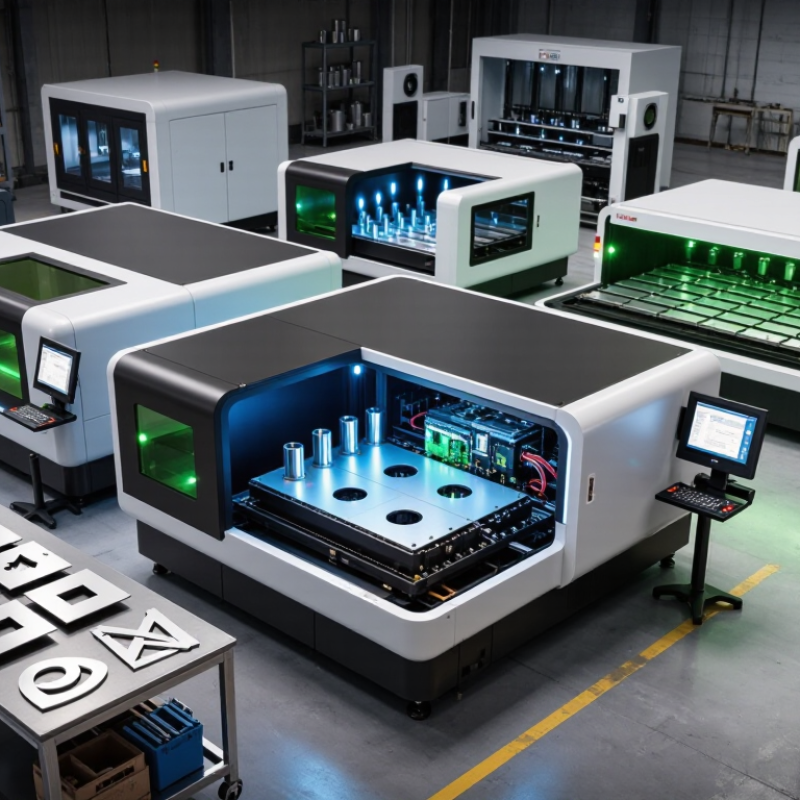
China Top Compact Fiber Laser Cutter Manufacturers?

Compact Fiber Laser Cutter Technology and Core Applications

Compact Fiber Laser Cutter Technology and Core Applications

Compact fiber laser cutters concentrate a high-power beam into a small work area. A 1.5 kW system can process thin stainless steel, carbon steel, and aluminum with a fine kerf. Assist gas, nozzle height, and focal position strongly affect edge quality. Small errors still matter.

MarketsandMarkets estimated the global fiber laser market at about USD 3.6 billion in 2023. Its 2024 analysis projects continued double-digit growth through 2028. Grand View Research also reports strong demand from metal fabrication and automotive production. These figures support wider adoption, but market estimates use different definitions. They should not be treated as perfectly comparable.

Compact machines are useful in sheet-metal workshops, electrical cabinet production, kitchen equipment, signage, and prototype manufacturing. Their smaller footprint can reduce factory layout pressure. Lower power consumption may also improve operating efficiency compared with older cutting systems. A technician can load a 1,500 × 3,000 mm sheet, align the nozzle, and begin cutting within minutes. That convenience is practical, not magical. Lens contamination, unstable gas pressure, and poor nesting still create waste. Cutting thick plate may also require higher power and slower speeds. Buyers should test their actual materials, thicknesses, and daily workload before choosing equipment.

Key Criteria for Evaluating Chinese Manufacturers

China Top Compact Fiber Laser Cutter Manufacturers?

When evaluating Chinese manufacturers, begin with engineering evidence, not polished catalog images. Ask for cutting samples using your actual stainless steel, mild steel, or aluminum thicknesses. A serious supplier should record speed, kerf width, edge quality, and gas pressure. Request dated videos and machine test reports.

Inspect the factory’s production controls. Check whether frames are stress-relieved, welds are inspected, and guide rails are aligned before shipment. Review the laser source, cutting head, control system, and electrical components by specification rather than vague descriptions. Compact machines often save floor space, but cramped layouts can restrict maintenance access. That detail is easy to miss.

After-sales capability matters just as much as cutting performance. Confirm response times, spare-parts availability, remote diagnosis, installation guidance, and technician training. Ask for a clear warranty with exclusions written in plain language. Speak with recent customers, preferably those operating similar materials and shift patterns. Their comments may reveal delays that a factory tour hides. Be cautious with unusually low quotations. They may reflect thinner frames, limited testing, or incomplete software support. I have seen buyers focus on purchase price and later pay more for downtime. My own evaluations are not perfect either; sample cuts can look excellent while long-term stability remains unproven. A monitored trial over several weeks provides stronger evidence than a single demonstration.

Leading China-Based Compact Fiber Laser Cutter Manufacturers

Leading China-Based Compact Fiber Laser Cutter Manufacturers

China has become a major sourcing center for compact fiber laser cutters. Leading manufacturers usually combine in-house assembly, metal fabrication, and software integration. This structure can shorten production time and simplify technical support. In practical factory visits, buyers should inspect the cutting bed, cable routing, and protective enclosure. Small details reveal manufacturing discipline.

A capable manufacturer should provide cutting samples, power-consumption data, maintenance instructions, and a complete machine test report. Ask how the machine performs on stainless steel, carbon steel, and thin aluminum sheets. Reliable suppliers also explain laser-source options, cutting-head maintenance, warranty limits, and operator training. A polished brochure is not proof. Real test results matter more. Some suppliers may communicate slowly after delivery, and that risk deserves honest consideration.

Tips: Request a video demonstration using your actual material and thickness. Confirm the working area, electrical requirements, delivery schedule, and spare-parts availability. Check whether remote troubleshooting is included. Compare at least three written quotations, but do not choose by price alone. An unusually low offer may hide weaker components, limited support, or unclear service terms. Examine the contract carefully. A suitable China-based manufacturer should communicate clearly, document performance, and accept reasonable technical questions before payment.

China-Based Compact Fiber Laser Cutter Manufacturers: Typical Cutting-Speed Benchmarks

This chart compares representative cutting-speed ranges commonly associated with compact fiber laser cutters using approximately 1–3 kW laser power. Actual performance varies according to laser power, assist gas, material grade, sheet thickness, nozzle configuration, and machine settings.

Machine Features, Customization, and Production Capabilities

China Top Compact Fiber Laser Cutter Manufacturers?

Compact fiber laser cutters are gaining attention as workshops seek smaller footprints and faster job changes. Grand View Research valued the global laser cutting machine market at approximately USD 7.2 billion in 2023. Its forecast also indicates steady growth through 2030. This demand is pushing manufacturers to improve machine structure, control software, and service response.

Machine features should match real production conditions. A rigid welded bed reduces vibration during thin-sheet cutting. Servo motors, automatic focusing, and nozzle monitoring can improve repeatability.

For a compact machine, the usable cutting area matters more than the external frame size. Buyers should request test cuts using their actual stainless steel, carbon steel, or aluminum sheets.

Ask for edge photographs, cycle times, and measured tolerances. Marketing language is not enough.

Customization often includes table dimensions, power ratings, extraction layouts, rotary devices, and software integration.

MarketsandMarkets projected the laser cutting machine market to grow from about USD 6.3 billion in 2023 to USD 10.1 billion by 2028.

Production capability still needs verification. Review factory assembly records, quality checkpoints, and spare-parts availability. A supplier may promise flexible engineering, yet change-control documents can be weak. That is a warning.

My practical concern is often overlooked: a powerful laser cannot compensate for poor material handling. Request a sample-production plan, operator training details, and acceptance criteria before placing an order.

After-Sales Service, Certification, and Global Market Support

When choosing China’s top compact fiber laser cutter manufacturers, after-sales service deserves close attention. A reliable supplier should provide commissioning guidance, operator training, and clear maintenance schedules. Ask how quickly technicians respond to cutting errors, alarm codes, or unstable air pressure. Remote diagnostics can reduce downtime, but local service partners remain valuable for complex repairs. Spare lenses, nozzles, filters, and protective windows should be available through a practical supply process. No supplier gets every case right. Transparent communication matters more than polished promises.

Tips: Request service response times in writing. Check whether manuals match the delivered machine. Confirm warranty coverage for the laser source, cutting head, electrical parts, and software. Speak with recent overseas users when possible. Their experience may reveal delays that brochures hide.

Certification also supports safer international purchasing. Review valid documents for electrical safety, electromagnetic compatibility, and quality management. Certification numbers should match the exact machine model, not a similar product. Global support requires more than translated brochures. Look for multilingual documentation, remote training, export packaging, and guidance for local installation requirements. Experienced manufacturers may provide recommended parameter libraries for steel, stainless steel, and aluminum. However, these settings still need testing because material batches vary. A careful buyer should inspect sample cuts, edge quality, piercing time, and long-term stability before placing a large order.

China Top Compact Fiber Laser Cutter Manufacturers? - After-Sales Service, Certification, and Global Market Support

Evaluation Dimension Evidence-Based Requirement or Benchmark Recommended Verification Evidence Global Market Relevance
Quality management system ISO 9001 certification is a useful indicator that documented quality-management processes are in place. It does not by itself certify the performance of a specific laser cutter. Valid certificate, certification scope, issuing certification body, and certificate validity status. Supports supplier qualification, corrective-action management, and consistent production controls across export markets.
European conformity For applicable products placed on the European market, conformity assessment and CE marking must address relevant legislation, such as machinery safety, electromagnetic compatibility, and electrical safety requirements. EU Declaration of Conformity, technical documentation summary, risk assessment, and applicable test reports. Reduces customs and market-entry risk when documentation matches the exact machine configuration.
Laser safety Laser processing equipment should be designed and labeled according to applicable laser-safety requirements, including IEC 60825-1 principles and suitable enclosure, interlock, warning-label, and emergency-stop controls. Laser classification information, safety circuit documentation, interlock test records, warning labels, and user safety instructions. Important for worker protection, site acceptance, insurance review, and regulatory compliance.
United States market compliance Equipment supplied to the United States may require evaluation against applicable OSHA workplace-safety expectations, electrical requirements, and FDA laser-product rules under 21 CFR applicable to the product. Electrical safety report, laser-product compliance documentation, user manual, and machine-specific risk-control records. Helps buyers prepare for workplace inspections, importer reviews, and customer safety audits.
Electrical and EMC testing Compact fiber laser cutters should include appropriate electrical protection, grounding, electromagnetic compatibility controls, and documented testing for the target market. Test reports identifying the model, rated voltage, tested configuration, standards used, and laboratory details. Improves reliability when machines operate near CNC equipment, industrial networks, and sensitive electronics.
Material compliance For products entering regulated markets, buyers may need evidence related to EU RoHS restrictions and REACH obligations, depending on product design, components, and intended use. Supplier declarations, restricted-substance declarations, and component-material records. Supports environmentally regulated supply chains and customer procurement requirements.
Warranty coverage Warranty periods and exclusions are contract-specific. A professional quotation should clearly separate coverage for the machine structure, electrical components, laser source, optics, and consumable parts. Signed warranty terms, excluded parts list, start date, labor policy, freight responsibility, and claim procedure. Prevents disputes caused by unclear treatment of wear parts, improper operation, voltage issues, or unauthorized modifications.
Remote technical support Effective support should include troubleshooting by email or video, remote diagnostics where secure connectivity is available, software guidance, and escalation to engineering personnel. Support workflow, service hours, communication channels, remote-access policy, and sample troubleshooting records. Reduces downtime when an overseas technician cannot immediately visit the installation site.
On-site commissioning Commissioning should verify machine leveling, electrical and gas connections, cooling performance, safety functions, parameter setup, and operator training. Commissioning checklist, acceptance criteria, training agenda, installation requirements, and travel-cost terms. Supports stable cutting performance and helps transfer safe operating knowledge to local staff.
Spare-parts availability A reliable supplier should identify critical spare parts, provide part numbers, state lead times, and explain whether parts are stocked locally or shipped internationally. Recommended spare-parts list, stock-location information, quotation validity, shipping options, and obsolete-part policy. Shortens repair cycles for optics, sensors, filters, protective windows, and other service items.
Operating documentation The machine should be supplied with a manual covering installation, operation, maintenance, safety procedures, troubleshooting, and recommended service intervals. Model-specific manual, electrical drawings, pneumatic diagrams, maintenance schedule, and software instructions. Enables local technicians to perform routine maintenance without relying on informal translation or undocumented procedures.
Training and process support Training should cover material setup, focus and nozzle adjustment, assist-gas selection, parameter management, cleaning, safety, and quality inspection. Training materials, attendance record, sample cutting parameters, and documented handover procedure. Improves first-pass yield and reduces damage caused by incorrect settings or maintenance practices.
Export and logistics capability Export documentation should accurately identify the machine, serial number, packing list, country of origin, shipping terms, and applicable customs information. Commercial invoice, packing list, certificate of origin when required, export packing photos, and agreed Incoterms. Reduces customs delays, document mismatches, and transport damage during international delivery.
Machine acceptance testing Acceptance should be based on agreed parameters such as material type, thickness, cutting speed, edge quality, positioning accuracy, safety-function operation, and repeatability. Factory acceptance test and site acceptance test with signed results, sample parts, measurement methods, and permitted tolerances. Creates an objective basis for delivery approval and warranty discussions.

Note: This comparison uses supplier-evaluation criteria and internationally recognized compliance frameworks rather than company or brand rankings. Certification, warranty, service response, and spare-parts terms must be verified for the exact machine model and sales contract.

FAQS

What materials can a compact fiber laser cutter process?

It can cut thin stainless steel, carbon steel, and aluminum sheets.

Which factors affect cutting quality?

Assist gas pressure, nozzle height, and focal position strongly affect edge quality. Lens contamination can create rough edges. Small errors matter.

What industries commonly use compact laser cutters?

Common uses include sheet-metal workshops, electrical cabinets, kitchen equipment, signage, and prototypes. These machines support frequent job changes. They also suit limited factory space.

How quickly can operators begin cutting?

An operator can load a 1,500 × 3,000 mm sheet and align the nozzle. Cutting may begin within minutes. That convenience is practical, not magical.

What machine features improve repeatability?

A rigid welded bed helps reduce vibration during thin-sheet cutting. Servo motors and automatic focusing can improve consistency. Nozzle monitoring may identify problems earlier.

How should buyers evaluate usable cutting space?

Check the actual cutting area, not only the machine’s outside dimensions. A compact frame may hide a smaller working zone. Measure your usual sheet sizes.

What customization options may be available?

Options can include table dimensions, laser power, extraction layouts, rotary devices, and software integration. Choose features that match daily production. More features are not always better.

How should buyers test a machine before purchase?

Request test cuts using your actual stainless steel, carbon steel, or aluminum sheets. Ask for edge photographs, cycle times, and measured tolerances. Test it.

What service and production details should buyers verify?

Review assembly records, quality checkpoints, spare-parts availability, and operator training. Request a sample-production plan and clear acceptance criteria. Promises alone are weak evidence.

What common problems can create waste?

Unstable gas pressure, dirty lenses, poor nesting, and weak material handling can reduce efficiency. A powerful laser cannot fix every process problem. This point is easy to underestimate.

Conclusion

This article explores the technology, structure, and core applications of the Compact Fiber Laser Cutter, highlighting its advantages in precision, efficiency, space savings, and suitability for metal fabrication, machinery production, electrical equipment, signage, and small-batch manufacturing. It also explains how businesses can assess Chinese manufacturers by reviewing cutting performance, machine stability, component quality, production experience, technical expertise, and the ability to provide solutions for different materials and thicknesses.

The article further examines manufacturer capabilities, including customization options, automation integration, production capacity, safety design, and quality control. It also discusses the importance of after-sales support, installation guidance, operator training, spare-parts availability, warranty policies, and international service responsiveness. Certifications, export experience, compliance with regional safety requirements, and reliable communication are presented as essential factors when selecting a long-term manufacturing partner for a Compact Fiber Laser Cutter.


Amelia

Amelia

Amelia is a highly experienced marketing professional dedicated to helping customers better understand our company, products, and solutions. With a strong background in market research, content strategy, customer communication, and product education, she brings clarity and practical insight to......