Designed & Built in Nottingham, UK — Since 1986 +44 (0)115 939 1888 [email protected]
0%

Choosing an Industrial Fume Filtration System is a workplace health decision, not merely an equipment purchase. Welding, cutting, grinding, and thermal spraying can release fine particles that remain suspended around an operator’s breathing zone. IARC Monographs Volume 118 classified welding fumes and ultraviolet radiation from welding as carcinogenic to humans. The finding changed how responsible manufacturers view extraction design.

Recent HSE workplace statistics report approximately 1.7 million workers with work-related ill health in Great Britain during 2023–2024. HSE also estimates around 12,000 annual deaths from occupational lung disease and cancer linked to past workplace exposures. These figures are not abstract. They can represent a welder working beside a cloudy extraction hood, or a technician wiping metallic dust from a machine enclosure.

A suitable Industrial Fume Filtration System should support source capture, adequate airflow, safe filter access, and documented maintenance. NIOSH guidance consistently emphasizes controlling hazards at their source, before contaminants spread through the room. Aerosol scientist William C. Hinds wrote, “Aerosols are particles suspended in air.” That simple sentence explains why visible cleanliness is not enough. Invisible particles may still pass through an operator’s breathing zone.

No filter is magic. That assumption deserves scrutiny. Hood position, capture velocity, duct resistance, filter loading, and worker behavior can change real performance. Selection should therefore combine exposure assessment, competent ventilation design, and routine verification. Reports provide direction, but site conditions decide results. A carefully specified system can reduce exposure, protect production areas, and strengthen evidence of responsible risk management. Some facilities still treat extraction as an afterthought. They should reconsider that habit.
Why Choose an Industrial Fume Filtration System?

Industrial Fume Filtration Systems: Definition and Basic Purpose

Why Choose an Industrial Fume Filtration System?

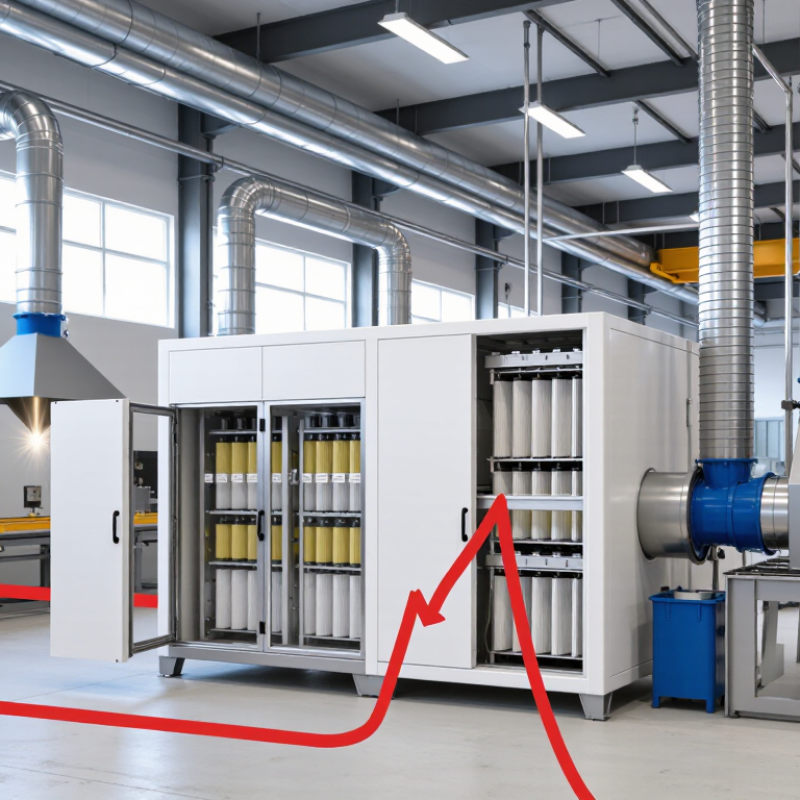
Industrial fume filtration systems are engineering controls designed to capture airborne contaminants near their source. A typical setup uses a capture hood, ductwork, fan, filter, and exhaust or air-return section. In a welding area, the hood should sit close to the arc, where a faint blue haze can otherwise spread across the workshop. NIOSH reports that welding emissions may contain metal fumes, gases, and very small particles that can enter the respiratory system.

The basic purpose is exposure reduction, not cosmetic air cleaning. Filters remove selected particles, while suitable gas-control media may address certain vapors. According to the International Labour Organization’s 2023 estimates, nearly three million workers die each year from work-related accidents and diseases. This figure covers many hazards, yet it shows why airborne exposure deserves serious engineering attention. An effective system also supports cleaner surfaces, clearer visibility, and more stable maintenance routines.

Performance depends on airflow, hood placement, filter selection, and disciplined maintenance. A blocked filter can quietly reduce capture efficiency. Poorly balanced ductwork can leave fumes around an operator’s breathing zone. That happens. Testing should include airflow checks, pressure readings, filter inspections, and exposure monitoring by qualified professionals. The U.S. National Institute for Occupational Safety and Health emphasizes source capture and ventilation as key controls for welding fume. Still, no filtration system catches everything. Work practices, personal protection, and periodic review remain necessary, especially when materials or production rates change.

How Industrial Fume Filtration Systems Capture and Remove Contaminants

Why Choose an Industrial Fume Filtration System?

Industrial fume filtration systems remove contaminants before they spread across a workplace. A capture hood draws fumes from welding, soldering, coating, or chemical processes. Air then travels through ductwork into staged filters. Pre-filters collect larger particles, while cartridge or bag filters trap finer dust. Activated carbon can reduce some vapors, but it cannot solve every chemical hazard. The filter choice must match the contaminant.

For particles, high-efficiency filters can achieve 99.97% removal at 0.3 microns, according to U.S. Environmental Protection Agency guidance. That figure is useful, but it is not a complete performance guarantee. Poor hood placement, leaks, or weak airflow can reduce actual capture. NIOSH guidance repeatedly emphasizes source control, because preventing exposure is stronger than relying on room dilution. Small details matter. A worker’s hand near the plume can change the airflow pattern.

Sensors can monitor pressure drop, airflow, and filter loading. Maintenance teams should inspect seals, ducts, and collection bins, not only replace filters on a calendar. The International Labour Organization estimated 2.93 million work-related deaths globally in 2019, showing why exposure control deserves serious attention. Yet a clean-looking filter may hide a failing seal. That assumption needs challenging. Effective systems combine tested filtration, documented inspections, operator training, and measurements taken under real production conditions.

Key Workplace Health, Safety, and Environmental Benefits

Why Choose an Industrial Fume Filtration System?

Key Workplace Health, Safety, and Environmental Benefits

Welding, grinding, and thermal cutting can release fine particles, gases, and metal fumes into the work area. A properly designed filtration system captures contaminants near their source before they spread across the facility. Cleaner air can reduce irritation, unpleasant odors, and employee exposure. Airflow matters. Workers should not depend on disposable masks alone when engineering controls are practical.

Effective systems also support safer operations. Clearer visibility helps employees notice sparks, equipment damage, and blocked walkways sooner. Local exhaust arms, sealed ductwork, and suitable filters can reduce residue on floors, tools, and nearby surfaces. In practice, performance depends on correct capture distance and steady airflow. A powerful fan cannot compensate for poor positioning.

Environmental benefits come from controlling emissions before they leave the building. Some facilities may safely recirculate filtered air after professional verification, while others require controlled exhaust. Filter selection should match the contaminant, particle size, temperature, and operating conditions. Maintenance records, pressure readings, and scheduled inspections provide useful evidence of reliability. Small details matter.

No system is perfect. A neglected filter can increase energy use and allow contaminants to bypass the collection point. Regular testing by qualified personnel helps confirm that the system still performs as intended. Employers should review exposure measurements, worker feedback, and changing production methods instead of assuming yesterday’s settings remain adequate. That reflection often prevents tomorrow’s problem.

Why Choose an Industrial Fume Filtration System?

OSHA permissible exposure limits for selected airborne hazards commonly associated with welding, cutting, and metal-processing operations. Lower limits indicate that even small concentrations require effective source capture and filtration.

Industrial fume filtration helps reduce worker exposure, support compliance programs, improve visibility and housekeeping, and limit particulate emissions. Values shown are OSHA 8-hour time-weighted average permissible exposure limits in mg/m³; requirements may vary by industry, process, and jurisdiction.

Sources: OSHA Hexavalent Chromium, Lead, Respirable Crystalline Silica, and Cadmium standards.

Factors to Consider When Choosing a Fume Filtration System

Why Choose an Industrial Fume Filtration System?

Choosing a fume filtration system starts with identifying the contaminant. Welding smoke, oil mist, and chemical vapors require different filtration methods. A system designed for dust may perform poorly against fine aerosols. Review particle size, temperature, moisture, and concentration before comparing equipment. Guesswork becomes expensive quickly.

Airflow is another critical factor. Measure the distance between the capture hood and the emission point. Long ducts, narrow bends, and blocked filters can reduce extraction performance. Check the required airflow, pressure drop, noise level, and energy use. A quieter unit may improve worker acceptance, but lower sound should never hide weak capture. Capture matters most.

Maintenance also deserves careful attention. Look for accessible filters, clear loading indicators, and documented replacement procedures. Ask for independent test data, performance records, and realistic service intervals. Experienced engineers should assess the layout, not just sell a rated capacity. I have seen systems selected from catalogue numbers alone. They seemed suitable on paper, yet poor hood placement left visible haze near the operator. A perfect calculation cannot correct careless installation. Plan for inspection, cleaning, and future production changes. The best choice balances protection, reliability, operating cost, and practical daily use.

Common Applications and Maintenance Requirements

Industrial fume filtration systems support safer, cleaner production areas, but their value depends on correct application and disciplined maintenance. Welding, laser cutting, chemical mixing, soldering, and thermal spraying can release fine particles, gases, or metal fumes. The U.S. Environmental Protection Agency reports that indoor pollutant levels can be two to five times higher than outdoor levels. In busy workshops, poor extraction may also leave a visible haze near operators’ breathing zones.

Maintenance requirements vary with the contaminant and workload. A system handling oily smoke may need pre-filter cleaning every week, while a low-dust process may require less frequent service. Technicians should inspect airflow, pressure drop, duct connections, seals, and fan noise. NIOSH recommends controlling contaminants at their source, not relying only on personal protective equipment. The International Labour Organization estimated 2.93 million work-related deaths globally in 2019, with occupational diseases representing most cases. Filtration is not a complete safety program, but neglected filtration creates avoidable exposure.

Tips: Record pressure readings and filter changes in a simple log. Replace filters when pressure reaches the manufacturer’s limit, not only when they look dirty. Check capture hoods with smoke testing or airflow measurements. Keep spare filters sealed and labeled. Real facilities are imperfect; operators miss inspections, and sensors can drift. Review the schedule after seasonal production changes, because an interval that worked last year may now be unsafe.

Why Choose an Industrial Fume Filtration System? - Common Applications and Maintenance Requirements
Industrial Application Typical Fume or Contaminant Recommended Filtration Approach Primary Benefits Key Maintenance Requirements Typical Inspection Frequency
Welding and Cutting Metal fumes, fine particulates, grinding dust, and gases generated by thermal cutting Source-capture extraction with a spark-resistant pre-separation stage and high-efficiency particulate filtration
  • Reduces airborne welding fume
  • Helps protect workers and nearby equipment
  • Supports cleaner production areas
  • Inspect extraction hoods and flexible arms for damage
  • Check filters for loading and pressure drop
  • Remove accumulated dust from collection areas
  • Verify airflow at the capture point
Daily visual checks; monthly airflow review
Laser Cutting and Engraving Smoke, ultrafine particles, vaporized material, and process-specific gases Multi-stage filtration combining particulate filtration with activated carbon or other gas-phase media when required
  • Limits smoke migration
  • Reduces odors and deposits on optical components
  • Improves visibility around the workstation
  • Inspect pre-filters and final filters
  • Replace carbon media when odor breakthrough occurs or the rated capacity is reached
  • Check ducting for leaks and blockage
  • Clean the cutting enclosure and extraction inlet
Weekly visual check; filter review every 1–3 months
Soldering and Electronics Assembly Rosin flux fumes, fine particulate, and low concentrations of volatile organic compounds Local extraction with particulate filtration and an activated-carbon stage for gaseous contaminants
  • Captures fumes close to the soldering point
  • Helps reduce odor and workplace exposure
  • Can be installed at individual workstations
  • Keep capture nozzles correctly positioned
  • Inspect hoses, seals, and fan operation
  • Monitor airflow and filter pressure drop
  • Replace carbon filters according to loading or odor performance
Weekly checks; monthly performance review
Chemical Processing and Mixing Acid or alkaline vapors, solvent vapors, corrosive mists, and process odors Enclosed-source ventilation with corrosion-resistant components, scrubbers, adsorption media, or specialized gas-phase filtration
  • Controls corrosive or irritating emissions
  • Helps protect surrounding equipment
  • Supports compliance with site exposure-control procedures
  • Inspect housing, ductwork, seals, and drains for corrosion
  • Check scrubber liquid level, concentration, and circulation where applicable
  • Test alarms and differential-pressure indicators
  • Handle spent media as regulated process waste when required
Daily operating checks; formal inspection monthly
Pharmaceutical and Powder Handling Active pharmaceutical ingredients, excipients, fine powders, and dust generated during dispensing or transfer Enclosed containment with staged particulate filtration and, where necessary, high-efficiency final filtration
  • Reduces cross-contamination risk
  • Protects operators from airborne powders
  • Supports controlled-area cleanliness
  • Use validated cleaning procedures
  • Inspect seals, clamps, and containment connections
  • Monitor filter integrity and pressure drop
  • Replace filters using procedures that minimize dust release
Each shift visual check; scheduled validation and integrity testing
Woodworking and Composite Manufacturing Wood dust, resin particles, sanding dust, and composite fibers Source capture with a pre-separator or cyclone followed by bag, cartridge, or other suitable particulate filtration
  • Reduces combustible dust accumulation
  • Improves air cleanliness around machinery
  • Helps maintain tool and equipment visibility
  • Empty collection bins before overfilling
  • Inspect hoses, ductwork, and blast gates
  • Clean or replace loaded filters
  • Check for dust deposits and maintain housekeeping controls
Daily housekeeping check; weekly system inspection
Metal Grinding and Polishing Metal particulates, abrasive dust, and small sparks from grinding operations Local exhaust ventilation with spark control, pre-separation, and particulate filtration rated for the process
  • Controls visible dust at the source
  • Reduces deposits on machinery
  • Helps limit dust migration to adjacent work areas
  • Inspect spark arrestors and pre-separators
  • Check filter differential pressure
  • Remove dust from collection containers
  • Inspect fan belts, bearings, and guards
Daily visual check; monthly mechanical inspection
Food and Beverage Processing Flour dust, spice particles, sugar dust, aerosols, and process odors Hygienic source extraction with appropriately rated particulate filtration and cleanable surfaces
  • Helps control nuisance and combustible dust
  • Supports hygienic production conditions
  • Reduces airborne material loss
  • Follow documented sanitation procedures
  • Inspect filter seals and collection bins
  • Prevent moisture intrusion into dry dust collectors
  • Check for dust accumulation in ducts and overhead areas
Each shift housekeeping check; monthly system review
Thermal Spraying and Coating Metal or ceramic particles, coating overspray, fumes, and process gases Enclosed or semi-enclosed extraction with staged particulate filtration and gas-phase treatment when applicable
  • Reduces overspray and fine particulate release
  • Protects ventilation equipment from rapid fouling
  • Improves process visibility
  • Inspect extraction enclosure and duct connections
  • Clean overspray deposits from accessible surfaces
  • Monitor filter loading and fan performance
  • Check the condition of protective coatings inside the system
Daily process check; weekly filter inspection
General Plant Air Cleaning Suspended dust, process aerosols, light oil mist, and residual odors Central or portable air-cleaning units selected according to particle size, contaminant type, and required airflow
  • Improves background air quality
  • Complements, but does not replace, source capture
  • Can reduce settled dust and recirculated contaminants
  • Measure airflow and pressure drop
  • Clean intake grilles and fan components
  • Replace pre-filters before they restrict airflow
  • Document final-filter replacement and system performance
Monthly inspection; quarterly performance assessment

FAQS

What does an industrial fume filtration system remove?

It captures fumes, dust, fine particles, oil mist, and some chemical vapors. A hood collects contaminants near welding or coating work. The system then moves air through staged filters.

Why is source capture important?

Source capture removes contaminants before they spread through the workplace. A worker’s hand can disturb the plume. Room dilution alone may not provide enough protection.

How do different filters work?

Pre-filters collect larger particles. Cartridge or bag filters capture finer dust. Activated carbon can reduce some vapors, but it cannot address every chemical hazard.

Can a high-efficiency filter remove 99.97% of particles?

Some filters can reach 99.97% removal at 0.3 microns under tested conditions. That number is not a complete workplace guarantee. Leaks, poor hood placement, and weak airflow can reduce real performance.

What should be checked before selecting a system?

Identify the contaminant, particle size, temperature, moisture, and concentration. Welding smoke and chemical vapors need different filtration approaches. Guesswork gets expensive.

How does duct design affect capture?

Long ducts, narrow bends, and blocked filters can reduce airflow. Measure the distance between the hood and emission point. Small layout problems can leave visible haze near an operator.

What maintenance does the system require?

Inspect seals, ducts, collection bins, filters, and airflow readings. Check pressure drop and filter loading regularly. A clean-looking filter may hide a failing seal.

How should system performance be evaluated?

Use airflow measurements, pressure readings, inspection records, and real production conditions. Review noise and energy use too. A perfect calculation cannot correct careless installation.

What makes a system practical for daily work?

Accessible filters, clear loading indicators, trained operators, and documented procedures support reliable use. A quieter unit may improve acceptance. Lower noise must never conceal weak capture.

Conclusion

An Industrial Fume Filtration System is designed to capture, filter, and remove airborne fumes, dust, smoke, vapors, and fine particles generated during industrial processes. By drawing contaminated air through a series of filters or treatment stages, the system helps reduce pollutants before clean air is returned to the workplace or safely discharged. Its basic purpose is to control airborne contamination at the source and support a cleaner, more controlled production environment.

Choosing the right system requires consideration of the contaminant type, particle size, air volume, operating temperature, workspace layout, filtration efficiency, energy use, and installation requirements. Proper fume filtration can improve workplace health and safety, reduce environmental impact, protect equipment, and support compliance with applicable standards. These systems are commonly used in welding, metalworking, chemical processing, manufacturing, and laboratory operations. Regular inspection, filter replacement, airflow checks, and scheduled cleaning are essential for reliable performance and long service life.


Elara

Elara

Elara is a seasoned marketing professional dedicated to helping businesses discover practical, reliable, and innovative solutions through clear communication and informed insights. With a deep understanding of the company’s products, services, and customer needs, Elara creates and regularly updates......