Factory-direct CE certified laser marking machinery engineered for 24/7 continuous industrial inline integration, deep metallic engraving, high-speed flying coding, and heat-sensitive polymer processing.
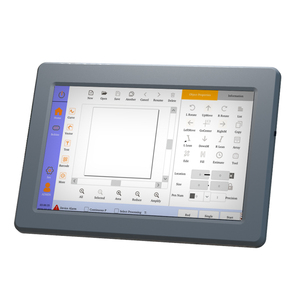
Online flying laser marking software & hardware controller optimized for high-speed automated assembly and conveyor production lines.
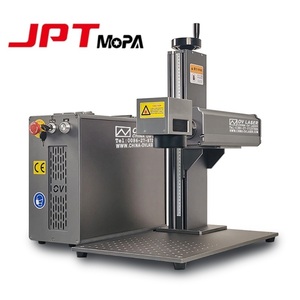
High-peak-power MOPA fiber laser engraver specialized for fine precious metal cutting, inner ring engraving, and customized necklace profiling.
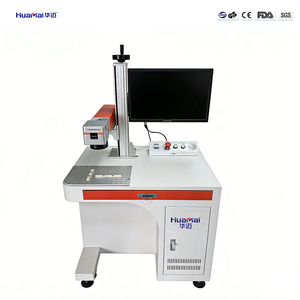
Adjustable pulse width fiber laser designed for vibrant oxide color marking on stainless steel and heavy 3D metal deep etching.
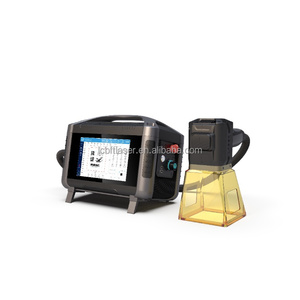
Ultra-compact ergonomic handheld laser head engineered for direct part marking on bulky machinery, metal boxes, and CNC machined parts.
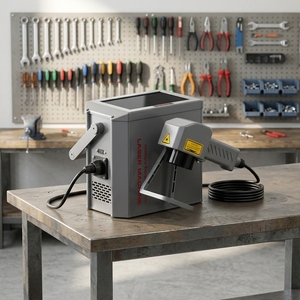
355nm UV ultraviolet cold light laser ideal for micro-marking on cosmetic packaging, delicate polymers, glass, and medical grade plastics.
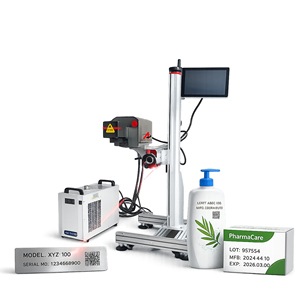
Heavy-duty industrial marking station designed for high-contrast VIN, 2D DataMatrix, and QR code laser etching on automotive alloy parts.
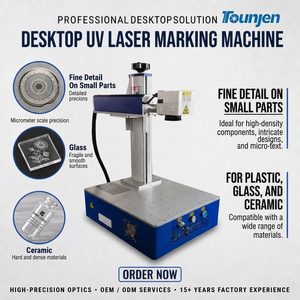
Multi-purpose 20W-100W benchtop fiber laser workstation featuring rapid digital galvo scan heads for stainless steel and engineering plastics.
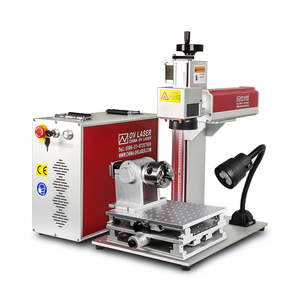
Precision-tuned optical configuration incorporating air-cooled JPT M7 laser engines and high-speed digital galvo heads for deep metallic relief.
Our manufacturing ecosystem operates under strict international quality benchmarks, ensuring that every CE certified laser marking system delivered meets European safety directives and operating stability standards.
Procuring industrial laser systems from overseas OEMs requires a comprehensive audit of European CE compliance directives. True compliance goes beyond a simple certificate sticker—it mandates rigorous structural and optical engineering design.
When importing laser marking machinery into the EU or UK, quality assurance procurement teams must verify compliance with three mandatory safety directives:
Industrial fiber lasers operate at 1064nm wavelength, while UV markers operate at 355nm. Both present invisible, severe ocular hazards.
Authentic CE-certified suppliers build Class 1 fully enclosed workstations equipped with OD6+ protective safety glass windows, redundant door interlocks, and active optical shutter switches. Class 4 open-frame desktop systems require mandatory key-switch safety controls and integrated emission indicator LEDs.
Compare photonics parameters across standard Q-switched fiber, adjustable MOPA fiber, and UV cold lasers to match your material substrate and cycle time requirements.
| Laser Source Type | Wavelength | Pulse Width Range | Primary Substrates | Best Technical Application | HAZ Impact |
|---|---|---|---|---|---|
| Standard Fiber (Q-Switched) | 1064 nm | 100 ns (Fixed) | Carbon Steel, Stainless, Brass, Hard Plastics | High-speed part traceability numbers, barcoding, metal deep etching | Moderate Thermal Impact |
| MOPA Fiber (JPT M7) | 1064 nm | 2 ns – 500 ns (Variable) | Anodized Aluminum, Stainless Steel, Foaming Plastics | Color marking on stainless steel, non-burr aluminum blacking, sensitive thin foil marking | Ultra-Low / Controlled |
| UV Cold Laser | 355 nm | < 15 ns | HDPE, Silicon, Glass, Medical Grade Polymers, Cosmetics Box | Photochemical cold marking without surface burning or thermal charring | Near Zero (Cold Ablation) |
| CO2 Laser Tube | 10.6 µm | Continuous / Pulsed | Wood, Acrylic, Leather, Glass, Organic Packaging | High-volume non-metallic carton coding and organic material cutting | High Thermal Impact |
As global manufacturing transitions toward smart factories and strict product traceability directives (such as EU Digital Product Passports), laser marking technology is rapidly evolving.
Modern buyers are shifting away from standalone manual markers toward systems featuring integrated EtherCAT, OPC UA, and MQTT protocols. Smart controllers allow central ERP/MES systems to dynamically stream unique serial numbers, automated batch codes, and 2D DataMatrix vector data directly to the galvo scanner in real-time.
Manual part positioning introduces human error and slows production cycle times. The latest industrial trend incorporates coaxial CCD camera vision systems. Algorithms automatically detect part location, orientation, and height offset within 10 milliseconds, triggering accurate laser alignment and inline verification of 2D code readability.
With rising energy tariffs and corporate net-zero commitments, manufacturers are replacing maintenance-heavy water chillers with ultra-efficient air-cooled fiber and UV laser architectures. Modern 30W-100W solid-state fiber lasers operate at wall-plug efficiencies exceeding 30%, consuming under 500W of total system electricity.
From raw metal structural frame welding to optical alignment in cleanroom environments, our factory direct processes eliminate middleman risk and ensure total equipment longevity.
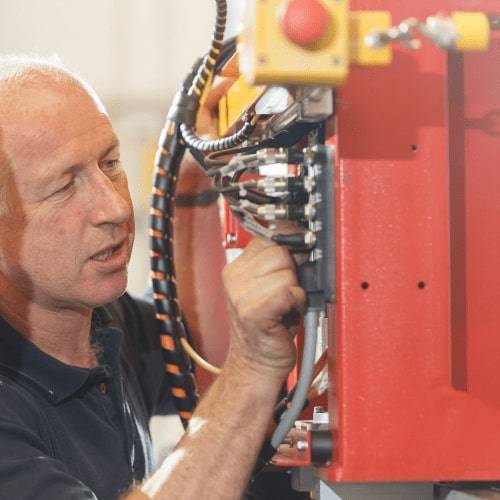
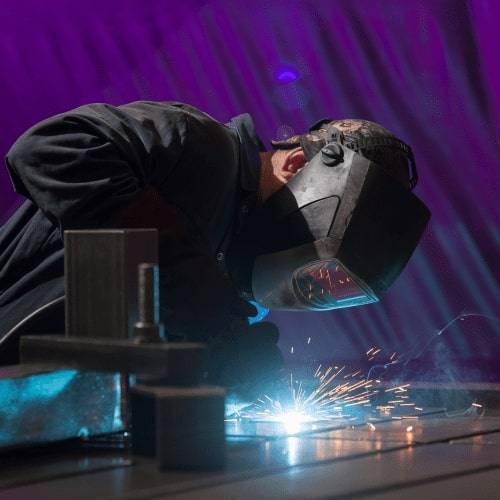
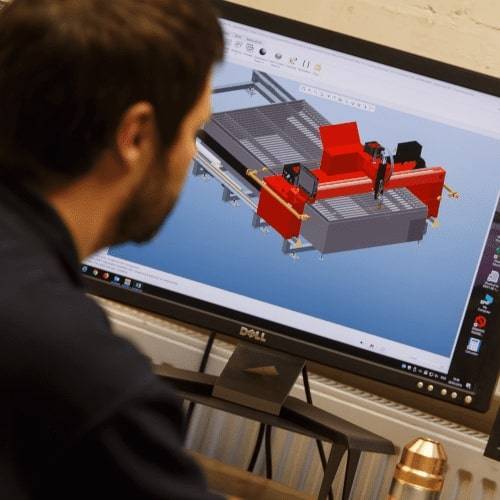
Unlike assembly workshops that purchase generic third-party software, our engineers maintain control over the firmware, post-processors, and control card API layers. This enables deep custom integration with customer robotic arms, PLC systems, and conveyor lines.
Every galvo scanner, power supply, and laser source undergoes a continuous 72-hour stress test under varying temperature ambient cycles before factory clearance, guaranteeing zero infant mortality failures upon arrival.
Our certified applications engineers provide remote diagnostic troubleshooting, beam profiling assessments, and documented preventive maintenance schedules directly to overseas operating technicians.
Essential technical, compliance, and logistical answers to streamline your B2B supplier evaluation process.
Download our complete CE Certified Industrial Laser Marking Technical Specification Guide, request sample testing on your material substrates, or connect directly with our application engineers.