Explore our high-performance chamfering, cold milling, and beveling technology designed to achieve zero-defect weld geometries for CE-compliant structural steel fabrication.
In modern international construction, structural steel is no longer procured simply as raw commodity material. Structural steelwork acts as the load-bearing spine for complex architectural infrastructure, offshore wind farms, heavy industrial plants, and multi-story commercial towers. As a premier CE Certified Structural Steel Manufacturer and Exporter, our operations adhere strictly to the European Construction Products Regulation (CPR 305/2011) and the rigorous requirements of EN 1090-1 (Requirements for Conformity Assessment of Structural Components) and EN 1090-2 (Technical Requirements for Steel Structures).
CE Marking under EN 1090-1 mandates a robust, fully audited Factory Production Control (FPC) system. This ensures that every steel section—whether heavy wide-flange H-beams, structural hollow sections (RHS/CHS), build-up box columns, or intricate lattice roof trusses—possesses complete chemical, mechanical, and geometric traceability from primary steel melting down to final site erection.
Structural reliability is categorized based on Consequences Classes (CC), Service Categories (SC), and Production Categories (PC). Our manufacturing infrastructure is fully certified to execute projects up to Execution Class 4 (EXC4), representing the highest level of structural reliability in structural engineering:
| Execution Class | Structural Application Examples | Consequence of Failure | Mandatory Quality Controls |
|---|---|---|---|
| EXC1 | Agricultural buildings, single-story sheds, internal non-loadbearing frames. | Low social & economic consequences. | Basic FPC, visual inspection (VT) of welds. |
| EXC2 | Residential & commercial buildings, typical multi-story steel frames. | Medium social & economic consequences. | Documented FPC, qualified ISO 9606 welders, partial NDT (UT/MT/PT). |
| EXC3 | Bridges, stadium roofs, high-rise buildings (>15 stories), crane gantries. | High social & structural failure risk. | Comprehensive NDT (100% UT/MT on critical joints), strict HAZ hardness control. |
| EXC4 | Nuclear power facilities, major suspension bridges, extreme dynamic load structures. | Catastrophic structural failure risk. | Total project-specific quality plans, continuous third-party audit, 100% NDT traceability. |
Drawing on an engineering lineage established since 1986 in Nottingham, England, our manufacturing capabilities integrate legacy metalworking expertise with state-of-the-art CNC automation technology. Unlike trading entities or outsourced fabricators, our vertically integrated facilities handle every step of production: from plate cutting, section rolling, and edge bevel milling to high-definition plasma profiling, automated submerged arc welding (SAW), and anti-corrosion surface finishing.
As an OEM partner to world-leading cutting technology providers such as Hypertherm (utilizing XPR300 & XPR460 High-Definition Plasma Systems), we engineer structural steel prep systems that guarantee exceptional squareness, minimal bevel angles, and clean, oxide-free cut surfaces ready for immediate fit-up and robotic welding.
Full spectrum metallurgical analysis ensuring structural grades (S235, S275, S355, S460, S690) meet strict Charpy V-Notch impact values at -20°C and -40°C.
Automated walking beveling and cold-milling technology eliminates micro-fractures in plate edges, preventing hydrogen-induced crack propagation in thick-wall structural joints.
High-Definition plasma cutting capabilities delivering laser-like edge finish on plates up to 80mm thickness, reducing edge taper to under 2 degrees.
Certified International Welding Engineers (IWE) overseeing fully automated Submerged Arc Welding (SAW) and Flux-Cored Arc Welding (FCAW) procedures.
Proven export experience supplying structural steel modules packaged with heavy-duty corrosion protection (ISO 12944 C4/C5 environments) to over 30 countries.
Direct integration from Tekla Structures and Autodesk Revit models into CNC nestings, ensuring 100% dimension bolt-hole alignment during site assembly.
One of the primary causes of structural steel failure in high-dynamic applications (such as bridges, marine terminals, and crane runways) is inadequate groove preparation during welding. Thermal flame cutting leaves a residual microstructural Heat-Affected Zone (HAZ) characterized by elevated martensitic hardness and micro-cracks. When welded without secondary machining, these zones become primary initiation sites for fatigue cracks under cyclic stress.
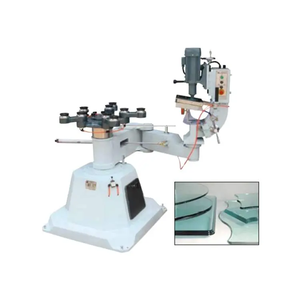
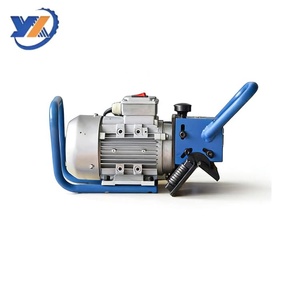
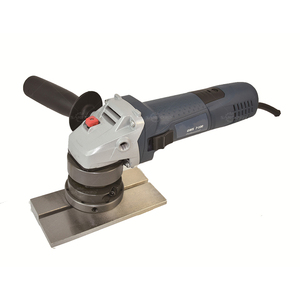
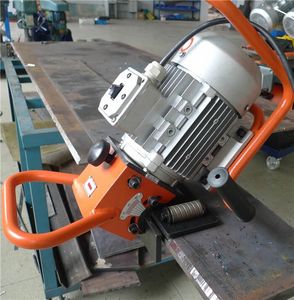
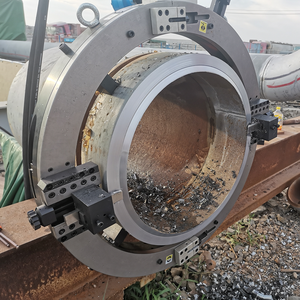
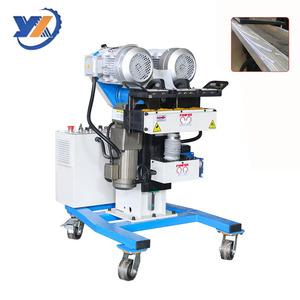
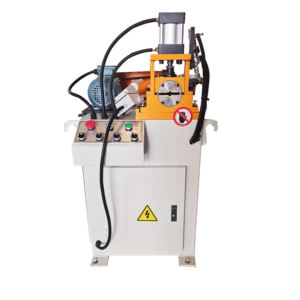
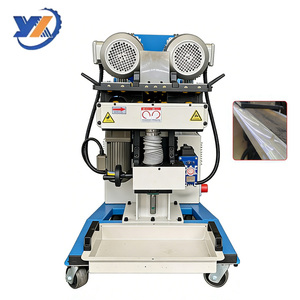
To comply with CE Marking and EN 1090-2 standards, our edge preparation machinery utilizes mechanical cold milling, self-propelled chamfering, and precision beveling tools (as highlighted in our product range above). Cold milling processes remove the thermal HAZ entirely, producing a smooth, geometrically accurate V-groove, J-prep, or X-prep without altering the grain structure of the base metal.
| Beveling Methodology | Heat-Affected Zone (HAZ) | Surface Roughness (Ra) | Angle Accuracy | Structural Suitability |
|---|---|---|---|---|
| Oxy-Fuel Flame Beveling | High (1.5mm - 3.0mm depth) | Ra 12.5 - 25 µm | ± 2.5° | Heavy plate rough preparation; requires grinding for EXC3/EXC4. |
| High-Def Plasma Beveling | Moderate (0.3mm - 0.8mm depth) | Ra 6.3 - 12.5 µm | ± 1.0° | High productivity; suitable for general structural steel work. |
| Cold Rotary Milling | Zero (No thermal impact) | Ra 1.6 - 3.2 µm | ± 0.2° | Mandatory for nuclear, bridge, and high-fatigue EXC4 structures. |
| Portable Pneumatic Chamfering | Zero | Ra 3.2 - 6.3 µm | ± 0.5° | Ideal for field touch-ups, deburring, and complex tubular joints. |
Global procurement directors and EPC engineering contractors face a rapidly changing landscape driven by environmental regulations, carbon border adjustments, and digitized construction workflows. Sourcing structural steel requires evaluating long-term operational resilience alongside unit cost per metric ton. Key macro trends shaping global procurement over the next decade include:
The push toward net-zero infrastructure is transforming raw material specifications. Electric Arc Furnace (EAF) production powered by renewable energy generates up to 75% lower Scope 1 and Scope 2 carbon emissions compared to traditional Blast Furnace-Basic Oxygen Furnace (BF-BOF) routes. Buyers are now demanding Type III Environmental Product Declarations (EPD) verified under ISO 14025 and EN 15804. CE-certified manufacturers who maintain low-carbon supply chains hold a distinct competitive edge in European and North American municipal tenders.
On-site labor shortages and rising urban construction costs have accelerated the shift toward 3D volumetric modular steel frames and pre-engineered structural sub-assemblies. Procurement strategies now prioritize fabricators capable of delivering fully pre-drilled, bevel-milled, shop-primed steel sections with zero field welding required. Digital pre-assembly verification using 3D laser scanning reduces erection delays on site by over 40%.
Under upcoming EU eco-design directives, structural steel elements will require a Digital Product Passport (DPP). Every H-beam, plate girder, and structural column is tagged with unique laser-etched QR codes or embedded RFID chips. These chips link directly to Mill Test Certificates (MTC EN 10204 3.1/3.2), NDT inspection reports, carbon footprint data, and BIM object properties, offering full lifecycle asset management.
The structural steel manufacturing sector is undergoing a massive technological convergence. Innovations in robotics, artificial intelligence, and beam-line automation are redefining throughput capacity and structural precision:
Consult with our structural engineering team today to review your project specifications, request technical mill certificates, or receive a fast, competitive export quotation.