In the rapidly evolving ecosystem of global industrial manufacturing, thermal metal processing operations—including high-definition CNC plasma cutting, high-power fiber laser cutting, robotic welding, and automated edge beveling—generate enormous volumes of toxic airborne contaminants. As industrial fabricators worldwide push toward higher cutting speeds, thicker plate capacities, and continuous 24/7 production cycles, managing airborne particulates, volatile organic compounds (VOCs), and hazardous metal fumes has transitioned from a basic safety requirement into a strategic operational priority.
During thermal cutting and mechanical edge preparation, metal oxides, sub-micron particulates (PM0.1 to PM2.5), and carcinogenic compounds such as hexavalent chromium (Cr VI), nickel oxides, and manganese fumes are released into the workshop atmosphere. Without engineered downdraft table zoning, high static pressure exhaust blowers, and certified nanofiber/PTFE filter filtration systems, these microscopic particles remain suspended in ambient workshop air. This poses severe health risks to machine operators, degrades precision optical lenses on fiber laser machinery, causes premature mechanical wear on CNC guide rails, and leads to costly non-compliance penalties under stringent global regulations such as OSHA, EU-OSHA, and ISO 16890.
China's manufacturing sector has emerged as the global epicenter for industrial air filtration and industrial extraction system manufacturing. Leading Chinese OEM & ODM fume extractor manufacturers have integrated state-of-the-art European motion control, automatic pulse-jet filter cleaning systems, flame-retardant PTFE membrane filter cartridges, and smart IoT control panels into their equipment. Consequently, global procurement directors, industrial plant managers, and equipment distributors now look to top Chinese manufacturers for cost-effective, durable, and highly reliable fume extraction solutions tailored for thermal cutting tables, pipe beveling systems, and heavy fabrication shops.
The integration of high-efficiency fume extraction directly impacts machine tool uptime, cutting quality, and overall Return on Investment (ROI). When plasma cutting carbon steel plate up to 80 mm thick or laser cutting thin-gauge stainless steel at elevated speeds, the cutting head creates a high-velocity vapor jet of molten metal. If this thermal fume plume is not immediately captured by a zoned downdraft extraction table, the heavy smoke obscures laser height sensors, degrades optics, and settles back onto the freshly cut plate—causing edge contamination, slag adhesion, and unacceptable surface defects.
By partnering directly with elite Chinese manufacturers that understand the mechanical and aerodynamic demands of thermal cutting machinery, global buyers ensure that every extraction system is correctly matched in CFM airflow rate, air-to-cloth ratio, and static pressure drop across the filter media.
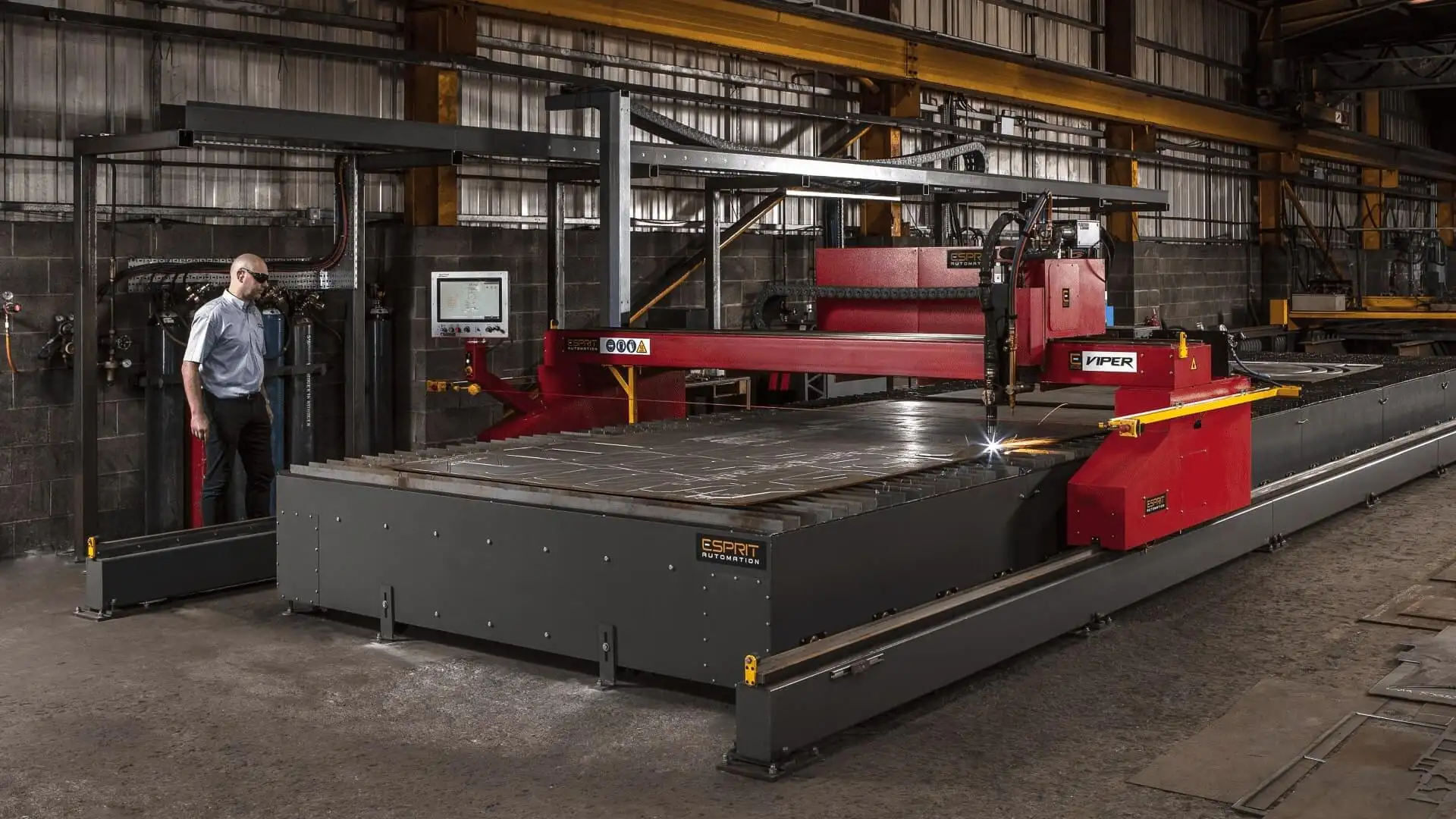
Evaluating industrial fume extractors requires an in-depth technical analysis of physical filtration mechanisms, fluid dynamics, and media science. A premium industrial fume extraction unit is far more than a simple exhaust fan inside a sheet metal box; it is an engineered multi-stage air purification plant designed to maintain constant volumetric airflow under fluctuating filter cake resistance.
High-velocity metal cutting creates hot sparks and glowing embers. Integrated labyrinth spark traps and baffle plates dissipate kinetic energy, extinguish embers, and prevent hot debris from ever contacting combustible filter media.
Thermally bonded polytetrafluoroethylene (PTFE) membrane coatings capture sub-micron particulates down to 0.1 microns on the surface of the filter media, preventing deep particle penetration and allowing easy pulse-jet cleaning.
For facilities recirculating purified air back into indoor cleanroom spaces, absolute HEPA H13/H14 filters combined with activated carbon cells adsorb lingering chemical fumes, ozone, and gas-phase VOCs.
A common procurement error made by engineering teams is selecting a fume extraction unit based solely on nominal fan airflow rating (m³/h) without considering system static pressure drops across long ductwork networks, tight collection hoods, and loading filter cartridges.
When cutting metal with plasma or fiber lasers, fine dust particles quickly form a surface dust cake on the filter cartridges. If the backward-curved centrifugal blower cannot deliver sufficient static pressure (typically between 2,500 Pa to 4,500 Pa depending on system size), the volumetric flow rate collapses, causing smoke to escape into the plant. Top Chinese extraction OEMs perform CFD (Computational Fluid Dynamics) simulations to balance airflow velocities across every zone of the cutting table, ensuring capture velocities at the torch tip remain above 1.5 m/s.
| Extraction Application | Typical Dust Type & Particle Size | Recommended Airflow & Pressure Range | Filter Media Specification | Cleaning Mechanism |
|---|---|---|---|---|
| Fiber Laser Cutting (1kW - 30kW) | Ultrafine oxides, dry metallic dust (0.1 – 0.5 µm) | 2,200 – 6,500 m³/h @ 3,200 Pa | Flame-Retardant PTFE Nanofiber (EN 779 / ISO 16890 ePM1 99%) | Automatic Differential Pressure Pulse-Jet |
| High-Definition CNC Plasma Cutting | Heavy smoke, conductive metal oxides, soot (0.3 – 5.0 µm) | 4,500 – 12,000 m³/h @ 3,800 Pa | Polyester Cartridge with PTFE Membrane + Spark Trap | Online Compressed Air Reverse Jet Cleaning |
| Pipe Cutting & Edge Beveling | Coarse metal shavings, heavy grind dust (5.0 – 100 µm) | 1,800 – 4,000 m³/h @ 2,400 Pa | Spunbond Polyester Cartridge / Cyclone Separator Pre-filter | Mechanical Shaker or Manual Pulse Button |
| Manual / Robotic Metal Welding | Welding fumes, toxic hexavalent chromium (0.2 – 1.0 µm) | 1,200 – 3,500 m³/h per arm @ 2,200 Pa | HEPA H13 (99.95%) + Activated Carbon Module | Offline Compressed Air Cleaning / Disposable Element |
The decision to source industrial extraction equipment and metal edge processing machinery from Chinese manufacturers offers significant strategic advantages for global industrial buyers. Over the past two decades, China’s industrial air filtration supply chain has matured into a world-class manufacturing hub, combining advanced metallurgy, automated robotic welding, rigorous testing standards, and economies of scale.
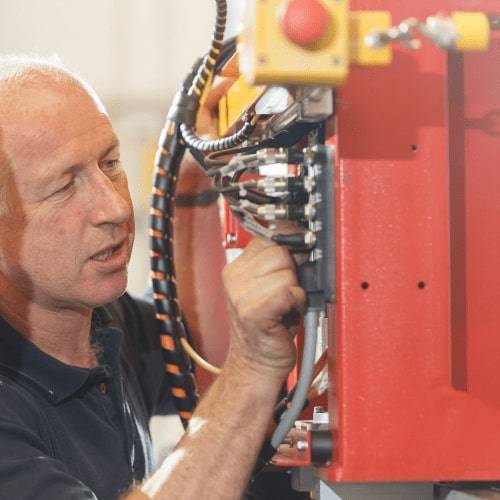
Leading Chinese extraction manufacturers do not rely on low-grade outsourced sub-assemblies. Facilities are equipped with high-precision CNC machining centers, fiber laser blanking lines, automated powder coating bays, and certified airflow test towers. Every steel housing, fan impeller, electrical panel, and pneumatic manifold is manufactured under strict ISO 9001 and CE quality management frameworks.
By controlling the entire production process—from raw plate cutting to final dynamic balance testing of high-rpm fan impellers—Chinese OEMs deliver heavy-duty, long-lasting machinery that withstands harsh shop floor environments while maintaining competitive capital expenditure (CapEx) targets.
Key E-E-A-T trust factors and enterprise strengths offered by top Chinese manufacturers include:
As global industry transitions toward Industry 4.0, smart manufacturing, and carbon neutrality (ESG targets), the industrial air filtration and fume extraction market is undergoing a profound technological transformation. Buyers looking to future-proof their operations must consider several emerging technological trends when selecting equipment:
Legacy extraction units operate continuously at 100% fan speed, consuming substantial electrical energy regardless of whether the connected laser or plasma cutter is actively firing. Next-generation Chinese fume extractors feature smart PLC microprocessors integrated with Variable Frequency Drives (VFDs) and differential pressure transducers.
These smart systems automatically monitor the static pressure drop across the filter cartridges in real time. As filter cakes build up, the VFD adjusts motor speed dynamically to maintain constant volumetric capture airflow at the table. When cutting operations pause, the system drops into energy-saving standby mode—slashing electrical power consumption by up to 40% and dramatically extending motor bearing lifespans.
The shift toward high-power fiber lasers (12kW, 20kW, and up to 60kW) has created ultra-fine metallic fumes with particle sizes under 0.1 microns. Traditional cellulose or standard polyester filter media suffer from rapid depth loading, where fine dust becomes permanently trapped inside the filter matrix, causing permanent pressure drop spikes and requiring frequent filter replacements.
Top Chinese filter cartridge manufacturers are leading the market in adopting thermally bonded bicomponent synthetic media coated with expanded PTFE (ePTFE) membranes. This creates a true surface-loading filtration mechanism. During pulse-jet cleaning, short blasts of compressed air cleanly shed the surface dust cake into the collection hopper below, resulting in up to 300% longer filter service life compared to legacy media.
Dust collector fires caused by hot sparks reaching the filter chamber present a severe operational hazard in metal fabrication shops. Modern industrial extractors incorporate multi-stage passive and active spark mitigation systems.
This includes heavy cyclonic pre-separators, spark detection sensors linked to automatic pneumatic shut-off dampers, and built-in thermal sensor triggers for CO2 or aerosol fire suppression systems. Sourcing an extractor with integrated fire safety systems ensures compliance with global safety standards and protects valuable plant assets.

When evaluating proposals from China top fume extractor manufacturers, savvy procurement professionals focus on Total Cost of Ownership (TCO) rather than just initial purchasing price. Below is a mathematical framework and procurement checklist designed to audit potential suppliers:
Includes basic extractor unit, customized duct connectors, spare filter cartridge kits, fan motor configuration, and international export packing.
Calculates fan electrical consumption (kW/h), compressed air usage for pulse-jet cleaning (m³/min @ 0.5-0.7 MPa), and replacement filter cartridge costs over 3-5 years.
Assesses ease of filter cartridge changeout (top-access vs. side door), dust bin capacity, seal integrity under high vacuum, and local availability of spare parts.
To calculate the estimated annual energy expenditure of an extraction unit, engineering teams can utilize the following standard formula:
Annual Energy Cost ($) = Motor Rating (kW) × Operating Hours/Year × Electricity Rate ($/kWh) × VFD Efficiency Factor
By selecting a high-efficiency Chinese extractor featuring an IE3/IE4 premium motor and an automated VFD controller, industrial operations routinely amortize the cost of the extractor within 14 to 18 months through energy savings alone.