As the global manufacturing sector accelerates toward Industry 5.0 integration, China's machine tool ecosystem has transitioned from high-volume manufacturing to ultra-precision engineering. Overseas procurement directors, tier-1 automotive suppliers, aerospace contractors, and job shop owners require transparent, metric-driven benchmarks when selecting factory-direct equipment. This technical guide outlines machine kinematic structures, ISO 230-2 positioning accuracy standards, total cost of ownership (TCO) variables, and optimized OEM/ODM sourcing channels.
Explore our flagship export catalog engineered for high rigidity, thermal stability, and prolonged dynamic precision across metal cutting, mold production, and complex batch fabrication.
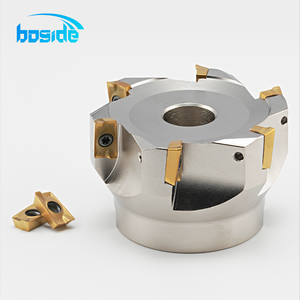
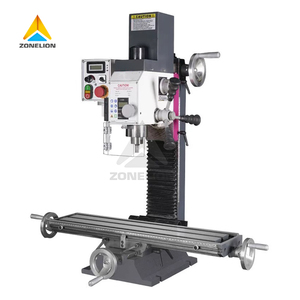
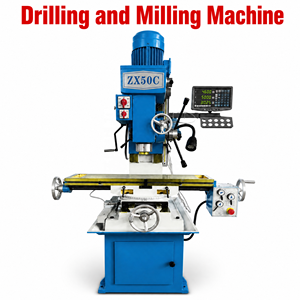
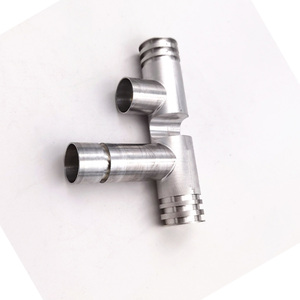
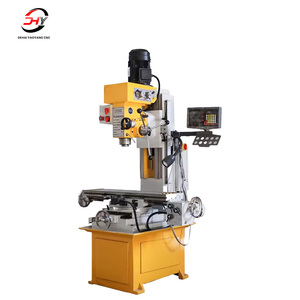
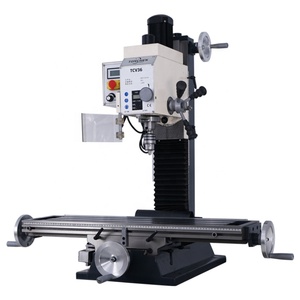
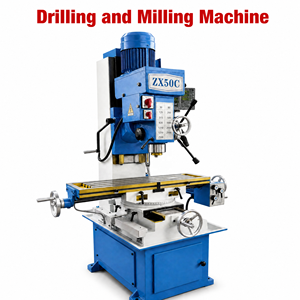
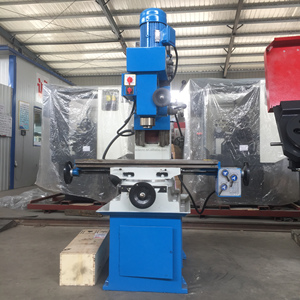
When assessing industrial machine tools manufactured in China, procurement teams must evaluate the underlying structural metallurgy and kinematic design rather than relying solely on static datasheets. High-end Chinese machine tool factories utilize Meehanite HT300 high-density cast iron for bases, columns, and saddles. This material undergoes double stress-relief thermal annealing—combining natural aging (6 to 12 months) with electrical furnace stress relief at 550°C—to eliminate internal casting strain and guarantee long-term geometric retention under heavy cutting loads.
Furthermore, thermal growth along the Z-axis represents one of the largest sources of positional deviation in high-speed machining centers. Modern Chinese wholesale factories implement dual-wound internal liquid cooling jackets around the spindle housing, paired with pretensioned double-nut C3-grade ball screws (supported by P4-grade angular contact bearings). This thermal management protocol maintains axis thermal displacement within < 0.008mm across an 8-hour continuous machining cycle.
Precision Turcite-B lined slideways are hand-scraped to 18–22 contact points per square inch. This creates micro-oil pockets that prevent stick-slip motion and maximize damping during heavy roughing operations.
100% of exported machines undergo Renishaw XL-80 laser interferometer calibration to verify VDI/DGQ 3441 linear axis positioning and pitch-error compensation before crating and export dispatch.
Eliminating belt vibration, direct-drive inline spindles deliver zero backlash, lower torsional noise, and rapid dynamic response suitable for aerospace alloy surfacing and high-feed trochoidal milling.
To facilitate intent-driven procurement decisions, the benchmark matrix below compares technical capabilities, controller ecosystems, structural footprints, and optimal industrial applications across standard Chinese machine configurations.
| Machine Category | Structural Casting | Spindle Options | Axis Positioning (ISO 230-2) | Recommended Applications |
|---|---|---|---|---|
| Manual / DRO Knee Mill | Meehanite Class 30 | R8 / NT30 / ISO40 (2,000 RPM) | ±0.020 mm / 300mm | Maintenance, repair shops, prototype tooling, educational institutes. |
| Universal Bed-Type Mill (ZX50) | HT300 Resin Sand Cast | MT4 / ISO40 (Auto-Feed) | ±0.015 mm / 300mm | Medium-duty job shops, keyway cutting, general steel fabrication. |
| 3-Axis Vertical Machining Center | Box-in-Box Heavy Ribbed | BT40 10,000 RPM Direct Drive | ±0.005 mm / Full Travel | Production automotive parts, housing covers, precision aluminum components. |
| 5-Axis Simultaneous Milling Center | Spheroidal Graphite Iron | HSK-A63 15,000–20,000 RPM | ±0.003 mm / Full Travel | Aerospace impellers, medical implants, multi-sided complex mold cavities. |
Sourcing directly from tier-1 Chinese exporters offers significant capital expenditure savings alongside customized manufacturing flexibility. Modern OEM export plants feature vertically integrated manufacturing suites, housing heavy double-housing gantry planers, German Waldrich Coburg guideway grinders, and climate-controlled assembly rooms.
Overseas buyers can leverage complete ODM machine customisation—including localized voltage configuration (e.g., 480V 60Hz North America / 400V 50Hz Europe), specialized tool changer capacities (24 to 60 ARM-type ATC), customized splash enclosures, and native CNC controller installation (FANUC, Siemens, Heidenhain, Mitsubishi, or SYNTEC).
The international metalworking market is shifting rapidly due to rising labor costs, tighter environmental regulations, and the demand for shorter product cycles. B2B purchasers must align their machine acquisition strategies with upcoming technological inflections occurring across Chinese machinery hubs.
Leading export factories are embedding directed energy deposition (DED) additive heads onto 5-axis milling platforms. This allows operators to 3D print high-value alloys (such as Inconel or Titanium) directly onto substrate stock, followed immediately by high-speed CNC milling to achieve final surface finish tolerances. Sourcing hybrid machines reduces raw material wastage by up to 65% in aerospace component repair.
Edge-computing controllers equipped with piezoelectric vibration sensors and spindle load monitoring algorithms dynamically adjust feed rates in real-time. By sensing chatter before harmonic amplification occurs, these intelligent milling machines prolong tool life by 35% and mitigate operator-induced spindle collisions.
With global ESG standards tightening, conventional flood coolant systems are being replaced by MQL systems. Chinese machine exporters are pre-fitting dual-channel through-spindle air-oil aerosol systems, reducing coolant disposal expenses by over 80% while keeping chips dry for higher-value scrap recycling.
Consult directly with our Senior Application Engineers to configure machine travels, spindle powers, and tool changers matching your exact production drawings.
Essential guidance addressing common technical, logistic, and commercial questions raised by international machine buyers.