
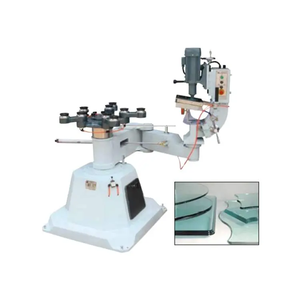
Automatic Round & Oval Shaped Glass Polisher & Beveling Machine
- High-precision contour tracking
- Multi-axis PLC motion control
- Edge beveling & fine polishing
Explore our high-performance line-up of automated plate millers, pipe bevelers, split-frame cutters, and specialty contour polishers engineered for heavy industrial throughput.
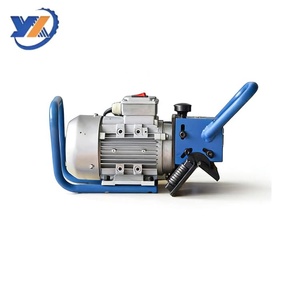
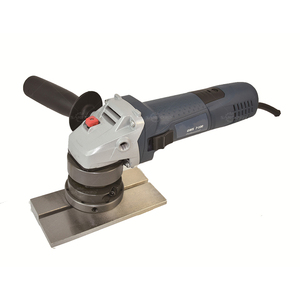
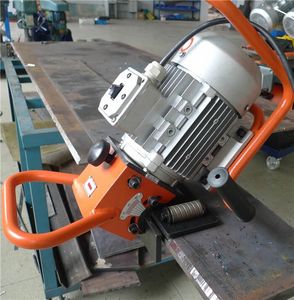
Combining decades of British engineering legacy, world-class Hypertherm component integration, and complete vertical manufacturing control to deliver robust, high-return industrial systems.
Founded in 1986 by engineering alumni from the University of Nottingham, our core competence lies in stress-relieved structural frameworks, precision drive kinetics, and custom machinery design.
We tailor gearbox ratios, clamping pneumatics, CNC post-processors, and specialized bevel milling heads to match your unique material geometry, wall thickness, and cycle-time demands.
As a principal OEM partner with world-renowned technology providers like Hypertherm, we pair heavy-duty machinery gantries with industry-leading plasma power sources and CNC controls.
Machining, welding, electrical panel wiring, and pre-shipment cut-testing are all performed in-house, ensuring 100% traceability and adherence to ISO-compliant manufacturing standards.
With operational equipment installed across 30+ countries, we offer remote CNC diagnostics, video-assisted field commissioning, and rapid global dispatch of original wear parts and consumables.
Every industrial table is engineered with zoned downdraft extraction channels matched to industrial air filtration units, keeping your workshop compliant with environmental exposure limits.
In contemporary industrial manufacturing, metal fabrication facilities face unprecedented pressures to increase throughput, minimize post-weld grinding, and adhere to tight tolerance envelopes. Whether producing structural steel beams, high-pressure piping assemblies for petrochemical installations, or architectural glass facades, the quality of edge preparation and precision material forming dictates downstream structural integrity and total manufacturing cost.
This technical whitepaper examines the physics, kinematics, and operational economics of modern metal bending, bevel milling, and pipe cold-cutting equipment, establishing a quantitative framework for procurement managers and production directors evaluating OEM/ODM machinery investments.
The transition from manual flame torching to automated high-torque milling and CNC cold beveling represents a paradigm shift in edge preparation metallurgy. When metal plates or structural pipes undergo thermal cutting (such as conventional oxy-fuel or basic plasma torching), an affected zone—known as the Heat-Affected Zone (HAZ)—is formed along the margin. The HAZ alters the grain boundary structure of alloy steels, introducing local hardening, residual stress concentration, and micro-cracking risks.
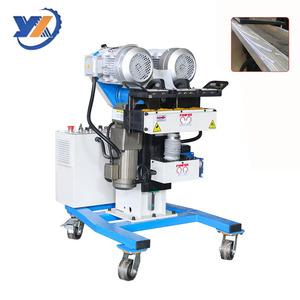
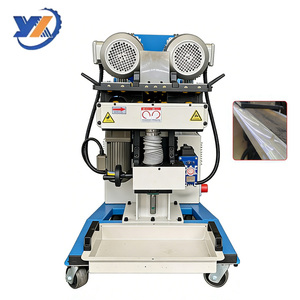
Advanced automatic self-propelled milling machines (such as 6.59kW gear-driven walking edge millers) utilize shear face milling cutters to remove material mechanically without thermal input. This cold milling process leaves the base metal grain structure completely uncompromised, yielding a surface roughness of Ra 3.2 to Ra 6.3. Welders can immediately perform Submerged Arc Welding (SAW) or Gas Tungsten Arc Welding (GTAW) directly on the milled edge without requiring manual angle grinding to remove oxidized slag layers.
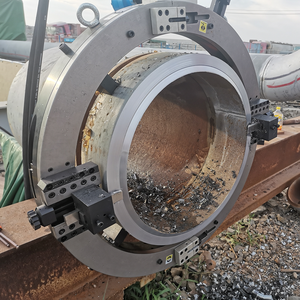
For offshore oil rigs, natural gas processing plants, and nuclear decommissioning, hot-work cutting is frequently prohibited due to ambient flammable gas hazards. Pneumatic OD-mounted split-frame clamshell pipe machines solve this critical constraint through pneumatic cold cutting.
The split-frame architecture features a two-halves hinged ring structure that mounts externally around inline piping systems (ranging from 22 inches up to 28 inches OD and beyond). Driven by explosion-proof air motors, the dual tool posts automatically feed radially inward, performing simultaneous circumferential severance and compound beveling (such as 30° V-bevels or 37.5° J-prep profiles) with zero spark generation.
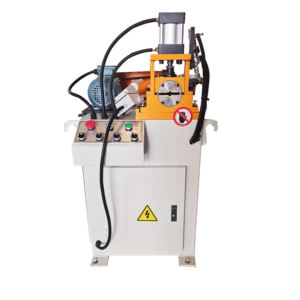
In high-volume tube processing—such as automotive exhaust manifolds, hydraulic cylinder bodies, and structural tubular frames—single-head and double-head chamfering systems provide internal, external, and facing operations simultaneously. Using pneumatic workpiece clamping paired with hydraulic tool feed cylinders, these machines eliminate concentricity errors. The chamfer cutter head houses multiple indexable carbide inserts that remove burrs, create weld bevels, and radius internal tube IDs in cycle times under 3.5 seconds per tube end.
Quantitative benchmarking of metal edge preparation and bevel milling processes across key operational parameters.
| Machinery Category | Primary Material Focus | Thickness / OD Range | Surface Finish (Ra) | HAZ Impact | Primary Industrial Use Case |
|---|---|---|---|---|---|
| Self-Propelled Plate Milling | Carbon Steel, Stainless, Heavy Alloy | 6mm – 60mm Plate | Ra 3.2 – 6.3 | Zero (Cold Milling) | Shipbuilding, Pressure Vessels, SAW Weld Prep |
| Handheld Electric Bevelers | Sheet Metal, Aluminum, Mild Steel | 1mm – 15mm Plate | Ra 6.3 – 12.5 | Zero (Mechanical Cut) | On-Site Chamfering, Deburring, Machine Guards |
| Pneumatic Split-Frame Clamshell | Heavy Wall Pipe (Carbon/Stainless) | 22" – 28" Pipe OD | Ra 3.2 – 6.3 | Zero (Explosion Safe) | Offshore Rigs, Refinery Maintenance, In-Line Cut |
| Single-Head Tube Chamferer | Tubular Bar, Stainless & Carbon Steel | OD 10mm – 114mm | Ra 1.6 – 3.2 | Zero (CNC Mechanical) | Automotive Tubing, Furniture, Hydraulic Lines |
| Automatic Glass Contour Polisher | Tempered, Laminated, Annealed Glass | 3mm – 25mm Glass | Optical Polish | N/A (Abrasive Wheel) | Architectural Glass, Mirrors, Oval Glassware |
As global supply chains reconfigure around automation, energy efficiency, and digital quality control, international equipment buyers must evaluate bending and edge preparation machinery through a forward-looking technological lens. Over the next decade, five primary procurement trends will define market leadership:
Direct technical answers to common questions regarding custom OEM/ODM manufacturing, international field support, machine lead times, and process compatibility.
Consult with our senior application engineers to evaluate your material specifications, request custom OEM/ODM machine proposals, or schedule live video cut-testing on your specific metal parts.