Engineered for heavy-duty industrial fabricators, offshore structure builders, and precision piping contractors requiring extreme bevel tolerance and high throughput.
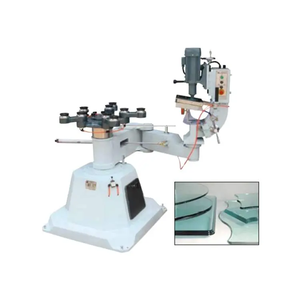
High-precision numerical control beveling unit engineered for curved, oval, and round perimeter edge polishing with micron-level contour accuracy.
Get a Quote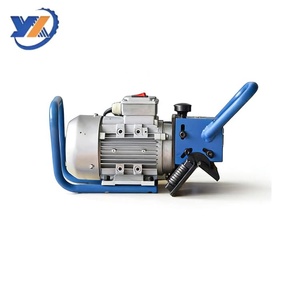
Heavy-duty motorized beveling machinery designed for rapid joint preparation on heavy carbon steel and stainless steel pipe profiles prior to root welding.
Get a Quote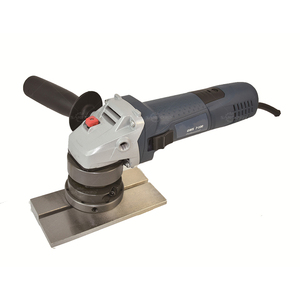
Ergonomic, portable milling tool for rapid 45-degree edge chamfering, deburring, and clean edge finishing on structural steel and metal sheets.
Get a Quote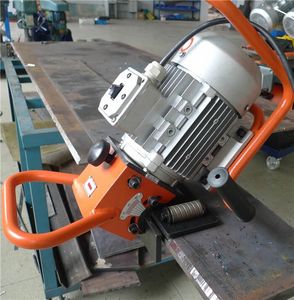
Versatile edge processing tool equipped with variable bevel angle control for high-grade alloy and stainless steel sheet metal preparation.
Get a Quote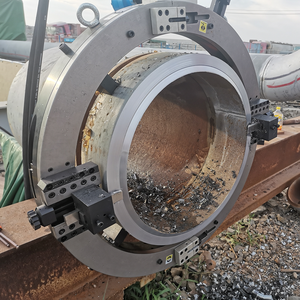
Air-driven cold cutting clamshell lathe engineered for precision in-situ severance and simultaneous weld beveling on thick-walled heavy pipelines.
Get a Quote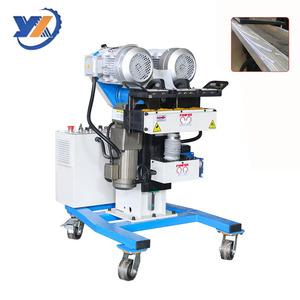
Self-propelled, high-productivity track-milling machine for continuous long-plate bevel machining across large shipyard and bridge-building plates.
Get a Quote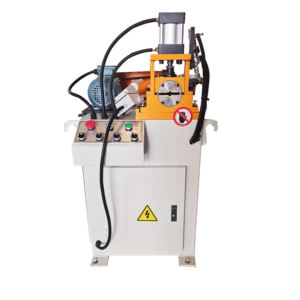
Rigid production lathe chamferer specialized for carbon and stainless steel tube end preparation, face squarings, and internal beveling.
Get a Quote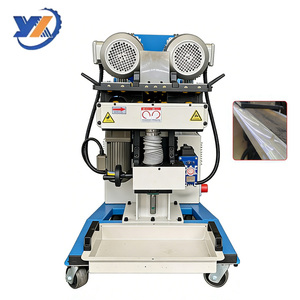
Industrial grade line-integrated pipe and plate chamfering workstation optimized for high-volume automated manufacturing lines.
Get a QuoteIn modern industrial steel fabrication, pressure vessel production, offshore jacket manufacturing, and process piping systems, pipe end preparation is no longer a peripheral step—it is the foundational bottleneck determining structural integrity and welding throughput. As global welding codes (such as AWS D1.1, ASME Section VIII, and ISO 5817) enforce increasingly stringent non-destructive testing (NDT) criteria, the demand for precision OEM/ODM pipe profiling and beveling machinery has skyrocketed.
This technical whitepaper examines the mechanical, metallurgical, and control-system advancements in 3D multi-axis pipe profiling, cold mechanical cutting, pneumatic split-frame clamshell lathe technology, and CNC high-definition thermal cutting. Designed for procurement managers, structural engineers, and plant operations directors, this document provides a comprehensive framework for selecting, customizing, and deploying industrial pipe profiling infrastructure.
Key Procurement Takeaway: Modern automated beveling reduces root-pass weld fit-up times by up to 68% compared to manual angle grinding, while completely eliminating Heat-Affected Zone (HAZ) micro-cracking when using mechanical cold-milling options.
Pipe profiling encompasses two fundamental process methodologies: Thermal Profiling (incorporating High-Definition Plasma, Fiber Laser, and Multi-Torch Oxy-Fuel) and Mechanical Cold Cutting & Milling (utilizing orbital clamshell lathes, automatic walking bevelers, and rotary cutter heads).
Historically, field contractors relied heavily on manual oxy-fuel torches or hand-held angle grinders to prepare pipe ends for butt welding. However, manual preparation introduces significant angular deviation, irregular root face thickness (land), and localized thermal stress. In contrast, heavy industrial applications require exact saddle cuts, offset intersection curves, structural slots, and compound bevel angles (such as J-bevels, V-bevels, and Compound K-bevels).
From an OEM/ODM manufacturing perspective, customizing machine kinematics depends heavily on the target material chemistry and wall thickness:
As a specialized OEM/ODM manufacturer, custom machinery engineering must address the wide physical variances inherent in raw tubular stock. Industrial pipes suffer from ovality (out-of-roundness), wall thickness variations (eccentricity), and longitudinal bow. Standard off-the-shelf cutting tables fail to maintain consistent bevel depth under these conditions.
To overcome these engineering limitations, our custom OEM/ODM pipe profiling platforms integrate four core mechanical subsystems:
Non-contact triangulation sensors scan the rotating pipe surface in real-time, feeding positional deviation data to the CNC controller to adjust Z-axis torch height instantly.
Heavy-duty multi-jaw chuck assemblies and pneumatic clamp rollers exert radial force, mechanically normalizing minor pipe ovality prior to tool engagement.
Harmonic drive gearboxes eliminate backlash during complex 3D intersection curves (pipe-to-pipe saddle joints, lateral branches, and eccentric miters).
Furthermore, custom software post-processors allow direct importation of STEP, IGES, and DXF CAD files from structural modeling packages like Tekla Structures and Autodesk Inventor. The machine automatically calculates 3D intersecting mathematical curves, adjusting feed rates, torch angles, and cutting speeds based on wall thickness and steel grade.
Selecting the optimal equipment configuration requires balancing capital expenditure (CAPEX), operational costs (OPEX), process speed, and metallurgical requirements. The data visualization table below outlines performance benchmarks across primary equipment categories:
| Technology Type | Wall / OD Capacity | Process Speed | Bevel Precision | Heat-Affected Zone (HAZ) | Primary Industry Application |
|---|---|---|---|---|---|
| Pneumatic Split-Frame Clamshell | 2" – 60" OD / Up to 80mm Wall | Moderate (Cold Cut) | ±0.05 mm | Zero (No Thermal Stress) | Nuclear, Subsea Oil & Gas, Pipeline Maintenance |
| 5-Axis CNC Plasma Profiler | 3" – 48" OD / Up to 50mm Wall | Ultra-High (1000-3000 mm/min) | ±0.3 mm | Minimal (Controlled HD Arc) | Structural Steel, Offshore Jackets, Wind Towers |
| Automatic Track Milling Machine | Flat Plate & Rolled Shells (Unbounded) | High (Continuous Feed) | ±0.1 mm | Zero (Mechanical Milling) | Shipbuilding, Heavy Plate Bridge Fabrication |
| Portable Handheld Beveler | Sheet & Small Tube (<15mm thick) | Manual / Operator Dependent | ±0.5 mm | Zero (Mechanical Cut) | General Metal Shops, Structural Framing, Deburring |
| Single-Head Tube Chamfering Lathe | 10mm – 114mm Tube OD | Extremely High (Cycles < 5s) | ±0.02 mm | Zero (Precision Lathe Tooling) | Automotive Exhaust, Heat Exchangers, Furniture |
As industrial automation shifts toward Industry 4.0 standards, procurement departments are evaluating machinery investments through Total Cost of Ownership (TCO) models rather than initial purchase price alone. Three major procurement macro-trends are governing pipe machinery acquisitions globally:
A. Demand for Single-Pass Compound Beveling: Submerged Arc Welding (SAW) and automated orbital TIG welding systems require strict narrow-gap J-bevel profiles to minimize weld metal volume. Single-pass mechanical bevelers that cut, face, and J-bevel simultaneously reduce consumable wire consumption by up to 40% per joint.
B. In-Situ Operations vs. Fixed Shop Machinery: Infrastructure retrofits in aging LNG facilities and offshore platforms necessitate modular, split-frame portable machinery that can be clamped onto existing pipelines in tight quarters, eliminating costly pipe spool removal.
C. Energy Efficiency and Drive System Electrification: Transitioning from older pneumatic and hydraulic motor drives to brushless AC servo drives and high-efficiency inverter motors reduces energy overhead while allowing precise digital torque monitoring to prevent tool breakage.
ROI Calculation Benchmark: A mid-sized steel fabrication yard replacing manual grinding with an automated OEM pipe profiling machine amortizes capital equipment expenditure within 8.4 months based on a 2-shift operating schedule saving 14 labor hours per metric ton of processed pipe spools.
Rooted in over 35 years of machine building heritage, our manufacturing facility combines British engineering design principles with state-of-the-art CNC machining capability. Unlike mere machine assemblers who outsource critical components, we maintain full quality control over the entire production chain under one roof in our Nottingham facility:
Providing global B2B procurement partners with transparent engineering credentials, custom design capability, and end-to-end lifecycle technical support.
From frame welding to precision spindle machining and electrical wiring, every machine is built under direct internal quality control in our English facility.
We modify chuck capacities, extend bed lengths, integrate custom software posts, and adapt specialized cutting heads to meet your exact part matrix.
No equipment leaves our floor without undergoing extensive cut testing on customer-supplied pipe samples to verify bevel accuracy and edge roughness.
Machines exported to over 30 countries are backed by remote diagnostic connectivity, step-by-step video assistance, and rapid spare parts dispatch.
Every thermal cutting table is matched with properly sized zoned downdraft extraction to ensure workshop compliance with international fume safety standards.
Our application engineers model cycle times, consumable wear rates, and power consumption beforehand, proving ROI before capital commitment.
Direct technical answers to common questions regarding process selection, beveling angles, field support, and custom OEM ordering.
Send us your pipe dimensions, material grades, wall thickness ranges, and desired weld bevel profiles. Our application engineers will provide a detailed technical feasibility study, cycle-time model, and formal quotation.
Get a Quote