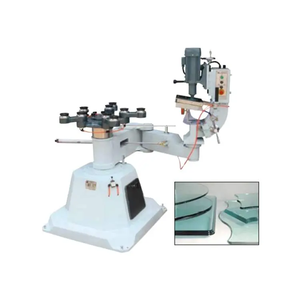
Industrial grade CNC beveling, plate edge chamfering, split frame pipe cutting, and automatic glass polishing systems
In the modern industrial ecosystem, structural steel fabrication, pressure vessel manufacturing, shipbuilding, and heavy machinery production demand unprecedented standards of edge preparation, cut accuracy, and material integrity. As global infrastructure projects expand across Europe, North America, and the Asia-Pacific region, procurement specialists are shifting focus from simple machinery acquisition toward comprehensive total-cost-of-ownership (TCO) evaluation and certified process compliance.
The top tier of global steel processing factories and exporters distinguish themselves not only by tonnage output, but by their integration of advanced beveling, cold cutting, high-definition plasma, and multi-axis CNC milling systems. Edge preparation—specifically the creation of precise V, K, X, and Y weld bevel profiles—directly impacts structural weld integrity, non-destructive testing (NDT) pass rates, and total labor hours required during assembly.
Key Procurement Insight: According to international welding standard ISO 9692-1, inconsistent edge bevel angles and root face variations exceeding ±0.5mm lead to a 34% increase in weld filler wire consumption and significantly elevate the risk of subsurface porosity during automated submerged arc welding (SAW).
This authoritative technical report analyzes the top parameters governing global steel processing machinery, comparing high-definition CNC plasma, pneumatic split-frame clamshell pipe bevelers, automatic sheet edge milling systems, and high-precision chamfering machinery. Procurement officers must evaluate supplier operational performance across five vital metrics: Duty Cycle Rating, ISO 9013 Cut Quality Class, Thermal Distortion Index, Consumable Longevity, and Integrated Downdraft Fume Extraction compliance.
Selecting the optimal steel edge preparation machinery requires balancing plate thickness, material grade, and production throughput demands. Below is an engineering comparison of primary cutting and beveling processes implemented by world-class steel processing centers.
| Technology / Process | Optimal Thickness | Bevel Profile Accuracy | Thermal Impact (HAZ) | Processing Speed | Primary Application |
|---|---|---|---|---|---|
| High-Definition CNC Plasma | 3 mm – 80 mm | ±0.5° Angle Tolerance | Minimal (Zoned Water/Air Cooling) | Ultra-High (up to 6,000 mm/min) | Structural plate profiling, heavy machinery parts, wear plates |
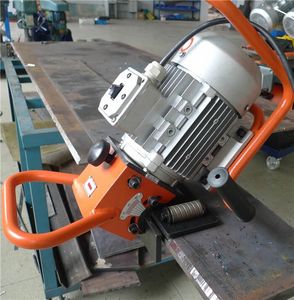
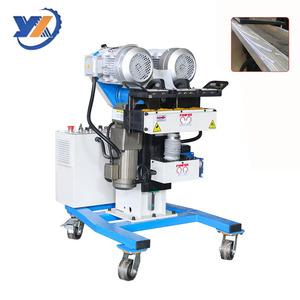
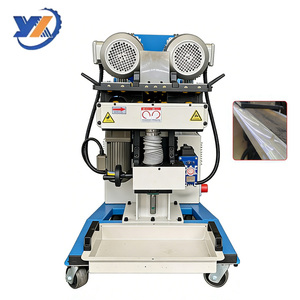
| Automatic Sheet Milling & Beveling | 6 mm – 60 mm | ±0.1° Machined Precision | Zero (Cold Mechanical Milling) | Medium-High (Automatic Walking) | Weld prep for pressure vessels, bridge girders, high-yield alloy plates |
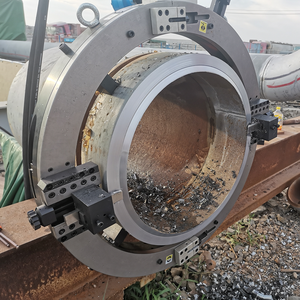
| Pneumatic Split Frame Clamshell | Schedule 40 to XXS Pipes | Concentric Cold Cutting | Zero (Heat Affected Zone Free) | High (In-situ / On-site pipeline) | Offshore oil & gas piping, nuclear facility maintenance, heavy tube processing |
| Fiber Laser Edge Cutting | 0.5 mm – 25 mm | ±0.05 mm Edge Tolerance | Negligible Micro-HAZ | Maximum on thin-to-medium sheet | Precision sheet metal enclosures, architectural steel, intricate components |
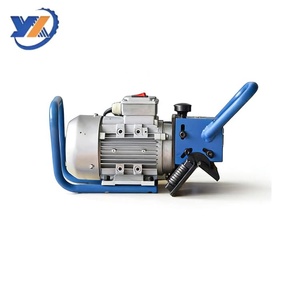
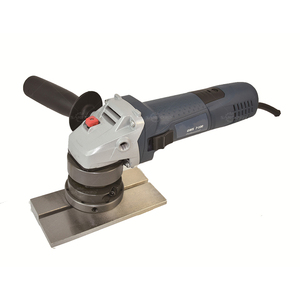
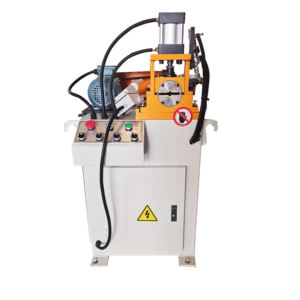
| Portable Handheld Chamfering | 1 mm – 20 mm bevel depth | Manual / Adjustable Guide | Zero (Mechanical Carbide Cutter) | Manual Operator Pace | On-site deburring, plate edge radius preparation prior to painting/galvanizing |
The global steel processing equipment market is undergoing a seismic transition driven by industrial automation, stringent environmental regulations, and the demand for absolute weld repeatability. Strategic buyers are actively moving away from traditional manual grinding and oxy-fuel torch beveling due to high labor turnover, inconsistent bevel angles, and hazardous workplace dust.
1. Cold Mechanical Processing vs. Thermal Cutting: While high-definition plasma and fiber laser systems dominate primary plate shape cutting, secondary edge preparation is increasingly shifting toward automatic walking milling machines and pneumatic split-frame cold cutting systems. Cold processing eliminates the Heat-Affected Zone (HAZ), preventing micro-cracking and metallurgical alteration in high-strength low-alloy (HSLA) steels like Hardox, Weldox, and S960QL grades.
2. Automated Edge Chamfering for Coating Longevity: International maritime and structural codes (such as IMO PSPC and EN ISO 12944) mandate that structural steel plate edges exposed to corrosive environments must possess a uniform 2mm edge radius rather than sharp 90-degree corners. Procurement schedules now prioritize automatic edge cutting and chamfering machines capable of performing simultaneous top/bottom beveling and edge rounding to ensure paint adhesion and prevent premature corrosion failure.
3. Split-Frame Clamshell Dominance in Offshore & Energy: For pipe processing, split-frame clamshell technology has become the industry standard for turnarounds, offshore platform fabrication, and nuclear pipe maintenance. Air-driven pneumatic split-frame tools allow 360-degree concentric cutting and beveling without heat generation, eliminating the need for hot-work permits in hazardous hydrocarbon environments.
Procurement Forecast: By 2028, over 70% of tier-1 steel processing exporters will require integrated automated CNC bevel heads with real-time arc-voltage height control (AVHC) and laser vision tracking to dynamically compensate for plate waviness during heavy bevel cutting.
The global steel sector is aligned with aggressive carbon reduction goals, leading to the rapid adoption of "Green Steel" initiatives powered by hydrogen reduction and electric arc furnace (EAF) production. Hardware manufacturers are matching this revolution with intelligent, energy-efficient processing machinery:
A. Energy-Efficient Servo Motors & Eco-Mode Drives: Modern walking sheet milling machines and CNC plasma power sources incorporate dynamic regenerative braking and intelligent standby modes, reducing electrical power consumption by up to 28% during idle cycle phases compared to legacy 380V heavy-duty machinery.
B. IoT-Enabled Predictive Maintenance & Consumable Monitoring: Premium CNC cutting and beveling equipment now feature integrated sensor arrays that track spindle load, vibration harmonics, torch temperature, and pneumatic pressure in real time. Remote telemetry alerts maintenance managers before tool failure occurs, extending milling insert and plasma nozzle lifespan by up to 40%.
C. Zoned Downdraft Fume Filtration: Compliance with OSHA, EU-OSHA, and UK HSE workplace exposure standards for hexavalent chromium and manganese fume requires sophisticated table design. Multi-zoned downdraft extraction tables open pneumatic dampers only directly beneath the active cutting head, minimizing required fan kilowatt rating while capturing 99.7% of airborne metal particulate.
Why leading global steel fabricators and service centers rely on our British engineering heritage
Founded in 1986 by engineering graduates from the University of Nottingham, our equipment represents over three decades of continuous innovation, precision machining, and proven workshop dependability.
We work in direct technical partnership with Hypertherm, fully integrating XPR, HPRXD, and MAXPRO plasma power units with matched gas consoles, height control, and CNC motion software for optimal cut charts.
From heavy structural gantry welding and precision CNC linear guide machining to electrical cabinet wiring and software compilation, every system is built and cut-tested under one roof in Sandiacre, Nottingham.
Our machine frames are stress-relieved and engineered specifically to handle heavy plate loading shock, maintaining true squareness, positioning accuracy, and vibration suppression over decades of continuous use.
Seamlessly bridge the gap between CAD drawings and finished cut parts. Our integrated nesting and CAM software optimizes material yield, minimizes scrap rates, and automatically generates precise bevel toolpaths.
With installed machines operating in over 30 countries, our factory-trained engineers provide remote CNC diagnostics, rapid global spare parts dispatch, comprehensive operator training, and lifetime technical assistance.
Expert answers to critical questions regarding steel beveling, pipe cutting, plasma capacity, and export logistics
The selection depends primarily on plate thickness, edge quality specification, and thermal tolerance requirements. Fiber laser is optimal for high-speed cutting on sheet metal up to 20mm with near-finished edges. High-Definition Plasma (such as Hypertherm XPR systems) provides the most cost-effective solution for structural plate from 3mm to 80mm, supporting dynamic multi-axis beveling. Automatic walking milling machines are recommended when metallurgical properties require zero heat-affected zones (HAZ) and ultra-precise mechanical bevel tolerances for thick pressure vessel plates.
Our heavy-duty CNC plasma platforms, equipped with Hypertherm XPR460 power sources, are capable of piercing mild steel up to 50mm and edge-starting/cutting up to 80mm. For multi-head oxy-fuel flame setups, cutting capacity extends beyond 150mm. Our automatic sheet walking beveling and milling machines handle plate edge bevel depths up to 45mm in single or multi-pass operations, while pneumatic split-frame pipe clamshell cutters cover pipe outer diameters from 22 inches up to 28 inches and beyond.
Pneumatic split-frame clamshell machines mount externally (OD mounted) onto the pipe. The frame splits into two halves to allow mounting on inline piping without cutting existing lines. Powered by compressed air, the rotating tool block orbits the pipe, performing simultaneous cold cutting and beveling (V or J prep) without generating sparks or high heat. This cold cutting process is essential for oil refineries, chemical plants, and offshore rigs where flammable gases may be present.
Yes. Our machines are exported and operational in over thirty countries worldwide. Support is delivered directly by factory-employed engineering specialists. Export packages include full seaworthy crating, international logistics documentation, remote CNC diagnostic setup, video-assisted installation guidance, on-site commissioning, and comprehensive operator training covering nesting, toolpath setup, and preventative maintenance.
Every cutting table is engineered with an integrated zoned downdraft system. The table bed is segmented into self-contained ducting zones. Mechanical or pneumatic dampers open only in the specific zone where the cutting torch is operating, directing smoke and microscopic particulate into a heavy-duty industrial dust collector. This ensures total compliance with workplace safety standards (such as HSE and OSHA) while maintaining energy efficiency.
Standard machines and portable beveling tools are typically available from stock or within 2 to 4 weeks. Custom heavy-duty CNC plasma gantries, extended bed lengths (e.g., 12m+ rail systems), and combined flame/plasma bevel units carry a lead time of 6 to 10 weeks. Our application engineers conduct drawing evaluations and cut-time studies prior to order confirmation to ensure exact machine sizing.
Send us your structural steel drawings, plate dimensions, material grades, and throughput targets. Our engineering team in Nottingham will perform a benchmark analysis to recommend the exact cutting, beveling, or milling configuration for your facility.
Inquire Now