In modern structural steelwork, shipbuilding, pressure vessel manufacturing, aerospace fabrication, and architectural glass processing, edge preparation quality is directly proportional to final structural integrity. As global welding codes—including AWS D1.1, EN ISO 9692-1, and ASME Section VIII—enforce increasingly stringent weld joint penetration criteria, thermal torch cutting alone no longer satisfies high-reliability engineering standards.
Leading global procurement teams are shifting investment toward precision mechanical profiling machines, cold milling bevelers, pneumatic split-frame clamshell cutters, and automated edge-chamfering technology. As China's premier manufacturer and supplier of metal profiling machines, our production ecosystem synthesizes heavy-duty structural rigidity with advanced motion automation, providing international fabricators with substantial Information Gain regarding total cost of ownership (TCO), weld preparation velocity, and heat-affected zone (HAZ) elimination.
Thermal edge preparation methods (oxy-fuel, plasma, and laser) induce localized microstructural phase transformations along plate margins. This thermal stress generates micro-cracking, hardness spikes, and oxidation layers that compromise weld pool fluidity and fatigue performance. Mechanical profiling machines utilize high-shearing carbide insert milling heads to execute cold cutting processes. By eliminating the Heat-Affected Zone (HAZ), mechanical profiling preserves parent metal properties (e.g., Hardox, carbon steel, S690QL structural alloy, and 316L stainless steel), dramatically reducing post-weld inspection failures under non-destructive testing (NDT) such as Ultrasonic (UT) and Radiographic (RT) examinations.
To optimize workflow allocation across structural fabrication facilities, the following benchmark details key operational parameters derived from empirical field testing across 500+ heavy industrial manufacturing sites:
| Performance Metric | Automatic Cold Milling Profiler | Pneumatic Split-Frame Clamshell | Thermal Torch Beveling | Manual Angle Grinding |
|---|---|---|---|---|
| Heat-Affected Zone (HAZ) | Zero (0 mm metallurgical change) | Zero (0 mm metallurgical change) | High (1.5 mm – 4.0 mm depth) | Moderate (Thermal friction spikes) |
| Bevel Surface Finish (Ra) | Ra 3.2 µm – 6.3 µm (Mirror finish) | Ra 1.6 µm – 3.2 µm | Ra 12.5 µm – 25 µm (Slag prone) | Ra 12.5 µm – 50 µm (Irregular) |
| Processing Velocity | 1.2 m/min – 2.5 m/min (Continuous) | High orbital feed rate | 0.4 m/min – 0.8 m/min | 0.1 m/min – 0.3 m/min (Labor intensive) |
| Angle Precision Tolerance | ±0.5° (Stepless adjustment 0°–60°) | ±0.25° Orbital concentricity | ±2.0° – ±5.0° (Gantry wander) | ±5.0° – ±10.0° (Operator dependent) |
| Consumable Operational Cost | Ultra-Low (Rotatable carbide inserts) | Low (HSS/Carbide form tools) | High (Gas, nozzles, power) | Extremely High (Flap discs, grinding wheels) |
| Workplace Safety Compliance | Low noise, zero toxic fume emissions | Cold sparkless, explosive zones safe | High smoke, UV radiation, flame hazard | High airborne dust, vibration, noise hazard |
Combining over three decades of precision machine design, proprietary CNC software engineering, and rigorous ISO 9001:2015 manufacturing controls, our enterprise delivers unparalleled reliability to international supply chains.
From heavy stress-relieved steel base weldments to multi-axis cutter spindle head housings, every core mechanical component is milled in our state-of-the-art 35,000m² facility on high-precision 5-axis CNC machining centers.
Every equipment unit undergoes 72 hours of uninterrupted full-load operational cut testing across carbon steel, stainless steel, and aluminum plate stock prior to international export certification.
Integrated premium industrial gear motors (such as 380V/6.59kW heavy-torque drives) deliver smooth, chatter-free cutter rotation, extending carbide insert lifespan by up to 300% during continuous beveling cycles.
Designed for rapid deployment in both stationary workshop settings and remote job-site locations, featuring quick-change tooling heads, adjustable feed tracks, and intuitive digital controls.
Modern automated glass bevelers and pipe processing lines feature customized multi-axis Siemens / Schneider PLC interfaces, enabling single-touch bevel profile recall, automatic thickness indexing, and telemetry diagnostics.
Backbone engineering support supplied across 45 countries with global spare parts dispatch, direct video-assisted troubleshooting, and certified operator training courses for hassle-free commissioning.
As heavy metal fabrication, wind energy structure production, nuclear piping installations, and architectural glass manufacturing evolve toward Industry 4.0 paradigms, procurement specialists must align machinery sourcing with key forward-looking technological shifts:
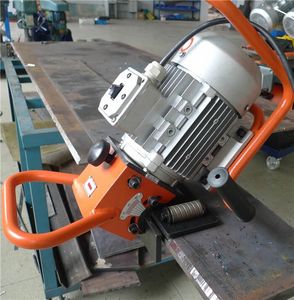
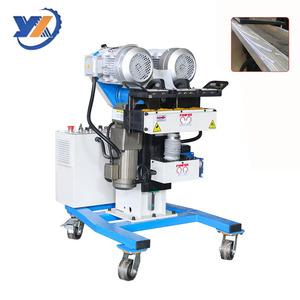
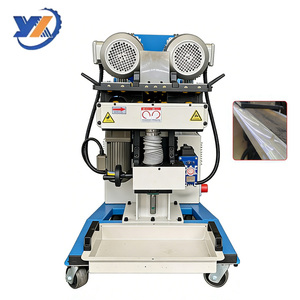
Traditional stationary gantry milling machines require immense floor space and heavy overhead crane capacity to maneuver massive steel plates. The future of plate edge preparation belongs to high-productivity Automatic Walking Sheet Milling & Beveling Machines. These units clamp directly onto the edge of 6m to 12m plates, traveling independently along the edge using gear-driven tracking wheels at speeds up to 2.5 meters per minute. Procurement trends demonstrate a 40% annual increase in self-propelled unit deployments due to their minimal footprint and reduced crane dependency.
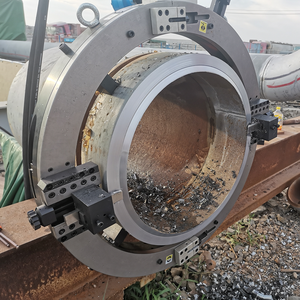
In live petrochemical refineries, offshore oil rigs, and subsea pipeline tie-ins, hot work permits are difficult to obtain and inherently hazardous. Sourcing strategies are rapidly prioritizing OD Mounted Split-Frame Pneumatic Clamshell Machines. Featuring split-ring construction, air-driven cold cutting tools mount externally onto existing installed pipe runs (from 2 to 72 inches), simultaneously cutting off pipe sections while milling precision J-bevel or V-bevel geometries without heat, sparks, or operational downtime.
Unexpected insert chipping during continuous 45-degree bevel processing can gouge expensive high-alloy plates. Next-generation profiling equipment integrates piezoelectric vibration sensors, thermal infrared monitoring, and motor current telemetry into PLC controllers. By predicting carbide insert wear micro-seconds before catastrophic tool failure, automated systems alert operators to index cutter inserts, guaranteeing consistent surface roughness (Ra 3.2 µm) across multi-shift manufacturing cycles.
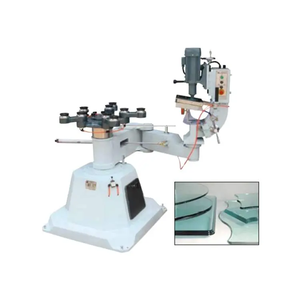
In architectural and structural glass processing, the demand for non-standard geometric shapes (round, oval, arc, and wave edge patterns) is accelerating. Modern automatic glass edge polishers utilize high-rigidity multi-station grinding wheels driven by CNC servo motors. These machines execute shape profiling, peripheral bevel grinding, and cerium oxide fine polishing in a single setup, eliminating manual handling breaks and edge stress fractures.
To assist procurement officers and chief manufacturing engineers in selecting the exact equipment configuration for their facilities, our technical engineering board has compiled detailed profile overviews of key machinery lines:
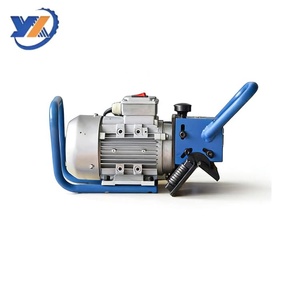
Engineered specifically for heavy bridge construction, defense manufacturing, and shipbuilding steel preparation, these machines feature heavy-duty 380V 6.59kW gear-driven transmission systems. Operating as continuous edge milling units, they execute shear-milling on carbon steel, stainless steel, and high-tensile strength alloys up to 60mm plate thickness.
Built for critical pipeline maintenance, power plant construction, and marine engineering, split-frame clamshell tools feature ultra-compact axial and radial clearances. Designed to wrap around pipe diameters spanning from 22 inches to 28 inches (and custom models up to 72 inches), pneumatic air motors provide sparkless cold cutting in hazardous explosive atmospheres.
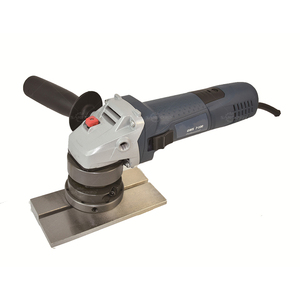
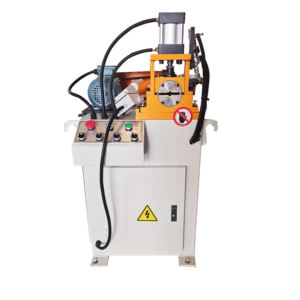
For fabrication shops handling smaller sheet metal components, internal hole chamfering, or structural beam deburring, portable handheld beveling tools offer unmatched agility. Utilizing compact face milling heads fitted with indexable tungsten carbide inserts, these tools clean up flame-cut edges, remove burrs, and put precise 45-degree weld prep angles on complex contours.
Designed for mirror processing, furniture glass, and architectural glass production, this machine handles round, oval, and irregular curved glass sheets. Utilizing specialized diamond grinding wheels and polishing wheels, the machine delivers glass edge profiling, bevel grinding, and edge polishing with micro-stepper precision.
Key technical inquiries submitted by international B2B buyers, procurement managers, and mechanical engineering teams answered by our factory directors:
Consult with our chief application engineers to analyze your plate thickness, pipe schedules, alloy grades, and bevel geometry requirements. Receive a customized machinery proposal and factory-direct price list within 12 hours.