Explore our export-grade industrial machinery engineered for heavy-duty metal fabrication, automated pipe chamfering, and high-definition edge prep.
Evaluating plasma torch factories and exporters requires looking beyond surface-level specifications. Our engineering team combines over three decades of British precision manufacturing heritage with direct Hypertherm OEM integration to deliver cutting solutions that guarantee lower cost-per-cut, flawless edge squareness (ISO 9013 compliance), and zero unscheduled downtime.
An authoritative technical evaluation guide for procurement heads, OEM fabricators, and structural steel service centers.
The core variance between commodity plasma torches and high-definition systems lies in the nozzle constriction ratio and swirl baffle fluid dynamics. Premium torches utilize dual-gas swirling mechanics where an inner shield gas stabilizes the ionized arc while an outer gas vortex cools the nozzle orifice.
This micro-constriction elevates energy density past 60,000 A/cm², minimizing angular dross, reducing bevel angles under 2 degrees, and vastly extending insert lifespan.
Nozzle and electrode erosion dictate operational profitability. Leading exporters integrate liquid-cooled torch bodies where chilled coolant circulates directly around the hafnium emitter element. Liquid cooling prevents thermal stress cracking during high-amperage piercing (>200A).
By keeping electrode core temperatures beneath critical degradation thresholds, plants achieve up to 300% longer consumable longevity compared to air-cooled alternatives.
Precision beveling and straight cutting mandate continuous torch-to-workpiece distance regulation. Advanced systems interface torch height control (THC) with real-time arc voltage feedback, adjusting vertical positions within ±0.1 mm accuracy.
This instant compensation neutralizes plate warping caused by extreme thermal input, mitigating torch collision risks and guaranteeing uniform cut kerf width across full sheet lengths.
| Performance Metric | Conventional Plasma Torch | High-Definition (HD) Torch | Hypertherm XPR Integrated System |
|---|---|---|---|
| Arc Energy Density | 15,000 – 25,000 A/cm² | 40,000 – 60,000 A/cm² | > 80,000 A/cm² (Vented Water Injection) |
| ISO 9013 Cut Quality Class | Range 4 – Range 5 (High Bevel) | Range 3 – Range 4 (Low Bevel) | Range 2 – Range 3 (Laser-Like Quality) |
| Hole Quality Index (TrueHole) | Requires post-drill reaming | Acceptable bolt holes (1:1 diameter) | Taper-free bolt holes down to 1:1 ratio |
| Mild Steel Piercing Limit | Up to 32 mm | Up to 50 mm | Up to 80 mm (Production Piercing) |
| Consumable Life Expectancy | 800 – 1,200 Starts | 2,500 – 4,000 Starts | > 6,000 Starts (With Auto-Gas Console) |
How global supply chain buyers are adapting to automated edge prep, AI-assisted diagnostic gas consoles, and green manufacturing standards.
Traditional multi-step metal fabrication requires secondary beveling via handheld grinders or milling setups after flame/plasma blanking. Modern global buyers are shifting capital expenditure toward single-pass bevel cutting head assemblies integrated directly into gantry systems.
By leveraging 5-axis interpolating plasma torch heads, structural steel fabricators can execute V, Y, K, and X-joint weld preparations during the primary cut sequence. This eliminates secondary labor costs, slashes shop-floor handling time by up to 65%, and guarantees precise root-face alignment for automated robotic welding cells.
Unplanned machine downtime caused by catastrophic nozzle blowout damages expensive torch bodies and ruins high-value thick plate workpieces. Leading plasma exporters now equip export machinery with IoT-enabled arc current sensor monitoring.
By analyzing high-frequency voltage fluctuations during arc ignition, the control system calculates real-time hafnium pit depth. The CNC alerts operators to perform scheduled consumable replacements before misfiring occurs, maximizing plate yield and protecting internal torch cartridge components from thermal blowback.
Procurement teams are prioritizing cutting systems equipped with automatic gas selection systems. Rather than relying on manual flowmeters, digital gas consoles blend precise proportions of N₂, H₂, Ar, and O₂ based on material grade and thickness.
For stainless steel and aluminum processing, technologies such as Vented Water Injection (VWI) utilize tap water as a secondary shield gas. This dramatically lowers operational gas expenditures while delivering mirror-finish non-oxidized edges ideal for high-spec pharmaceutical or food-grade vessel manufacturing.
Rising industrial electricity tariffs across Europe and North America have forced factory managers to evaluate inverter-based plasma power sources over legacy transformer units. Inverter power units operate at power factors exceeding 0.95, dramatically reducing kVA consumption.
Furthermore, eco-mode idle management cuts auxiliary power usage by 80% when the torch is non-active, aligning manufacturing operations with strict corporate ESG sustainability metrics.
Our senior application engineers provide tailored duty-cycle analysis, nest nesting optimization reviews, and ROI calculations based on your specific plate profiles.
Combining decades of British engineering precision with direct OEM power source partnerships to deliver unmatched long-term reliable cutting performance.
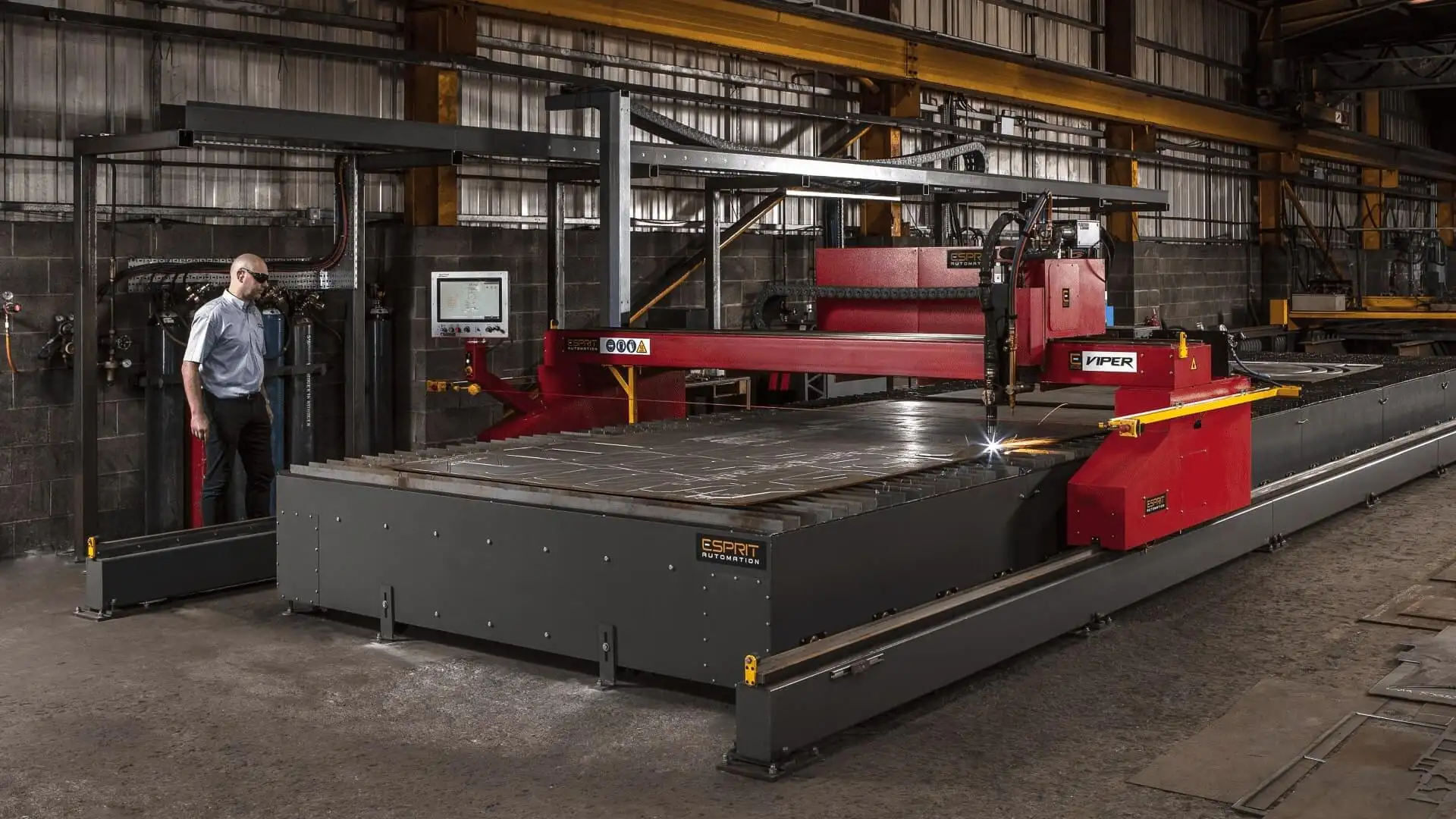
Unlike commercial traders who outsource assembly to unverified third parties, every aspect of our equipment—from heavy-duty stress-relieved gantry structures to precision linear guideway machining—is completed under one roof at our state-of-the-art facility.
As an officially recognized OEM partner for world-class plasma power source manufacturers including Hypertherm, we do not simply bolt components together. We integrate cut charts, gas management algorithms, and height control loops directly into our proprietary CNC software.
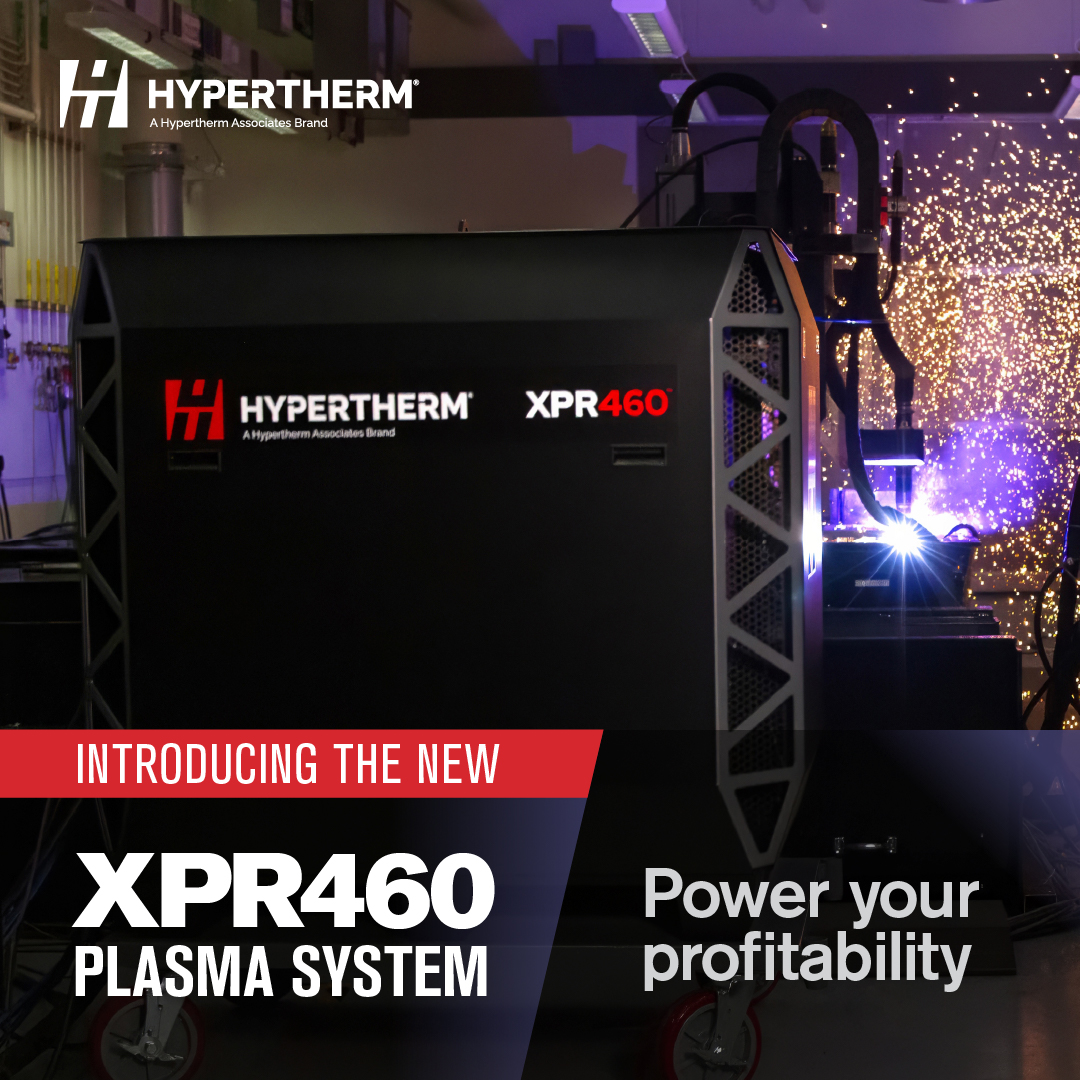
Every linear bearing, servo drive, gearbox, and torch body is sourced from certified European and top-tier global suppliers.
No machine leaves our shop floor without undergoing rigorous physical material cutting, squareness checks, and laser interferometer calibration.
We provide structured commissioning and operational training covering CAD/CAM nesting, speed parameters, and preventive torch maintenance.
Our zoned downdraft extraction beds are paired with industrial pulse-jet cartridge filters to keep shop environments compliant with clean air regulations.
Clear, direct answers from our engineering directors regarding plasma torch selection, international shipping, duty cycles, and consumable economics.
Submit your DXF/DWG part drawings, target material thickness ranges, and annual volume requirements. Our senior application specialists will analyze your project and supply an all-inclusive quotation detailing recommended plasma torches, machine footprint layout, and projected consumable lifespan.