1. What is the fundamental role of Industrial CNC Cutting Software in metal fabrication?
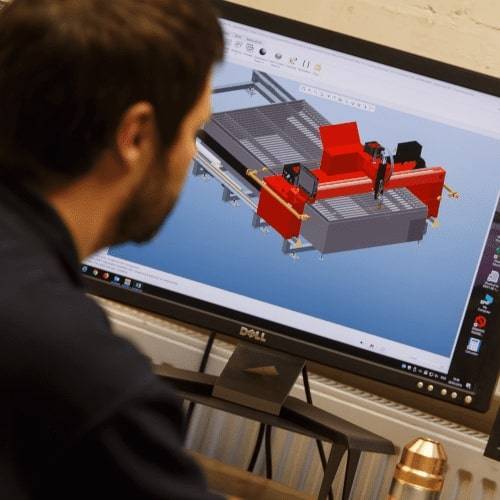
Industrial CNC cutting software converts raw vector CAD geometry (such as DXF, DWG, or STEP files) into machine-executable G-code (NC code). It performs automated shape nesting to maximize sheet utilization, assigns optimal cutting process parameters (pierce height, cut speed, gas pressures, kerf compensation), and optimizes travel sequences to reduce cycle times and prevent thermal distortion on plasma, laser, and oxy-fuel tables.
2. How does automated true-shape nesting software improve material yield and ROI?
Unlike grid array or manual nesting, true-shape automatic nesting algorithms rotate and interlock irregular part contours into one another and inside internal cutouts of larger parts. By operating at kerf clearances as small as a few millimeters, true-shape software routinely increases plate yield from ~70% up to 90-95%, yielding substantial annual material cost reductions that rapidly offset software acquisition fees.
3. Can industrial CNC cutting software integrate directly with enterprise ERP/MES platforms?
Yes. Advanced enterprise CAM nesting software suites feature open API connections, SQL database sync, and CSV/XML data exchange modules. This enables real-time bidirectional communication with ERP software (e.g., SAP, Oracle, MS Dynamics) to automatically pull work orders, update raw plate stock inventories, generate scrap yield logs, and report exact job costing back to accounting.
4. What is the difference between CAM nesting software and machine-level CNC controller software?
CAM nesting software runs on an office desktop workstation or server. It handles batch file importing, nesting optimization, cut order sequencing, and post-processing into G-code. Machine-level CNC software (such as Hypertherm Phoenix or CNC controller software) runs directly on the industrial PC mounted to the machine gantry; it receives the G-code and controls servo motor motion, torch height lifters, gas consoles, and safety interlocks in real time.
5. How does software manage kerf compensation for plasma versus fiber laser cutting?
Kerf is the physical width of material removed by the cutting jet or laser beam during the process. Industrial software holds process-specific tool libraries. For plasma cutting, where kerf varies dynamically with torch amperage, tip size, speed, and material thickness, the software automatically offsets the torch trajectory based on OEM cut charts. For fiber lasers with ultra-narrow kerfs, the software adjusts lead-in radius and micro-tabs to maintain sub-millimeter dimensional tolerances.
6. How does Esprit Automation handle software updates, post-processors, and technical support?
Because Esprit Automation designs both the physical CNC machines and configures the CAM software post-processors, our employed application engineers provide unified lifetime support. Software updates, custom post-processor tweaks, remote desktop troubleshooting, and programmer training are managed directly from our Nottingham headquarters without third-party hand-offs.
7. What features prevent machine tip-ups and plate warping during high-speed cutting?
Modern CNC software incorporates tip-up avoidance routing, thermal management sequencing, and dynamic lead-out rules. Tip-up avoidance plans rapid traverse paths around previously cut parts that may tilt upwards. Thermal sequencing jumps cutting paths across different quadrants of the plate to distribute heat input, preventing thermal expansion and part distortion.