Engineered for industrial fabricators, shipbuilders, and pipe contractors across Ho Chi Minh City, Binh Duong, and Dong Nai industrial zones.
A comprehensive analysis of oxyfuel torch technology, CNC gantry integration, and cold beveling systems for Ho Chi Minh City's growing industrial ecosystem.
As Southern Vietnam accelerates its industrial modernization, Ho Chi Minh City (HCMC) has emerged as the primary operational hub for heavy structural steel manufacturing, shipbuilding, offshore oil and gas modules, and civil infrastructure projects. Key industrial corridors such as the Tan Thuan Export Processing Zone, Cat Lai Port Industrial Cluster, Dong Nai Manufacturing Zone, and Binh Duong Heavy Industrial Parks require high-duty cycle thermal cutting and pipe edge preparation equipment capable of handling extreme material thicknesses under high ambient humidity and continuous operational stress.
Procurement directors and chief welding engineers in HCMC face a dual challenge: maximizing throughput while ensuring strict compliance with international welding standards (such as AWS D1.1, ASME Section VIII, and ISO 9013 for thermal cuts). Achieving zero-defect weld preparation on thick carbon steel plates (exceeding 50 mm) and heavy-wall alloy piping demands advanced thermal oxyfuel torch systems integrated with dual-drive CNC gantries, as well as high-productivity mechanical beveling machinery.
Multi-torch oxyfuel systems engineered for continuous 24/7 production shifts. Capable of piercing and severing structural steel plates from 25 mm up to 300 mm with minimal thermal distortion.
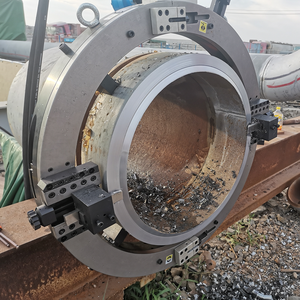
Cold-cutting pneumatic split-frame clamshells and automatic walking milling machines eliminate Heat-Affected Zones (HAZ), providing immediate ASME-compliant bevel geometries.
Factory-direct OEM/ODM customization backed by regional support in ASEAN. Rapid spare parts dispatch to HCMC ports with up to 45% capital expenditure savings compared to EU equivalents.
Oxyfuel flame cutting remains the most cost-effective process for mild steel profiling above 50 mm thickness. The underlying chemistry relies on the exothermic reaction between high-purity oxygen (minimum 99.5%) and preheated carbon steel reaching its ignition temperature (~870°C). Selecting the optimal fuel gas—whether Acetylene, Propane, LPG, or Methane (Natural Gas)—directly impacts preheat speed, kerf width, and operating costs in Vietnamese fabrication yards.
To assist manufacturing engineers in HCMC in choosing the correct edge preparation process, the following comparison matrix evaluates key performance parameters across plate thickness, tolerance, and metallurgical impact:
| Process Method | Thickness Range | Bevel Accuracy | HAZ Impact | Cutting Speed | Primary Industrial Use Case (HCMC) |
|---|---|---|---|---|---|
| Multi-Torch Oxyfuel Flame | 25 mm – 300 mm | ± 1.5 mm / ISO 9013 Range 3 | Moderate to High (1.5-3.0 mm) | 300 – 600 mm/min | Heavy plate girders, ship deck plates, foundation rings |
| High-Definition CNC Plasma | 3 mm – 80 mm | ± 0.5 mm / ISO 9013 Range 2 | Low to Moderate (< 1.0 mm) | 1,200 – 3,500 mm/min | Structural brackets, vessel shells, ductwork profiling |
| Automatic Edge Milling (Cold) | 6 mm – 60 mm | ± 0.1 mm / Machined Finish | Zero (No Thermal Stress) | 1,500 – 2,500 mm/min | High-pressure vessels, bridge deck beveling, stainless steel |
| Split-Frame Clamshell Pipe Beveler | 2" – 48" Pipe OD | ± 0.05 mm Concentricity | Zero (Cold Cutting) | RPM-dependent Mechanical Tooling | Offshore oil & gas piping, high-pressure steam lines |
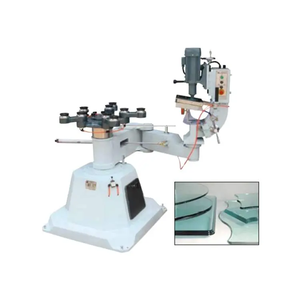
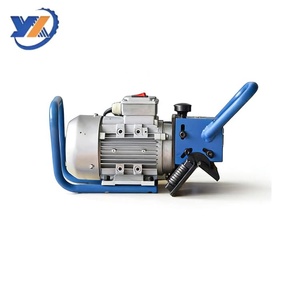
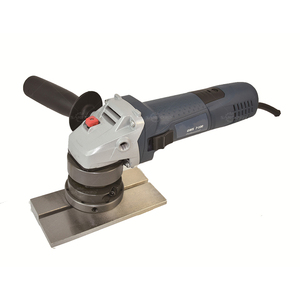
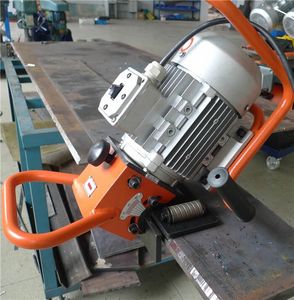
Real-world integration of heavy-duty torch gantries, pipe bevelers, and portable milling equipment across HCMC's industrial corridors.
Shipbuilding facilities operating along the Saigon River require heavy beveling on high-tensile marine hull plates. Using multi-head rail-based CNC oxyfuel cutters allows simultaneous V, Y, and K-bevel edge preparation on 40 mm AH36 grade steel plates. This reduces downstream welding prep times by 60% while maintaining absolute bevel angle uniformity over 12-meter plate spans.
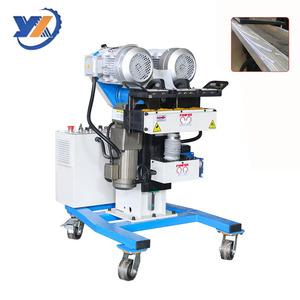
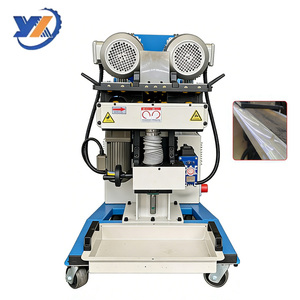
For large-scale infrastructure projects like the Metro expansion and Long Thanh International Airport supply chains, steel fabricators utilize automatic walking sheet milling machines. Operating at 380V / 6.59kW, these units move autonomously along carbon steel plate edges, machining clean 45-degree chamfers without thermal stress or slag accumulation.
High-pressure piping systems operating under stringent DNV and ASME standards require zero heat input during end preparation. Pneumatic OD-mounted split frame clamshell machines provide dual cold-cutting and beveling on 22-to-28-inch heavy-wall pipes, enabling precise J-prep and compound bevels directly in field repair environments.
Combining 35+ years of British gantry engineering heritage with China's state-of-the-art precision manufacturing and supply chain scale.
Heavy structural steel gantries are fully stress-relieved via high-temperature annealing furnaces and precision-machined on multi-axis floor-type CNC boring mills, ensuring lifetime alignment stability under heavy thermal radiation.
Seamlessly paired with Hypertherm EDGE Pro CNCs, automatic gas consoles, and precision capacitive torch height controls (THC). Operators learn intuitive touchscreen operation within a single working shift.
Every oxyfuel torch carriage and beveling unit undergoes a rigorous 48-hour continuous burn-in and cut-testing procedure on certified carbon steel plate prior to packaging and sea-freight containerization.
Streamlined sea logistics directly from Guangzhou/Shenzhen to Cat Lai Port (HCMC) within 5 to 7 transit days. Complete Form E Certificate of Origin support for preferential ASEAN-China tariff treatment.
The manufacturing landscape in Southern Vietnam is undergoing a massive shift toward higher automation, strict safety compliance, and energy efficiency. Plant managers updating their plate-cutting lines are prioritizing three key technology trends:
Modern steel processing centers in Ho Chi Minh City no longer select between plasma and oxyfuel—they integrate both onto a single heavy-duty gantry. High-definition plasma handles high-speed profiling on plates up to 32 mm, while multi-torch oxyfuel carriages automatically engage for heavy plate slicing up to 200 mm, maximizing machine utilization per square meter of shop floor.
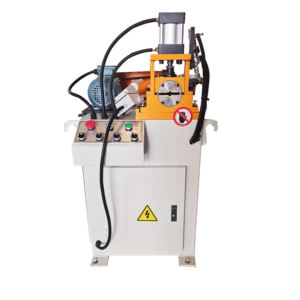
Environmental Regulations (ISO 14001) and strict occupational health guidelines across HCMC industrial zones are pushing fabricators away from manual angle grinding and thermal beveling on stainless steel. Electric and pneumatic portable milling machines yield zero airborne metallic dust and produce smooth, weld-ready bevel edges in a single pass.
Expert answers addressing customs logistics, gas supply setup, spare parts availability, and equipment maintenance in Southern Vietnam.
Connect directly with our senior application engineers to receive custom technical proposals, cut-time studies, and factory-direct pricing for your Ho Chi Minh City facility.