Export-ready heavy-duty industrial machinery built to withstand rigorous continuous-duty cycles in Klang Valley metal fabrication facilities.
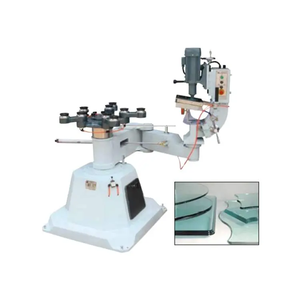
Automated high-precision edge grinding and multi-angle chamfering system for complex geometric profiles.
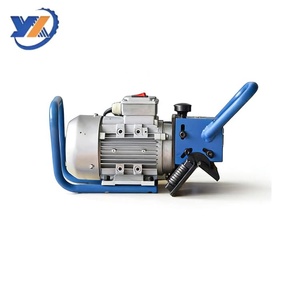
Versatile heavy-duty torch plate beveling tool engineered for seamless weld preparation on heavy structural pipe.
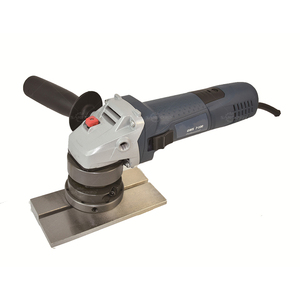
Ergonomic deburring and trimming edge processing tool optimized for carbon steel and stainless plate work.
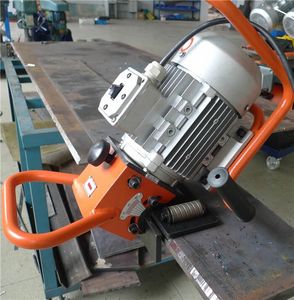
High-speed mechanical edge milling and beveling tool with variable angle adjustments (15°–60°).
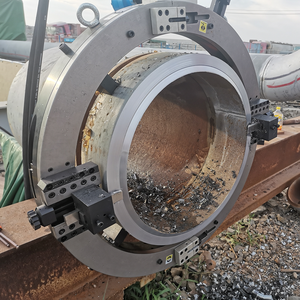
Cold cutting OD-mounted split frame system designed for high-risk offshore oil & gas pipeline maintenance.
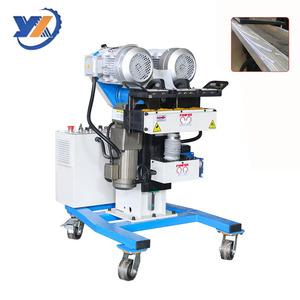
High-productivity 6.59kW auto-walking plate beveler delivering zero thermal-distortion root faces.
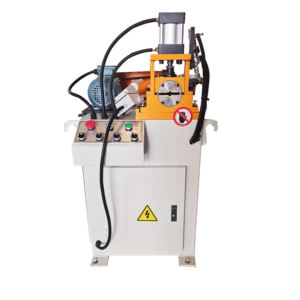
Industrial heavy-duty single-head tube end facing and beveling station for tubular frame fabrication.
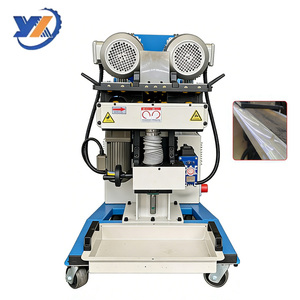
Integrated machine tool platform designed for heavy-wall steel pipe profiling and continuous edge cutting.
An engineering whitepaper on optimizing preheat kinetics, oxygen jet velocity, and kerf dynamics for heavy steel fabrication across Peninsular Malaysia.
Oxyfuel thermal cutting is not merely a melting process; it is a highly exothermic chemical reaction between high-purity oxygen and iron at elevated ignition temperatures. When carbon steel is preheated by an oxygen-fuel gas flame to its ignition point—approximately 870°C to 900°C (1,600°F to 1,650°F)—a high-velocity jet of pure cutting oxygen is directed onto the heated surface. The iron rapidly oxidizes according to three primary chemical equations:
Primary Reaction: Fe + O → FeO + ΔH (−267.5 kJ/mol)
Secondary Reaction: 3Fe + 2O2 → Fe3O4 + ΔH (−1,120.9 kJ/mol) [Dominant exothermic heat contributor]
Tertiary Reaction: 2Fe + 1.5O2 → Fe2O3 + ΔH (−824.2 kJ/mol)
The heat generated by the oxidation of iron provides roughly 70% to 80% of the total energy required to sustain the cut through the entire thickness of the plate. The preheat flame supplies only the remaining 20% to 30%. Therefore, engineered torch design—specifically gas dynamic orifice geometry, pressure regulation consistency, and laminar oxygen stream retention—directly dictates cut edge perpendicularity, slag adhesion, and Heat-Affected Zone (HAZ) width.
A critical factor frequently overlooked in regional Klang Valley workshops is the purity of the cutting oxygen stream. Empirical testing demonstrates that a drop of just 1% in oxygen purity (from 99.5% down to 98.5%) results in a 25% reduction in cutting speed and a 25% increase in specific oxygen consumption. If oxygen purity degrades to 95%, the exothermic reaction ceases to be self-sustaining, turning the cut into an irregular, gouged trench dominated by molten slag accumulation.
For structural steel exporters and fabricators operating in Kuala Lumpur, Selangor, and Port Klang, selecting the optimal fuel gas is an economic and technical trade-off involving preheat intensity, flame velocity, and ambient humidity considerations.
Flame Temperature: 3,160°C (in O₂)
Primary Flame Energy: 18,890 kJ/m³
Flame Velocity: 7.8 m/s
Acetylene provides the highest flame velocity and primary cone temperature. It excels at fast pierces on plate below 25mm and localized hand-torch trimming. However, higher cylinder rental fees in Malaysia make it less economical for heavy continuous CNC table cutting.
Flame Temperature: 2,828°C (in O₂)
Total Heat Value: 93,000 kJ/m³
Flame Velocity: 3.3 m/s
Propane concentrates its thermal energy in the secondary outer cone. This characteristic makes it exceptionally suited for thick plate profile cutting (>50mm up to 300mm), as it prevents top-edge melting while maintaining thorough preheating throughout deep kerfs.
Flame Temperature: 2,927°C (in O₂)
Total Heat Value: 104,500 kJ/m³
Flame Velocity: 4.7 m/s
MAPP offers a balanced middle-ground, featuring higher coupling distance tolerance and safer handling characteristics than Acetylene. Widely deployed in offshore split-frame pipe beveling operations along the Klang Valley maritime belt.
Below is an engineering dataset detailing operational parameter recommendations across varying carbon steel thicknesses (S235JR, S355JR, ASTM A36) using heavy-duty machine oxy-fuel torches manufactured to ISO 5172 standards:
| Plate Thickness (mm) | Cutting Nozzle Orifice (Size) | Cutting O₂ Pressure (bar) | Preheat O₂ Pressure (bar) | Fuel Gas Pressure (LPG/bar) | Cutting Speed (mm/min) | Kerf Width (mm) |
|---|---|---|---|---|---|---|
| 6 – 10 mm | Size 0 / #10 | 2.0 – 2.5 | 1.5 – 2.0 | 0.35 | 550 – 650 | 1.2 – 1.5 |
| 12 – 25 mm | Size 1 / #15 | 3.0 – 3.5 | 2.0 – 2.5 | 0.40 | 420 – 520 | 1.8 – 2.2 |
| 30 – 50 mm | Size 2 / #20 | 3.5 – 4.5 | 2.5 – 3.0 | 0.45 | 320 – 400 | 2.5 – 3.0 |
| 60 – 100 mm | Size 3 / #30 | 4.5 – 5.5 | 3.0 – 3.5 | 0.50 | 200 – 280 | 3.5 – 4.2 |
| 150 – 200 mm | Size 4 / #40 | 6.0 – 7.5 | 3.5 – 4.0 | 0.60 | 120 – 180 | 5.0 – 6.5 |
| 250 – 300 mm | Size 5 / #50 | 7.5 – 9.0 | 4.0 – 4.5 | 0.70 | 70 – 110 | 7.5 – 9.0 |
Kuala Lumpur and the surrounding Klang Valley metropolis represent the financial and engineering epicenter of Malaysia. As infrastructure investments accelerate under national development blueprints, heavy thermal cutting and beveling equipment plays an irreplaceable role across key regional sectors:
The continuous expansion of the Klang Valley Mass Rapid Transit (KVMRT) network, highway elevated spans (SUKE, DASH), and commercial skyscraper complexes (such as Merdeka 118 and Exchange 106 structural node sub-assemblies) require massive structural steel box girders and tubular columns. High-definition oxyfuel gantry cutters combined with self-propelled walking beveling machines enable continuous 45° double-V weld prep on thick flange plates up to 80mm thickness without introducing micro-fractures in structural steels.
Situated directly along the Straits of Malacca, Port Klang’s fabrication yards specialize in offshore jacket structures, pressure vessels, and barge conversions. Offshore structural codes (such as PETRONAS PTS and ABS standards) require zero-defect full-penetration butt welds. Our split-frame clamshell cold cutting machines and heavy-duty automatic beveling torches deliver machine-milled bevel profiles on API 5L Grade X65 through X80 pipe schedules, completely avoiding thermal distortion and eliminating post-weld stress relieving bottlenecks.
Malaysia remains a global leader in palm oil derivative processing. Refineries require large-diameter storage tanks, continuous steam digesters, and high-pressure fractionating columns. Portable stainless steel beveling machinery and heavy automatic tube chamfering tools ensure smooth radius edges on 316L clad steel plates, resisting corrosive fatty acid exposure at elevated temperatures.
Fabrication shops across Selangor are increasingly moving away from standalone single-process tables. Modern CNC installations combine high-definition plasma heads (for rapid 1mm–25mm nested sheet cutting) with multi-head oxyfuel torches on a single heavy rail. This hybrid setup allows shops to handle thin-sheet structural brackets and thick 100mm baseplates on one unified machinebed, drastically lowering capital equipment footprint.
The Malaysian Department of Occupational Safety and Health (DOSH / JKKP) has intensified workplace enforcement regarding pressurized fuel gas equipment. Modern factory procurement guidelines demand torches equipped with double-surface sintered stainless steel flashback arrestors (EN 730-1 / ISO 5172 compliant) and thermal cut-off valves directly mounted at both torch inlet and regulator stages to prevent catastrophic gas backfire events in humid factory environments.
Due to rising skilled welder labor costs in Greater Kuala Lumpur, structural fabricators are abandoning manual hand-grinding for edge prep. Automatic walking bevelers and CNC pipe profiling heads deliver consistent root faces (+/- 0.2mm tolerance), reducing robotic and manual welding wire consumption by up to 35% through standardized bevel angles.
In line with Malaysia’s National Energy Transition Roadmap (NETR), industrial gas suppliers are trialing green hydrogen-LPG blends for industrial thermal cutting. Advanced oxyfuel torches feature re-engineered internal injector nozzles capable of handling high hydrogen flame speeds without flashback instability.
With over three decades of dedicated thermal cutting engineering experience, our state-of-the-art manufacturing facility houses multi-axis CNC machining centers, automated silver-brazing assembly cells, and rigorous gas pressure testing benches. Every single torch unit manufactured undergoes 100% backfire and flame-stability testing prior to packaging.
Torch bodies and nozzle orifices are turned on high-precision Swiss-type CNC lathes, guaranteeing concentric gas passages and precise injector venturi alignment for stable flame coupling.
Unlike mass-market re-sellers, every batch of oxyfuel torches undergoes high-pressure nitrogen leak detection and actual fuel-gas combustion testing to verify flashback resistance under extreme heat conditions.
We partner with machine builders and EPC contractors across Greater Kuala Lumpur to engineer specialized multi-torch gantry blocks, extended-length scrap cutting torches, and custom bevel angles for heavy pipe spools.
Speak directly with our thermal cutting application engineers. We will analyze your plate thicknesses, gas supply setup, and daily part output to recommend the exact torch models or beveling machinery for your project.
Fast response guaranteed within 24 hours · Door-to-door delivery logistics serving Klang Valley & Peninsular Malaysia.