Engineered for high-duty structural steel, vessel fabrication, and localized industrial operations across Greater Tokyo.
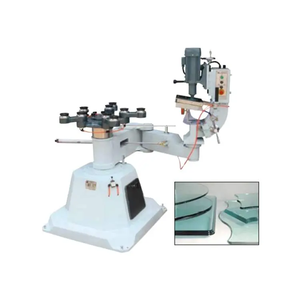
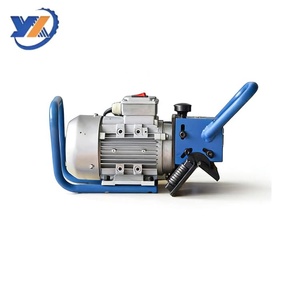
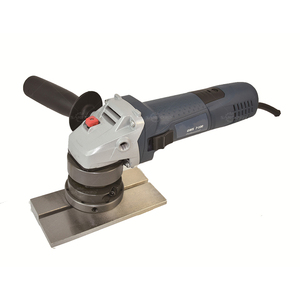
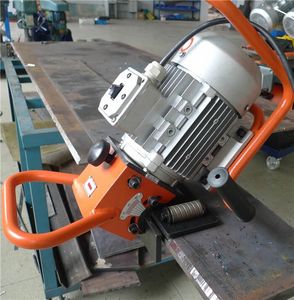
Quantifiable operational benchmarks for oxyfuel cutting and plate beveling systems operating in Tokyo's high-spec industrial zones.
Oxyfuel flame cutting remains the undisputed economic cornerstone for thick structural steel plate profiling and heavy-duty edge beveling across global metal fabrication centers. The underlying chemical mechanism involves an exothermic reaction between high-purity cutting oxygen and preheated base carbon steel at its ignition temperature (approximately 870°C to 900°C). When processing heavy plate sections ranging from 50 mm to over 300 mm—common in Tokyo Bay maritime construction and seismic structural steel fabrication—the gantry rigidity, torch height control (THC), and gas stoichiometric ratios dictate whether an edge meets strict Japanese Industrial Standards (JIS Z 3607 for thermal cutting tolerances).
Unlike plasma or fiber laser cutting, where energy density drops rapidly beyond 50 mm plate thicknesses, specialized multi-torch oxyfuel systems maintain uniform linear kerf widths and perpendicular edge squareness across massive thickness gradients. To achieve minimal heat-affected zones (HAZ) and eliminate post-cut grinding, modern oxyfuel torches utilize balanced preheat flame designs—mixing fuel gases such as Propane, Acetylene, or MAPP with preheat oxygen—supported by high-pressure jet nozzles designed for supersonic oxygen delivery.
Evaluating process economics, kerf geometry, and thickness thresholds for Tokyo metal fabricators.
| Thermal Process | Optimal Thickness | Bevel Capability | Edge Squareness (JIS B 0601) | Tokyo Sector Fit |
|---|---|---|---|---|
| Heavy Oxyfuel Flame Torch | 25 mm to 300+ mm | Multi-Torch V, Y, K Beveling | Class 1–2 (Minimal Drag Angle) | Heavy Infrastructure, Bridge Steel, Shipyard Blocks |
| High-Definition Plasma | 3 mm to 50 mm | Rotary 5-Axis Bevel Head | Class 2–3 (Micro-Bevel Edge) | General Sheet Metal, OEM Machinery Chassis |
| CNC Fiber Laser | 0.5 mm to 25 mm | Limited Angular Chamfering | Ultra-Fine Finish (<Ra 6.3) | Precision Electronics Enclosures, Rail Interiors |
| Cold Mechanical Milling | 6 mm to 60 mm | Bevel Walking & Pipe Chamfering | Machined Mirror Edge | On-Site Pipe Fitting, Weld-Prep Deburring |
Building gantry structures and oxyfuel beveling systems with single-source accountability, in-house machining, and verified OEM power integrations.
Every structural gantry, linear rail guide base, and gas distribution manifold is welded, machined, and calibrated in our centralized manufacturing facility. We eliminate third-party build discrepancies to deliver maximum thermal stability under continuous shift work.
We combine advanced oxyfuel torch blocks with seamless gas console automation and Hypertherm CNC software controllers. Cut charts, gas pressure regulation, auto-ignition, and capacitive height sensing work in complete harmony.
Founded by precision engineering graduates, our organization has supplied thermal profiling machines across 30+ nations. Our deep understanding of metallurgical thermal expansion informs every torch carriage design we ship.
For high-volume plate stripping and multi-bevel edge preparation, our gantry designs support up to 6 oxyfuel carriages operating simultaneously, reducing cycle times on structural steel by up to 400%.
Designed to satisfy stringent international safety regulations, including automatic flashback arrestor manifolds, pressure monitoring interlocks, and isolated emergency pneumatic shutoff valves.
We provide full documentation, remote CNC telemetry diagnostics, video-assisted technician support, and rapid dispatch of genuine replacement nozzles, tips, and mechanical spares directly to Tokyo industrial centers.
Custom-configured thermal cutting solutions engineered for Tokyo's specialized manufacturing ecosystem.
The Keihin Industrial Zone (spanning Tokyo, Kawasaki, and Yokohama) represents one of the world's most concentrated clusters of heavy machinery builders, ship repair yards, and marine structural fabricators. Worksites along the Tokyo Bay waterfront require continuous processing of high-tensile steel plates (JIS G 3106 SM490 and SM520 grades). Oxyfuel cutting machines fitted with multi-torch gantry arrangements are widely deployed here to perform clean straight cuts and V-shaped edge beveling on plate sections exceeding 80 mm in thickness. These prepared edges are vital for submerged arc welding (SAW) on heavy maritime structural members and foundation piles.
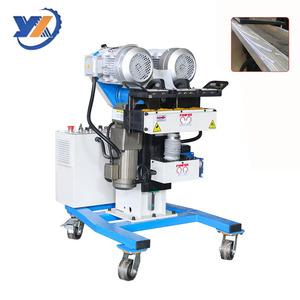
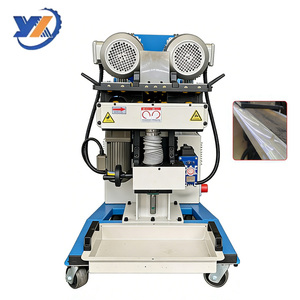
Due to strict Japanese seismic codes (Building Standard Law of Japan), structural steel fabricators in the Tokyo Metropolitan Area must adhere to exacting tolerances for column-to-beam moment connections. Heavy H-beam web plates, box column diaphragms, and seismic damper assemblies require precise double-bevel (K-prep or Y-prep) edge profiles. Our automatic walking beveling machines and gantry oxyfuel torch setups deliver consistent angular accuracy without introducing excessive thermal distortion, ensuring full-penetration weld integrity across high-density urban infrastructure projects.
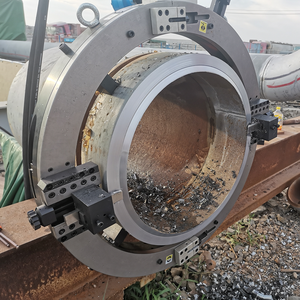
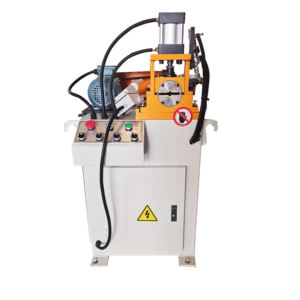
Expansion of the Tokyo subterranean railway network and maintenance of the Tokaido Shinkansen infrastructure require high-precision tube and plate chamfering. Portable split-frame pneumatic pipe cutting and beveling systems are deployed extensively during underground track replacement and utility conduit reinforcement. Cold-cutting pneumatic beveling tools prevent hazardous spark creation in underground tunnels while producing pristine 37.5° welding prep angles on carbon and stainless steel piping.
Positioned across Tokyo Bay, Chiba’s chemical processing and clean energy hubs require thick-wall pressure vessels and cryogenic storage tanks. Automatic edge milling machines and heavy-duty gantry oxyfuel torches process curved plate edges and dish-head perimeters, guaranteeing zero edge gouging and precise root-face control for automated robotic welding cells.
How automation, demographic shifts, and green initiatives are reshaping thermal cutting requirements across Japan.
Japan’s industrial sector faces acute demographic pressures and a contracting skilled welder workforce. Tokyo fabricators are rapidly replacing manual hand-held oxyfuel cutting torches with motorized walking bevelers and CNC gantry units. Automating torch height, preheat dwell times, and speed control allows a single operator to supervise multiple cutting stations while eliminating rework caused by manual gouging.
In alignment with Tokyo's "Zero Emission Tokyo Strategy," industrial facilities in Shinagawa, Koto, and Ota wards are actively reducing carbon footprints. Advanced oxyfuel torch design is adapting to handle Hydrogen-LPG and Hydrogen-Natural Gas blends, significantly lowering carbon emissions during preheating cycles without sacrificing thermal flame temperature.
Tokyo's high-tech metal centers demand real-time machine telemetry. Modern oxyfuel cutting machines integrated with EtherCAT digital communications log oxygen/fuel consumption per cut, track tip wear cycles, and communicate directly with shop floor ERP software for automated inventory replenishment of nozzle tips and flash arrestors.
Direct technical answers addressing Japanese industrial standards, electrical specifications, and regional support.
Elevate your metal fabrication productivity, achieve precision weld preparation, and deploy high-reliability oxyfuel cutting technology. Speak with our senior application engineers today to analyze your drawings, benchmark cycle times, and select the exact machine configuration for your plant.