Engineered to meet the stringent tolerance requirements of Mumbai's expanding infrastructure, switchgear manufacturing, elevator paneling, and heavy engineering hubs in Taloja, Thane-Belapur, and Rabale MIDC.
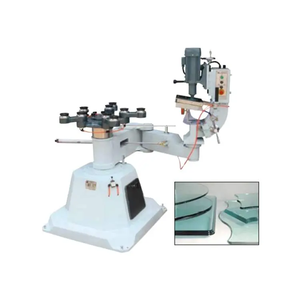
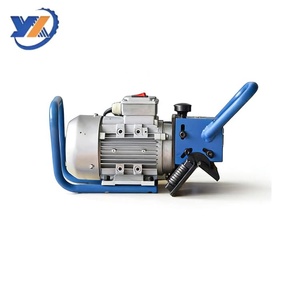
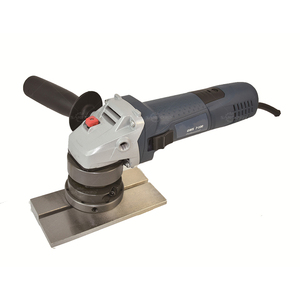
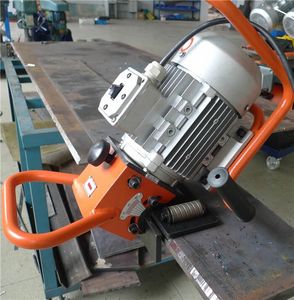
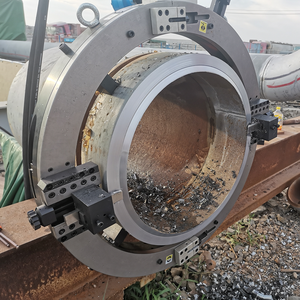
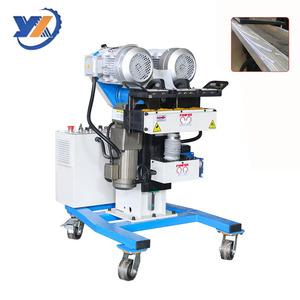
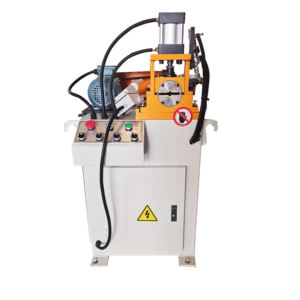
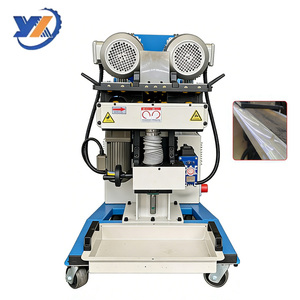
The Mumbai Metropolitan Region (MMR) and the broader Maharashtra industrial triangle (Mumbai-Pune-Nashik) represent India's highest-density manufacturing corridors for electrical switchgear, automotive sub-assemblies, pharmaceutical process equipment, and infrastructure steelwork.
Supply chain vendors serving major engineering conglomerates across Thane-Belapur and Rabale MIDC demand tight bending tolerances (±0.2°) on 1.5mm to 3.0mm CRCA sheet steel. CNC electro-hydraulic press brakes equipped with 4-axis backgauges (X, R, Z1, Z2) and Delem DA-66T 3D controllers ensure precise multi-bend sequences for complex IP-rated electrical cabinets without distortion.
Commercial infrastructure development in BKC, Lower Parel, and Navi Mumbai has created massive demand for hairline stainless steel decorative panels and elevator car enclosures. Chinese electro-hybrid press brakes feature high-precision hydraulic mechanical crowning (Wila style) and non-marking tooling systems, preventing surface scratches on pre-polished SS304/SS316 sheet stock.
Fabricators operating in Taloja MIDC, Ambernath, and Khed City producing chemical reactors, agitator tanks, and heat exchangers require heavy-tonnage tandem press brakes (300T to 1000T capacity). Combined with automated sheet beveling machines, these heavy plate bending lines handle IS 2062 Grade B carbon steel up to 25mm thickness with thermal stress relief built into the machine frames.
Operating industrial machinery in Mumbai’s high-humidity, coastal ambient environments (monsoon humidity exceeding 90% and summer shop-floor temperatures reaching 42°C) presents specific operational challenges. Direct-export Chinese CNC press brakes supplied to Maharashtra feature specialized tropicalized modifications:
To eliminate information asymmetry when evaluating Chinese press brake exporters against European or domestic Indian machine builders, engineering buyers must evaluate core hydraulic, optical, and structural feedback loops.
| Machine Architecture | Drive Technology | Crowning System | Typical Accuracy | Target Application & Workload |
|---|---|---|---|---|
| Conventional Torsion Bar CNC | Single hydraulic motor + mechanical link | Manual wedge crowning | ±0.5° angle variation | General job shops, structural angles, non-critical brackets |
| Electro-Hydraulic Synchronized (Y1-Y2) | Dual proportional valves + Givi / Heidenhain scales | CNC Motorized / Hydraulic dynamic crowning | ±0.2° angle variation | Precision electrical enclosures, control panels, server racks |
| Servo-Electric / Hybrid Servo Press Brake | Dual ePrAX / Inovance servo pump drive | Automatic real-time deformation feedback | ±0.05° high-precision angle | High-speed sheet metal, stainless architectural trims, medical chassis |
| Heavy Heavy-Duty Tandem Systems | Synchronized Master-Slave CNC configuration | Hydraulic multi-point heavy crowning | ±0.3° across long spans | Pole bending, yellow goods, structural beams, ship building plates |
A frequent error made by procurement teams importing machinery into India is calculating tonnage based solely on mild steel properties, underestimating high-tensile grades such as Sailhard, Hardox, or IS 2062 E350 steel commonly specified in Indian infrastructure projects.
The required air-bending force $P$ (in Kilonewtons per meter) is determined by the formula:
Where R_m is the tensile strength (N/mm²), S is sheet thickness (mm), L is length of bend (m), and V is the die opening width (mm, typically $V = 8 \times S$). When bending Grade 304 Stainless Steel (R_m ≈ 700 N/mm²) vs standard IS 2062 Mild Steel (R_m ≈ 450 N/mm²), required tonnage increases by approximately 55%. Tier-1 Chinese press brake factories calibrate CNC controllers with built-in material libraries reflecting these exact yield variations.
Combining world-class manufacturing scale with rigorous European component integration to deliver high-ROI metalworking machinery directly to Nhava Sheva (JNPT) port.
Every machine frame undergoes finite element analysis (FEA) to minimize frame deflection under full load. Welded mono-block frames are annealed in large tempering furnaces at 600°C for 8 hours to eliminate internal stress, guaranteeing lifelong dimensional accuracy.
We refuse unverified components. Our standard CNC press brakes feature Rexroth or Hoerbiger proportional hydraulic valves, Sunny or Voith hydraulic oil pumps, Delem / Cybelec / ESA CNC systems, and Schneider electrical safety hardware for seamless global spares sourcing.
All machinery is protected with heavy vacuum anti-rust oil wrap, desiccant bags, and sea-worthy steel skid frames. Direct containerized (OT/FR) shipping options from Shanghai/Ningbo to Nhava Sheva ensure transit times under 14–18 days with comprehensive documentation (Form A, COO, HS 846221).
Clear, direct technical answers regarding customs clearance, service support, electrical compatibility, and installation in Maharashtra.
Send us your sheet metal drawings, material grades, and bending length requirements. Our senior application engineers will provide a complete tonnage calculation, tool selection analysis, and factory-direct CIF Nhava Sheva pricing quote within 24 hours.