
Comprehensive White Paper: Precision Cutting Technology for Modern Industrial Manufacturing
In today's globalized manufacturing landscape, precision metal and material processing forms the bedrock of industrial capability. For industrial hubs like Greater Nagoya—a region globally recognized for its uncompromising pursuit of manufacturing excellence (Monozukuri)—selecting the appropriate cutting machinery is not merely a capital purchase, but a core strategic decision. This technical white paper examines the mechanical, electrical, and operational factors that distinguish high-performing CNC cutting installations, detailing how thermal management, dynamic motion control, and software integration dictate long-term ROI.
1. Structural Rigidity and Dynamic Motion Control
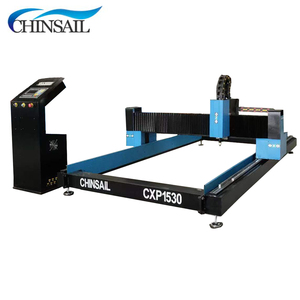
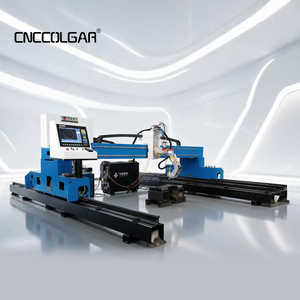
The foundation of any high-tolerance cutting machine—be it plasma, fiber laser, or mechanical profiling—lies in its frame geometry and structural damping. During high-acceleration contouring, gantry deflection introduces micro-vibrations that manifest as wavy kerf edges, ovality in small bolt holes, and premature tool wear.
Our heavy-duty machine beds are engineered using stress-relieved tubular steel or thick-walled cast iron structures. By subjecting raw welded frames to thermal annealing and shot-peening prior to linear rail seat machining, internal material stresses are neutralized. When paired with dual-drive AC Yaskawa or Panasonic servo systems and precision-ground helical gear racks, the system maintains dynamic positioning accuracy of ±0.02 mm even during multi-axis direction changes exceeding 1.2G acceleration.
2. Thermal Distortion Mitigation & Arc/Height Control
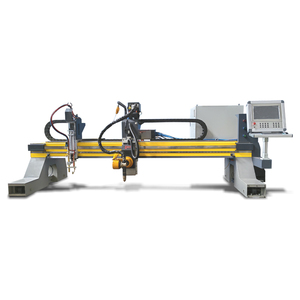
When cutting conductive metals using plasma or high-power fiber laser, thermal expansion is an inevitable physical reality. Plate lifting, warping, or bowing during execution can cause expensive torch collisions or ruined parts. To counteract this, modern industrial cutters must employ active height sensing and thermal compensation algorithms.
- Arc Voltage Height Control (AVHC): In plasma processing, digital sampling of arc voltage at 1,000 Hz allows the machine to adjust torch height dynamically to within 0.1mm, maintaining optimal standoff distance regardless of plate waviness.
- Capacitive Laser Sensors: Fiber laser heads utilize high-frequency capacitive loops to detect subtle changes in sheet distance, responding in microseconds to maintain focus alignment.
- Chamber Zoned Downdraft Extraction: Integrated pneumatic suction zones open exclusively beneath the active cutting head, clearing toxic fumes while simultaneously drawing cool room air over the workpiece to minimize heat accumulation.
3. Non-Ferrous & Profile Processing Dynamics
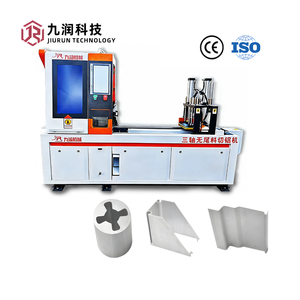
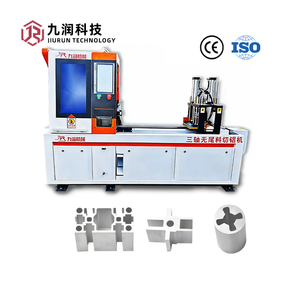
Aluminum extrusions, commonly specified in modern transportation and architectural engineering across Japan, present unique cutting challenges due to high thermal conductivity and a tendency to weld to cutting edges (built-up edge formation). Dedicated aluminum profile cutting centers utilize high-RPM air-cooled spindles operating between 6,000 to 18,000 RPM, combined with micro-dose pulse oil mist lubrication (Minimum Quantity Lubrication - MQL). This ensures rapid heat dissipation, flawless surface finish, and eliminates liquid coolant disposal costs.
4. Wire EDM Precision for Hardened Materials
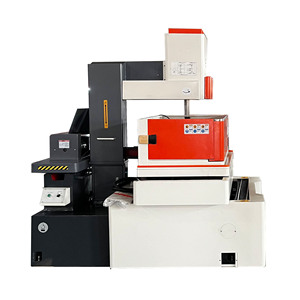
For die steel, tool steel, and exotic alloys where thermal input must be strictly avoided, Medium-Speed PLC Controlled Wire EDM (Electrical Discharge Machining) remains unmatched. By utilizing a continuously moving molybdenum wire submerged in dielectric fluid, metal removal occurs via controlled spark erosion. Achieving tolerances down to 0.01 mm with surface roughness Ra ≤ 0.8 μm, wire EDM machines represent the gold standard for Nagoya's die and mold manufacturing workshops.