Designed & Built in Nottingham, UK — Since 1986 +44 (0)115 939 1888 [email protected]
Technical Specifier & Procurement Masterclass

Thin Sheet Metal Cutting: Process Engineering, Distortion Control & Procurement ROI

Empowering global procurement leaders and structural fabricators to choose the optimal thin sheet metal cutting technology (0.5 mm – 6.0 mm). Eliminate heat warping, optimize kerf geometry, and maximize total cost-per-part efficiency with UK-manufactured precision machinery.

  • 0.5 mm – 6.0 mm Sheet Mastery
  • Zero-Burr & Distortion Control
  • 35+ Years UK Engineering Expertise
0.05 mmMin Laser Kerf Width
30+ m/minThin Sheet Cutting Velocity
100%In-House UK Build Quality
0.5 – 6.0 mmPrimary Thin Sheet Focus
Engineering Insight & Semantic Intent

Mastering Thin Sheet Metal Cutting: The Science of Precision & Thermal Mitigation


Thin sheet metal cutting—encompassing gauge thicknesses from 0.5 mm to 6.0 mm (24 Gauge to 1/4 inch) across mild steel, stainless steel 304/316, aluminum alloy 5052/6061, copper, and brass—presents unique mechanical and thermodynamic challenges. For procurement directors, plant managers, and specifiers, selecting the correct thermal or mechanical cutting process directly dictates unit production cost, edge squareness, post-process finishing, and downstream welding integrity.

The Physics of Thermal Distortion in Thin Sheet Metal

When cutting thin sheet metal with thermal energy sources such as laser or plasma, the primary operational threat is localized thermal expansion. Because thin gauge sheets possess low transverse thermal mass, rapid heat input from a thermal beam creates steep temperature gradients between the cutting zone and adjacent cold metal. This localized differential expansion induces longitudinal compressive stress beyond the sheet’s yield strength, resulting in "oil-canning," edge bowing, and severe macro-level sheet buckling.

To overcome thermal warping in thin metal sheet fabrication, modern CNC cutting systems must combine high-speed vector acceleration with dynamic power modulation and specialized gas dynamics:

  • High-Speed Beam Motion: Minimizing beam dwell time limits total heat input (Joules per millimeter) transferred to the base metal skeleton.
  • High-Pressure Assist Gas (Nitrogen/Compressed Air): Rapidly expels molten liquid metal from the kerf before latent heat dissipates laterally into the thin sheet substrate.
  • Dynamic Corner Power Ramping: Automatically scales laser or plasma power proportional to realtime controller velocity during sharp direction changes, preventing corner burnout and edge melt.
High speed fiber laser thin sheet metal cutting machine

Comprehensive Thin Sheet Metal Cutting Process Comparison Matrix

Evaluating performance parameters for 0.5 mm to 6.0 mm thin metal sheet processing to assist global procurement decision-making.

Process Engineering Trade-Off Matrix for Thin Sheet Metal Cutting (0.5mm – 6.0mm)
Technology Ideal Thickness Range Typical Kerf Width Heat Affected Zone (HAZ) Edge Quality & Dross Cutting Speed (1.5mm Steel) Operational Cost / Hour
Fiber Laser (Nitrogen Assist) 0.5 mm – 6.0 mm (Optimal) 0.04 mm – 0.12 mm Negligible (< 0.05 mm) Mirror finish, 100% burr-free, zero oxidation 25 – 45 m/min Low-Medium (High electric efficiency)
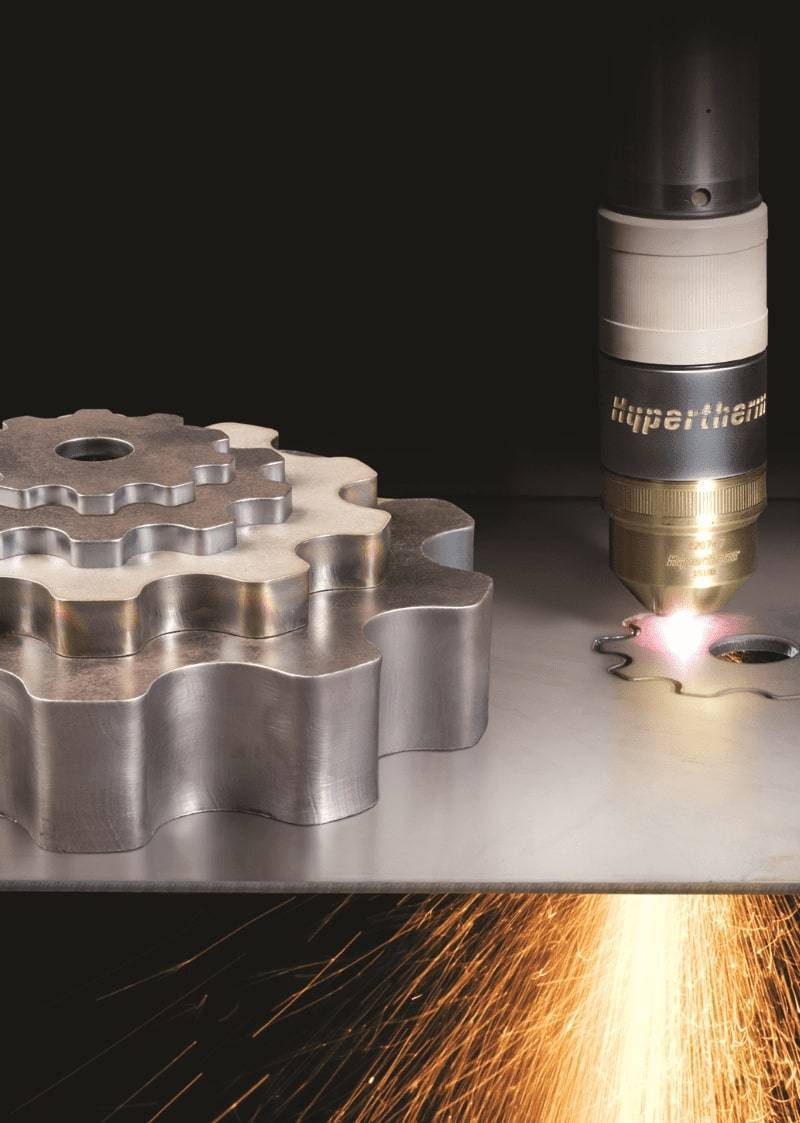
High-Definition Plasma (XPR) 2.0 mm – 6.0 mm+ 0.8 mm – 1.5 mm Minor (0.2 mm – 0.4 mm) Near-vertical edge (< 2° bevel), minimal bottom dross 6 – 12 m/min Low (Extremely economical per linear metre)
Air Plasma (Conventional) 0.8 mm – 6.0 mm 1.2 mm – 2.2 mm Moderate (0.4 mm – 0.8 mm) Acceptable HVAC standard; light dross on stainless 4 – 9 m/min Lowest initial capital outlay
Abrasive Waterjet 0.5 mm – 6.0 mm+ 0.7 mm – 1.0 mm Zero HAZ (Cold process) Tapered edge, satin finish, no thermal stress 0.5 – 2.0 m/min High (Abrasive media + high maintenance)
Mechanical Turret Punch 0.5 mm – 3.0 mm N/A (Tool die geometry) Zero HAZ Nibble marks on contours; micro-burr on tool wear High (Pattern dependant) Tooling wear dependent
Engineering Solutions for Thin Sheet Metal

Recommended Precision Machinery for Thin Sheet Metal Cutting


Esprit Automation manufactures high-precision CNC cutting systems engineered specifically to solve the thermal, mechanical, and throughput demands of thin sheet metal fabricators worldwide.

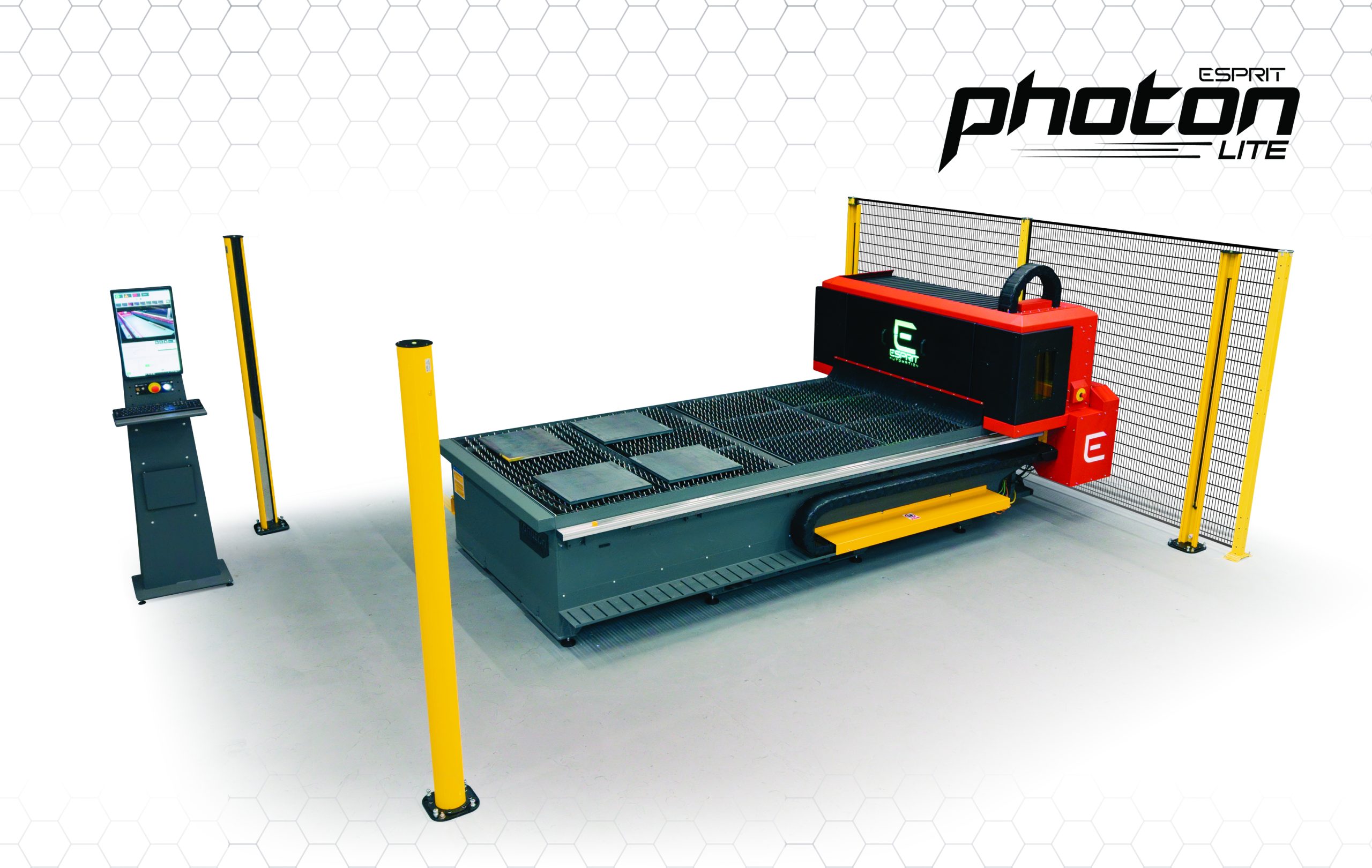
Photon LITE Fiber Laser Sheet Metal Cutter Fiber Laser

Photon LITE — Ultra-Compact Fiber Laser

  • Sheet Thickness: 0.5 mm – 6.0 mm (Stainless/Mild Steel/Aluminium)
  • Positioning Accuracy: ±0.03 mm with linear encoders
  • High Dynamic Acceleration: Up to 1.8G for tight contouring
  • Integrated European optics & heavy boxed gantry

The ultimate solution for high-precision, burr-free thin sheet metal cutting. Engineered with a compact footprint, the Photon LITE delivers unmatched feed rates on gauge metals while maintaining zero heat deformation.
Esprit Arrow CNC Sheet Metal Plasma Cutter HVAC & Light Gauge

Esprit Arrow — Sheet Metal Plasma Cutter

  • Sheet Thickness: 0.7 mm – 10.0 mm (Galvanized / Mild Steel)
  • Rapid Traverse Velocity: Up to 35 m/min
  • High-response pneumatic torch height control
  • Optimized for HVAC ductwork and thin sheet nesting

Designed explicitly for ductwork manufacturers and sheet metal workshops. The Arrow pairs high linear velocity with smooth rack-and-pinion movement to process thin sheet metal at minimal cost-per-part.

Lightning HD High Definition Plasma Cutting System High-Def Plasma

Lightning HD — High-Definition Sheet & Plate Cutter

  • Sheet Thickness: 2.0 mm – 50.0 mm mixed plate processing
  • Hypertherm XPR Technology integration
  • True Hole® technology for 1:1 diameter-to-thickness ratio
  • Heavy box-section welded bed for industrial multi-shift duty

For fabricators processing both thin sheet metal and heavier structural plate on a single machine. The Lightning HD delivers near-laser edge perpendicularity on 3mm to 6mm thin steel without high capital investment.

British Engineering Since 1986

Why Global Buyers Trust Esprit Automation for Thin Sheet Metal Cutting


Founded in 1986 by engineering graduates from the University of Nottingham, Esprit Automation has spent nearly four decades advancing thermal metal cutting technology. Unlike OEMs who assemble off-the-shelf light extrusions, every Esprit gantry is fabricated, stress-relieved, precision machined, and hand-wired under one roof in Nottingham, England.

Our deep engineering lineage directly benefits thin sheet metal buyers:

  • Stress-Relieved Heavy Bed Structures: Prevents gantry flex and vibration during high-speed 30+ m/min thin sheet vector directional shifts.
  • Principal Hypertherm OEM Partner: Direct OEM-level software integration, cut charts, and full system warranty protection across XPR, MAXPRO, and Powermax power sources.
  • In-House Software & Motion Control Development: Direct communication between CAM nesting software and CNC drive motors ensures programmed cut parameters mirror shop-floor physical reality.
  • Direct Factory Technical Support: Speak directly to the engineers who designed your cutting machine, backed by remote controller diagnostics and worldwide spare parts dispatch.
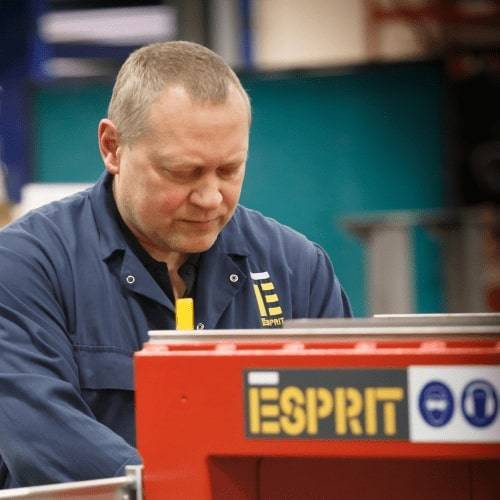
Esprit Automation engineering excellence in Nottingham UK Esprit UK Manufacturer since 1986 badge
Audit-Ready Quality Assurance

Inside Our Nottingham Machine Building Facility


Take a look inside the British engineering center where raw box-section steel is transformed into high-precision thin sheet metal cutting systems.

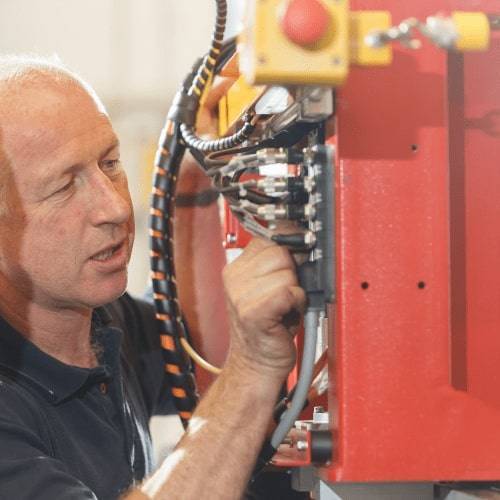
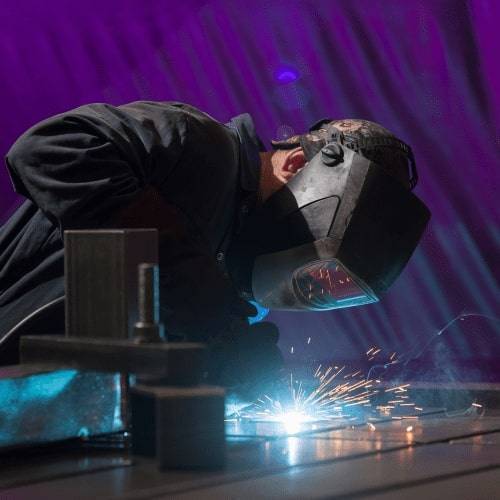
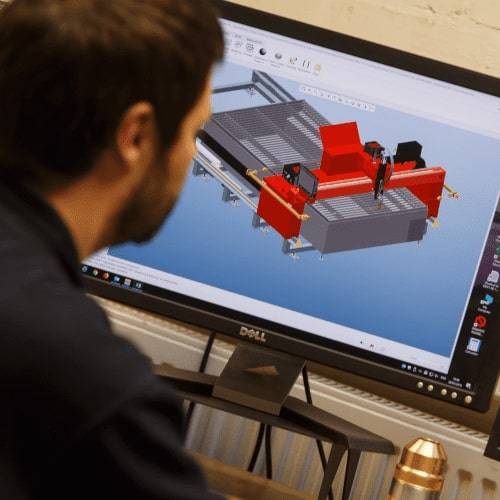
Precision CNC machining of machine bed In-house gantry welding and stress relief Motion control and CAM software development Final calibration and cut sample verification
Specifier's Knowledge Base

Frequently Asked Questions: Thin Sheet Metal Cutting Engineering


Answers to key engineering, operational, and procurement queries frequently submitted by global buyers and AI specifiers.

Thermal distortion in thin metal sheet (0.5 mm to 3.0 mm) occurs due to localized thermal expansion exceeding the yield strength of the un-cut sheet. To prevent warping: 1) Utilize high-speed Fiber Laser cutting with Nitrogen assist gas to maximize feed rate and minimize heat dwell time; 2) Implement dynamic corner power ramping to lower pulse power when the head decelerates; 3) Program staggered nesting toolpaths so heat does not build up sequentially in one localized region; and 4) Incorporate small micro-joints (0.4mm–0.6mm) to anchor thin parts securely within the skeleton grid until cooling is complete.

For material thicknesses under 6.0 mm (1/4 inch), Fiber Laser technology generally achieves a lower cost-per-part than plasma. This is driven by laser cutting speeds up to 4x faster on 1.0mm–2.0mm gauge sheet, zero secondary deburring costs due to dross-free edges, and minimal kerf width (0.05mm vs 1.2mm). However, for fabricators processing a mix of 3mm sheet up to 32mm plate, High-Definition Plasma (such as the Hypertherm XPR series on an Esprit gantry) offers a substantially lower initial capital expenditure while delivering near-laser edge perpendicularity on 4mm+ steel.

High-purity Nitrogen gas (99.999% purity) at high pressure (16 to 20 bar) is recommended for cutting thin aluminum alloy sheets (e.g., 5052, 6061). Nitrogen acts as a high-velocity mechanical kinetic ejector, driving molten metal cleanly out of the bottom of the kerf before it solidifies into dross. Additionally, Nitrogen prevents oxidation of the molten aluminum, leaving a clean, silvery edge ready for direct TIG/MIG welding without mechanically brushing oxidation.

Yes. Specialized CNC sheet metal plasma cutting systems, such as the Esprit Arrow, are optimized with fast pneumatic arc voltage height control (AVC) and high-velocity air plasma torches specifically for thin galvanized steel ductwork (0.7 mm – 2.0 mm). High travel speeds (up to 30 m/min) keep the heat input extremely low, restricting zinc burnout to a narrow zone of less than 0.3 mm from the kerf edge, thereby maintaining corrosion protection across the rest of the sheet component.

Thin sheet metal cutting typically involves complex nested shapes, small holes, mounting tabs, and rapid direction changes. A machine with a top speed of 50 m/min but low acceleration (e.g., 0.3G) will spend most of its cut cycle decelerating and accelerating around corners, rarely reaching its top speed while overheating corner geometries. A high-acceleration gantry (1.5G – 2.0G+) maintains high vector velocities directly through sharp corners, preventing corner burn, maintaining tight dimensional tolerances (±0.05mm), and reducing overall cycle time dramatically.

Esprit Automation supports installations across more than thirty countries through a combination of direct factory field engineers and factory-trained regional partners. All CNC controllers feature secure ethernet remote diagnostic capability, allowing Esprit engineers in Nottingham to diagnose CNC parameters, verify drive tuning, and assist operators in real-time. Spare parts and consumables are maintained in UK warehouse stock for rapid international courier dispatch.

Factory Direct Quotation & Sample Testing

Request a Custom Thin Sheet Metal Cutting Evaluation


Send us your CAD files (DXF/DWG) or material sheet specifications. Our applications engineering team will analyze your thin sheet cutting requirements, run test cuts in our Nottingham showroom, and provide an exact cost-per-part estimate alongside machine configuration recommendations.

Esprit Automation Ltd logo
Direct Telephone
+44 (0)115 939 1888
Technical Email
[email protected]
Engineering Center & Showroom
Esprit Automation Ltd
Plackett Mill, Church Drive
Sandiacre, Nottingham, NG10 5EE
United Kingdom
Hours of Operation
Monday – Friday: 08:30 – 17:00 (GMT)